About this artwork
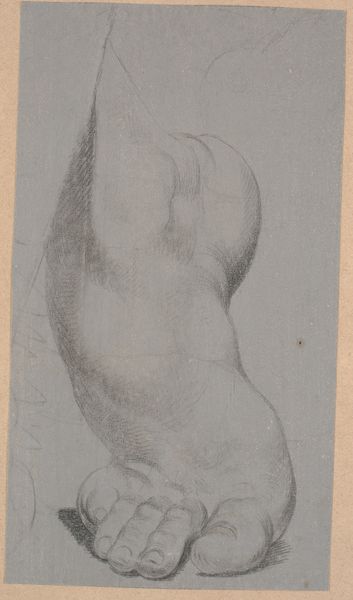
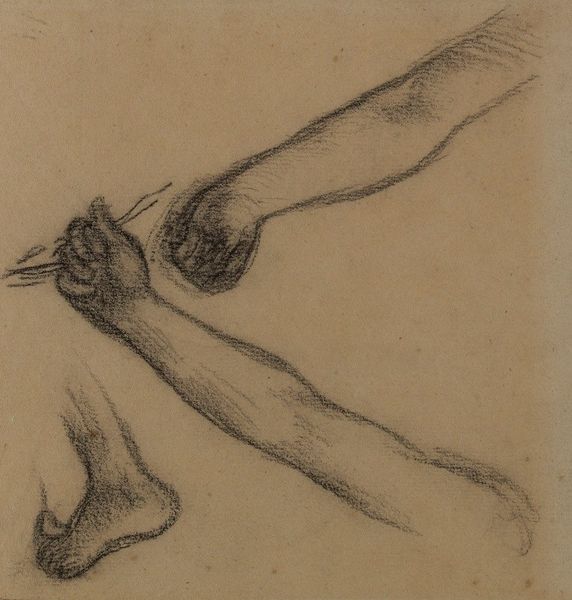
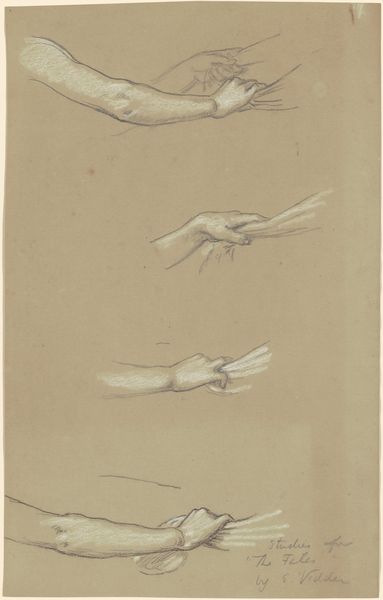
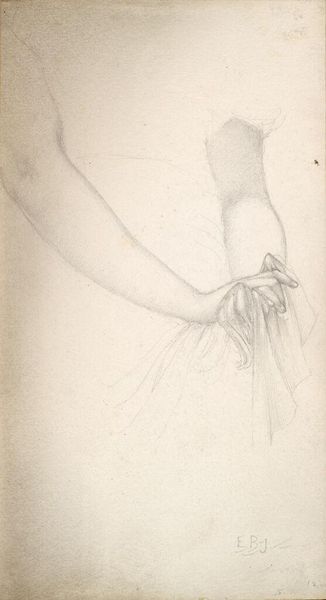
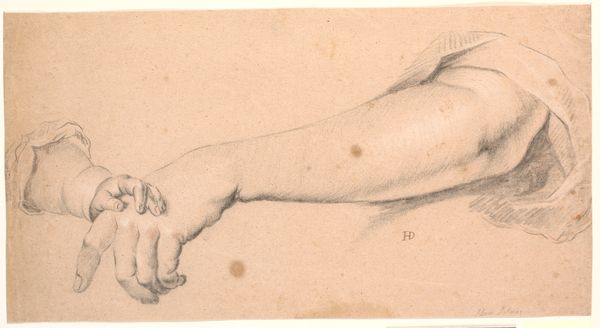
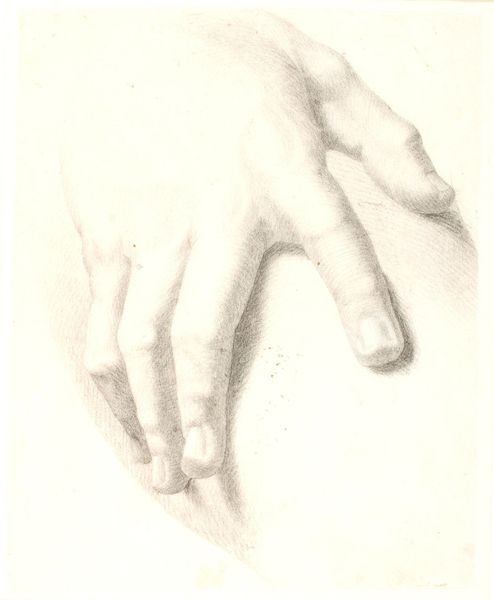
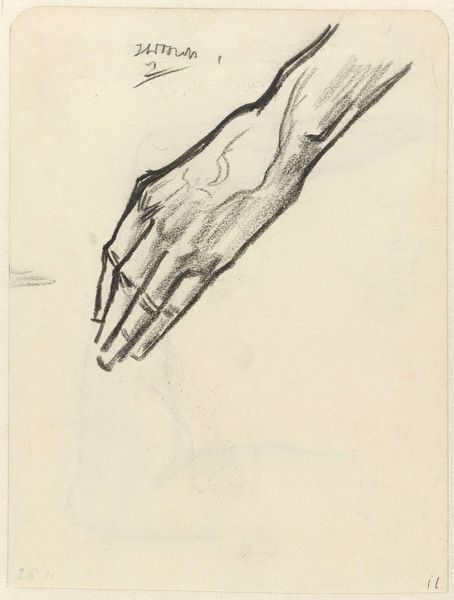
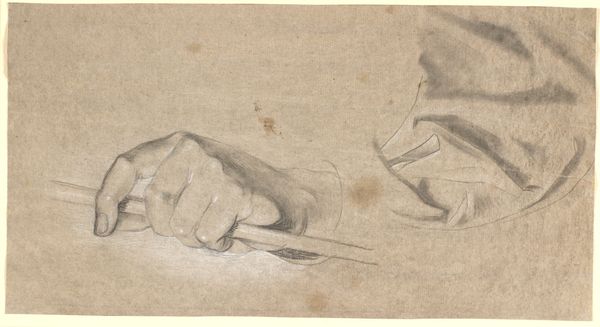
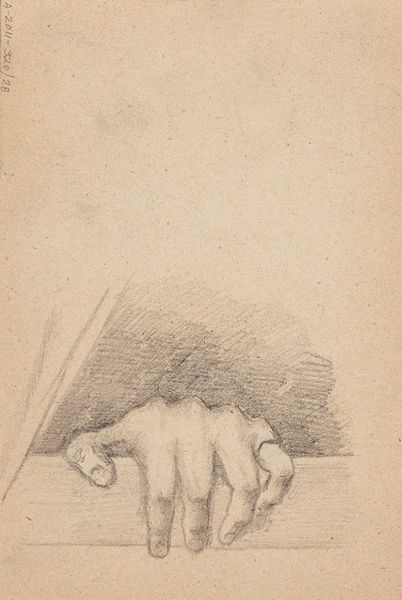
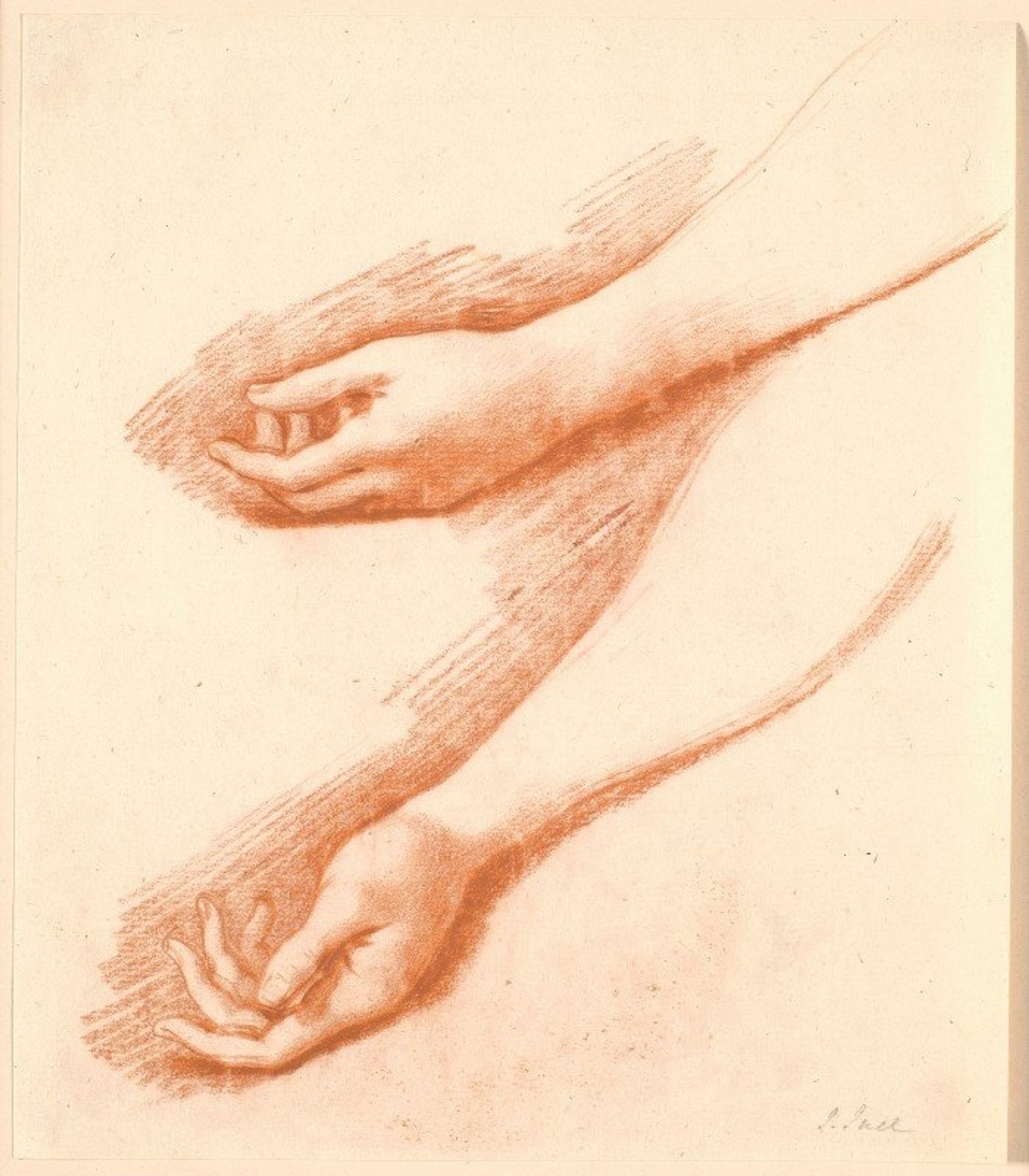
Jens Juel rendered “To studier af en kvindes venstre underarm, den øverste anvendt til det Ankerske familiebillede” using sanguine chalk on paper. Two views of a woman's left forearm dominate the composition, their gentle curves and soft shading evoking a sense of delicate beauty. Juel's careful attention to form and line creates a compelling study in anatomical detail. The use of sanguine chalk, with its warm, reddish hue, imparts a lifelike quality to the skin, enhancing the texture and volume of the arms. The shading, achieved through parallel strokes, adds depth and dimension, further emphasizing the naturalistic representation. This drawing embodies Enlightenment ideals, where empirical observation was paramount. It is not just a preparatory sketch, but an exploration of form, line, and anatomical accuracy. Note how the artist uses the semiotic weight of the hand to represent gesture and intent. The hand acts as a signifier, conveying meaning through its posture. The work challenges fixed meanings by presenting the body not as a symbol of an absolute beauty, but as a subject of careful, objective study.
To studier af en kvindes venstre underarm, den øverste anvendt til det Ankerske familiebillede
1792

Artwork details
- Medium
- drawing, paper, pencil
- Copyright
- Public Domain: Artvee
Tags
Comments
Share your thoughts
About this artwork
Jens Juel rendered “To studier af en kvindes venstre underarm, den øverste anvendt til det Ankerske familiebillede” using sanguine chalk on paper. Two views of a woman's left forearm dominate the composition, their gentle curves and soft shading evoking a sense of delicate beauty. Juel's careful attention to form and line creates a compelling study in anatomical detail. The use of sanguine chalk, with its warm, reddish hue, imparts a lifelike quality to the skin, enhancing the texture and volume of the arms. The shading, achieved through parallel strokes, adds depth and dimension, further emphasizing the naturalistic representation. This drawing embodies Enlightenment ideals, where empirical observation was paramount. It is not just a preparatory sketch, but an exploration of form, line, and anatomical accuracy. Note how the artist uses the semiotic weight of the hand to represent gesture and intent. The hand acts as a signifier, conveying meaning through its posture. The work challenges fixed meanings by presenting the body not as a symbol of an absolute beauty, but as a subject of careful, objective study.
Comments
Share your thoughts