About this artwork
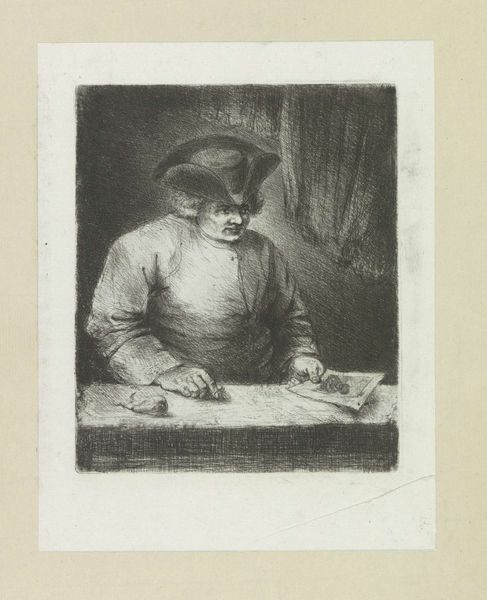
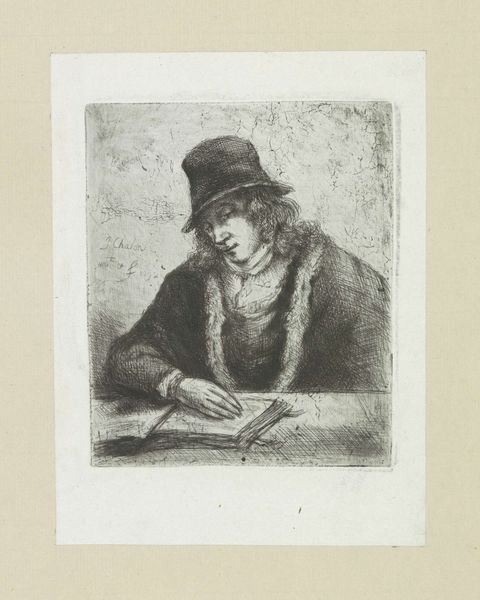
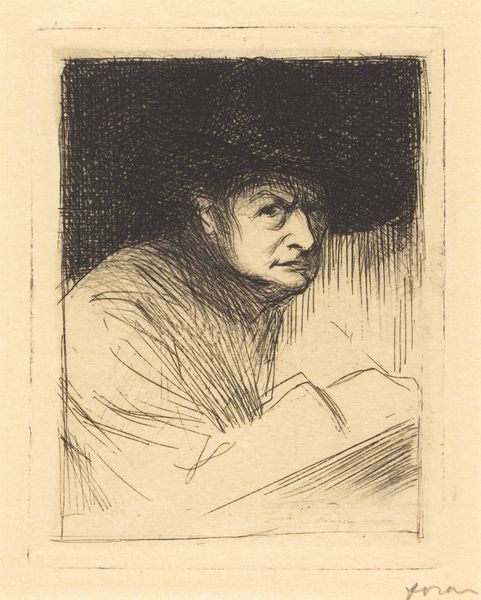
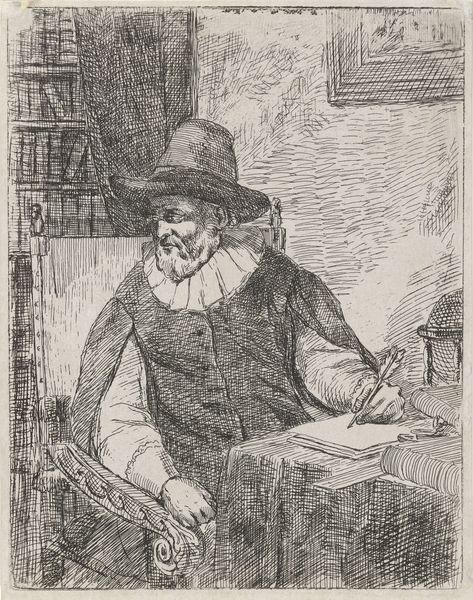
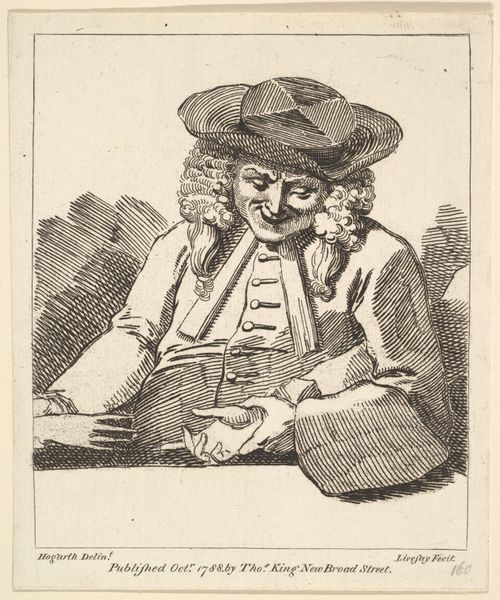
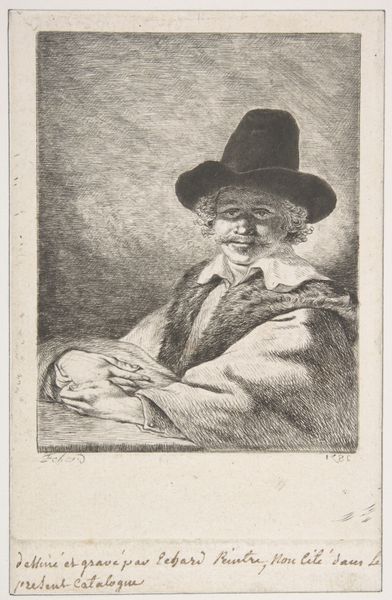
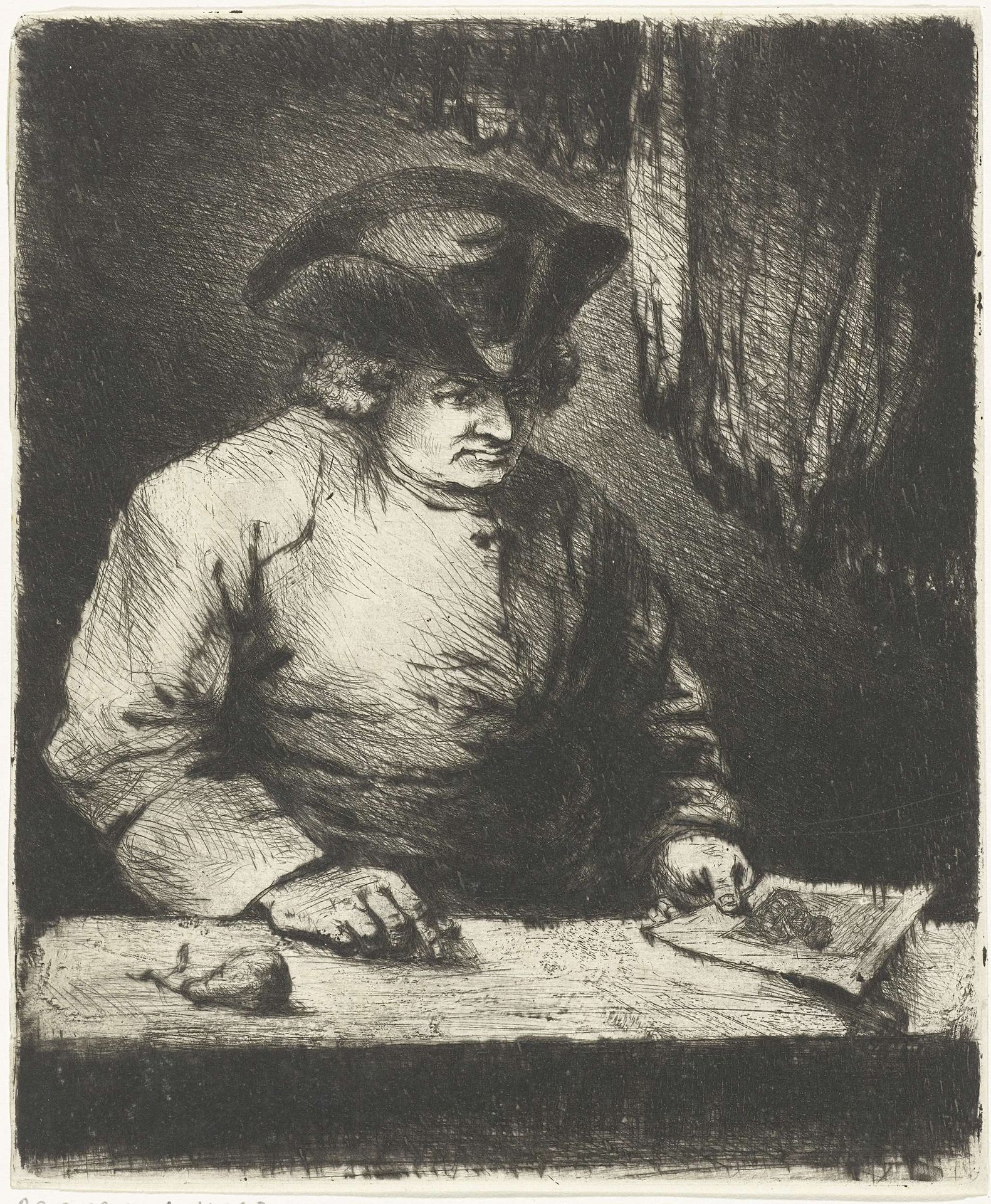
Jan Chalon created this etching, titled "Portret van Hendrik Chalon," sometime in the late 18th century. As the etching suggests, Hendrik Chalon may have been Jan's brother. This portrait comes from a time when class structures dictated one’s place in society and the kind of person you were allowed to be. While Jan Chalon achieved considerable recognition, it is not easy to understand the position of Hendrik in Dutch society based on this image. He sits at a table, hat on, reviewing what looks to be a document or ledger, with what appears to be a dead bird on the table. The hat and the document imply some claim to status, but the bird offers a far more visceral, material reality. It can be tempting to interpret the image as a statement on the disparities of wealth. More profoundly, though, the image captures the intimacy and emotional intensity between two brothers, which transcends social and economic divisions.

Artwork details
- Medium
- drawing, print, etching
- Dimensions
- height 195 mm, width 165 mm
- Copyright
- Rijks Museum: Open Domain
Tags
Comments
Share your thoughts
About this artwork
Jan Chalon created this etching, titled "Portret van Hendrik Chalon," sometime in the late 18th century. As the etching suggests, Hendrik Chalon may have been Jan's brother. This portrait comes from a time when class structures dictated one’s place in society and the kind of person you were allowed to be. While Jan Chalon achieved considerable recognition, it is not easy to understand the position of Hendrik in Dutch society based on this image. He sits at a table, hat on, reviewing what looks to be a document or ledger, with what appears to be a dead bird on the table. The hat and the document imply some claim to status, but the bird offers a far more visceral, material reality. It can be tempting to interpret the image as a statement on the disparities of wealth. More profoundly, though, the image captures the intimacy and emotional intensity between two brothers, which transcends social and economic divisions.
Comments
Share your thoughts