Dimensions: height 195 mm, width 267 mm
Copyright: Rijks Museum: Open Domain
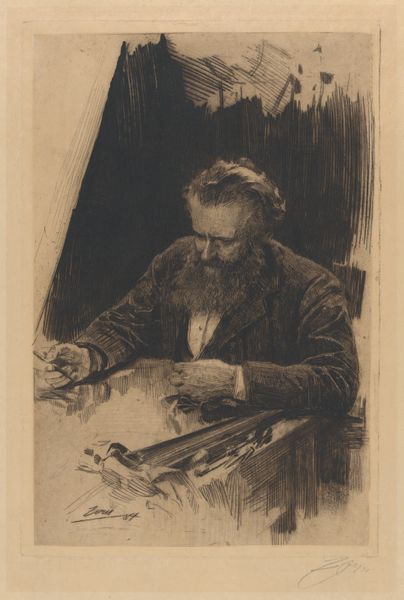
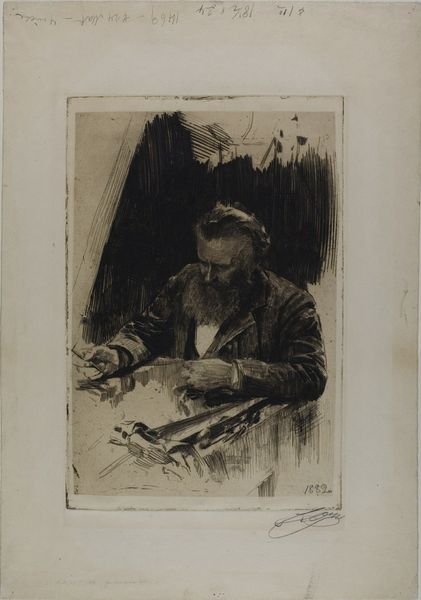
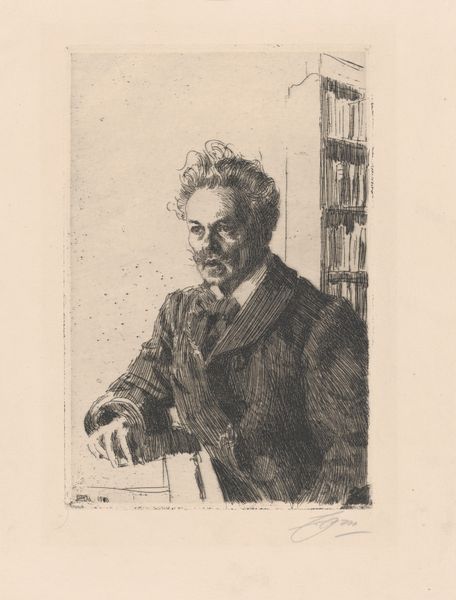
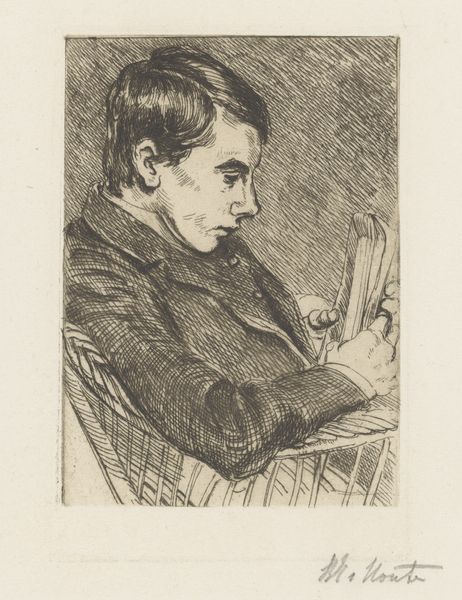
Curator: This is Sir Francis Seymour Haden's "Self-Portrait," created in 1862. The piece is an etching and can be found here at the Rijksmuseum. Editor: My first impression is the striking contrast of light and shadow. It feels like peering into someone's private study, a moment caught in thought. There's a palpable intellectual energy, wouldn't you say? Curator: Absolutely. It speaks volumes about the intellectual climate of the era, doesn’t it? Etchings at the time served a democratizing function, expanding art access for middle-class society. Considering his status, I also find it interesting that Seymour Haden chose to represent himself in such a manner, actively participating in this democratizing movement. Editor: Indeed, and the symbolic weight is carefully arranged. The beakers and vials clustered on his desk-- do they speak to his scientific or intellectual curiosity, almost as symbolic surrogates for the brain in this portrait? Curator: I see what you mean! We know Sir Francis was a physician but also an artist with his own means. So here is a privileged individual deeply engaged with intellectual pursuits, straddling the lines between art, science, and high society in Victorian England. The objects behind him create a space of inquiry, perhaps questioning the conventional expectations of someone in his social standing, leaning towards a more philosophical inclination, maybe? Editor: Definitely! There's almost a melancholic air about him, that shadow across his face perhaps echoing inner contemplation, but that’s Romanticism seeping through. Beyond being a straightforward representation, it taps into these deeper, more emotionally resonant realms. It's a powerful statement beyond the aesthetic. Curator: Exactly. Considering it was made in the early 1860s, a time of massive social and intellectual upheaval in Europe, it mirrors the kind of questions and struggles that defined modernity. This man sits right on that intersection, wouldn’t you say? Editor: Agreed, viewing through this lens truly elevates how we appreciate the visual narrative of the portrait. Curator: Precisely, seeing beyond face value allows us to dissect a work’s layers and relevance even further. Editor: Yes, sometimes we must use both the eye and the mind to connect symbols and context together in artwork analysis!
Comments
No comments
Be the first to comment and join the conversation on the ultimate creative platform.
 Collect
 React
React Comment
More like this