oil-paint
portrait
oil-paint
oil painting
expressionism
portrait art
Copyright: Public domain
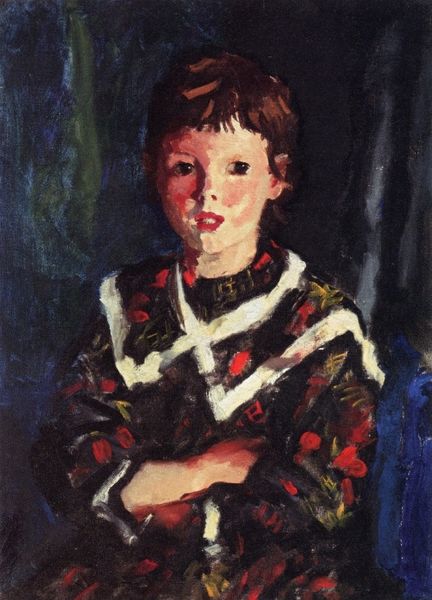
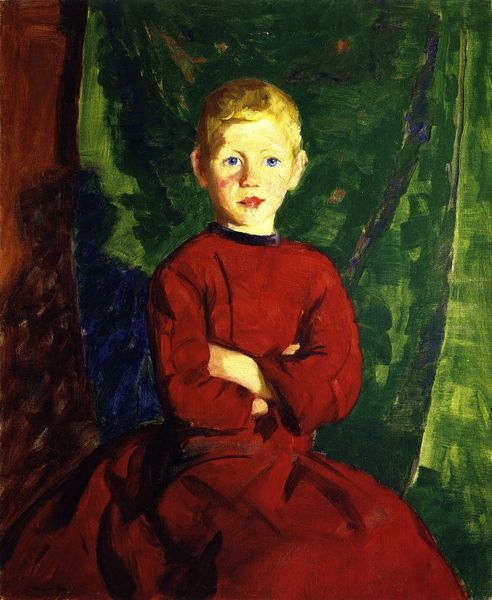
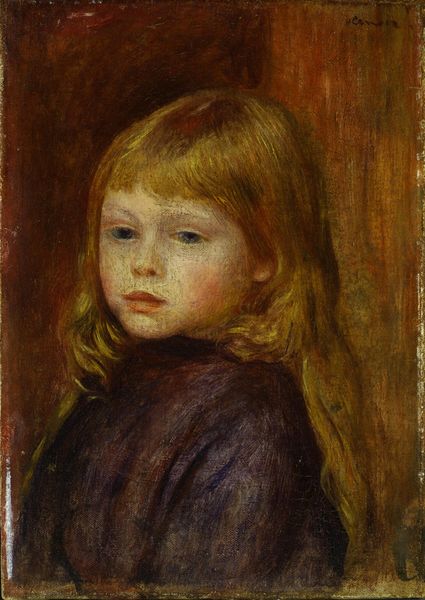
Editor: This is Andrés de Santa Maria’s “Niño vestido de verde,” painted in 1913. It's an oil painting, a portrait of a boy. I'm struck by the intensity of the red background against the subdued green of his shirt. What symbols do you see at play here? Curator: The red immediately brings forth notions of vitality, passion, even aggression, doesn't it? Juxtapose this with the boy's verdant garb – typically suggestive of nature, growth, and tranquility. Isn’t there an interesting conflict suggested by the colours, a certain psychological tension? Editor: I see that. It's almost as if the boy is standing in front of a fire. Does the green clothing act to soften this impression or reinforce the intensity of the red, in your opinion? Curator: An excellent point! The "Niño," with his expression, seems to be peering outward at us; thus, the painting invokes, perhaps intentionally, both a sense of vitality *and* of inherent confinement. Red can mean so many things, historically. Here, it makes us question; is the child at peace, or is the background all-consuming? Does he exist in two worlds: the comfort of growth, yet confined in his position, against his will? Editor: I never would have looked at it that way, as containing dueling, competing symbols. Thanks for pointing that out! Curator: You’re welcome! Thinking about this more deeply, colours and context really speak volumes when one explores portraiture of this period, don’t you think?
Comments
No comments
Be the first to comment and join the conversation on the ultimate creative platform.
 React
React Comment