1526
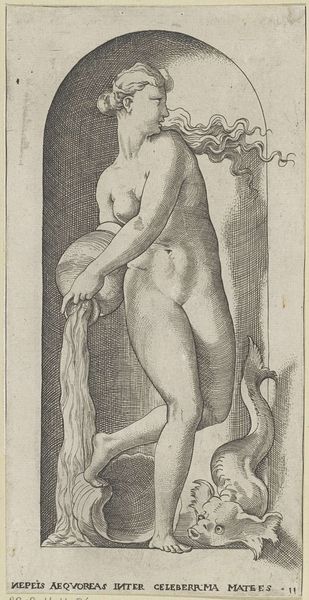
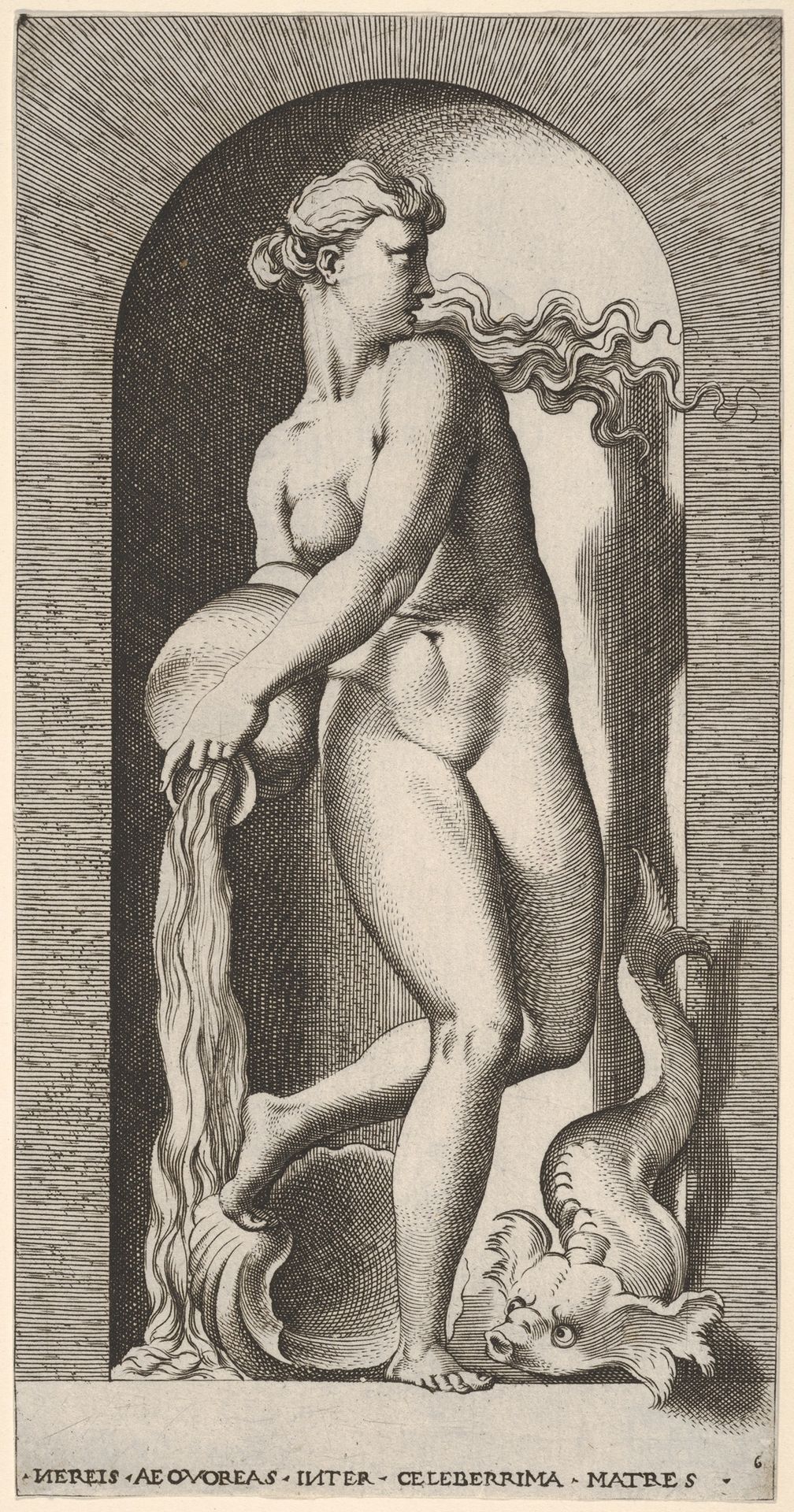
Plate 6: Thetis standing in a niche with a shell and sea creature, pouring water out of a vase, looking to her left, from "Mythological Gods and Goddesses"

Giovanni Jacopo Caraglio
1500 - 1565
The Metropolitan Museum of Art
Metropolitan Museum of Art, New York, NYListen to curator's interpretation
Curatorial notes
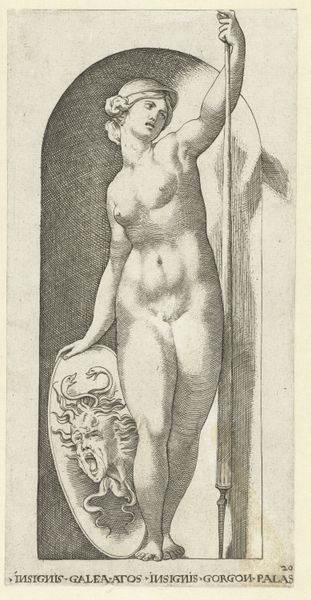
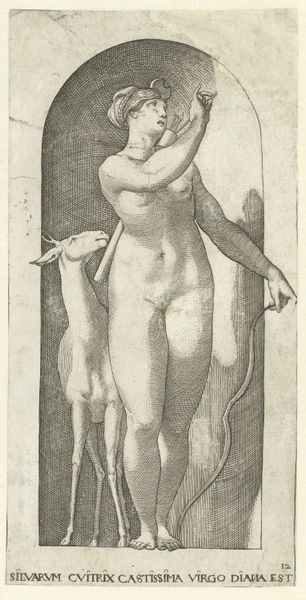
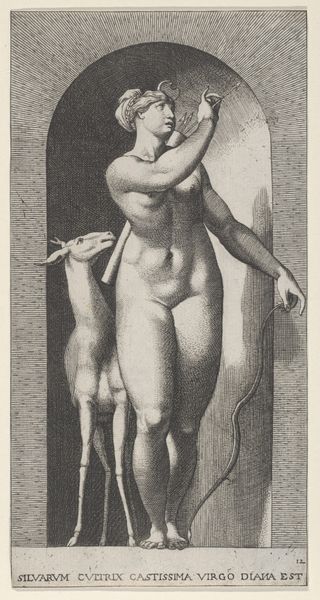
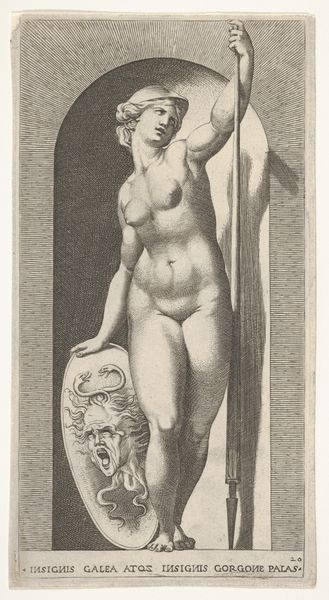
Giovanni Jacopo Caraglio created this engraving of Thetis, a Greek sea goddess, during the height of the Italian Renaissance. This print is part of a series, "Mythological Gods and Goddesses," reflecting the era's fascination with classical antiquity and mythology. Here, Thetis, mother of Achilles, is depicted nude, drawing water from a vase. Renaissance artists often used mythological subjects to explore themes of beauty, nature, and the human form. The choice to depict Thetis in the nude, standing in contrapposto, draws on classical ideals, but it also reflects the male gaze prevalent in Renaissance art. The female form is celebrated, but often through the lens of male desire and admiration. This image invites us to reflect on the complex ways in which women were represented in art, caught between idealization and objectification. It prompts us to consider whose stories were being told, and from whose perspective.