About this artwork
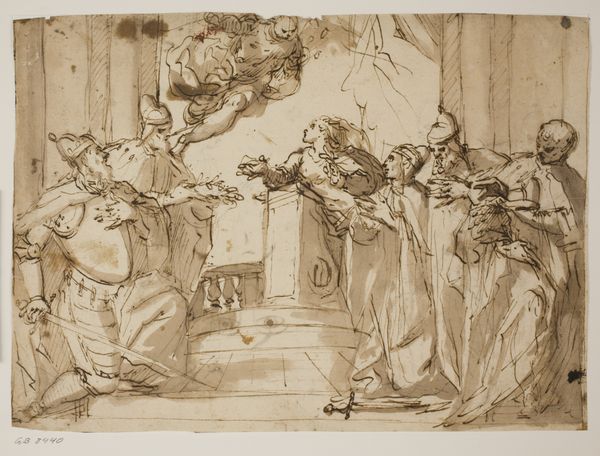
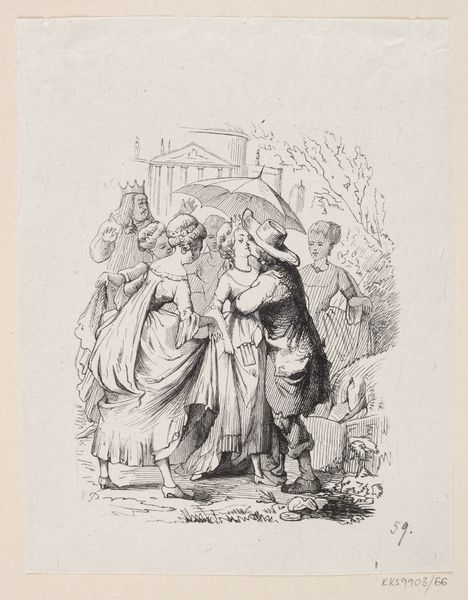
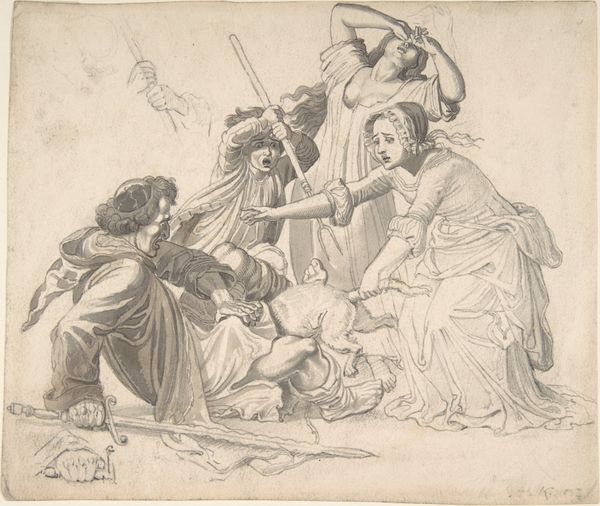
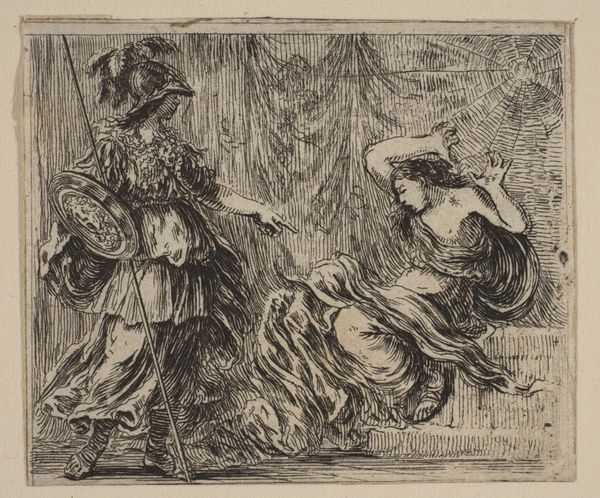
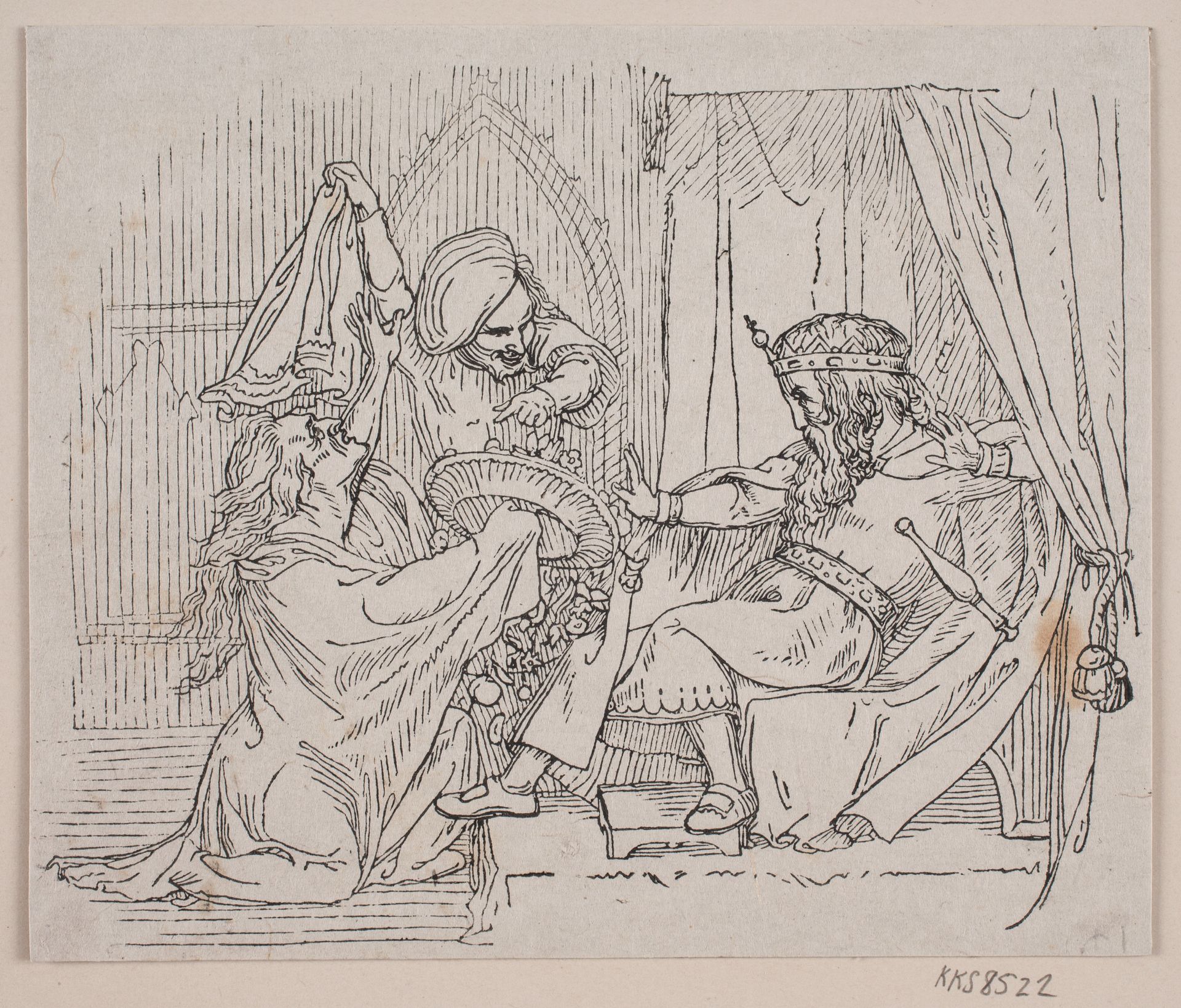
Andreas Flinch created this tiny drawing titled 'A King Loses his Sceptre in Terror' in the 19th century, as a preparatory study for the Uglspil illustrations. The image is rendered in ink on paper. The controlled, precise lines and hatching suggest the use of a fine-nibbed pen, wielded by a practiced hand. Look closely and you can see how Flinch built up tone and volume with careful cross-hatching, giving depth to the scene. The texture of the paper itself adds a tactile quality, a subtle reminder of the physical act of drawing. Drawings like this were crucial for 19th-century illustration, as they could be easily transferred to woodblocks for printing. The craft of wood engraving demanded skill and precision, translating the artist's vision into a reproducible image for mass consumption. This points to the relationship between art, labor, and the rise of print culture. Flinch’s drawing is not just an artwork; it's a blueprint for production.
En konge taber sceptret af forfærdelse. Forarbejde til Uglspil-billederne
1840


Artwork details
- Medium
- drawing, print, ink, woodcut
- Dimensions
- 102 mm (height) x 123 mm (width) (bladmaal)
- Location
- SMK - Statens Museum for Kunst
Tags
Comments
Share your thoughts
About this artwork
Andreas Flinch created this tiny drawing titled 'A King Loses his Sceptre in Terror' in the 19th century, as a preparatory study for the Uglspil illustrations. The image is rendered in ink on paper. The controlled, precise lines and hatching suggest the use of a fine-nibbed pen, wielded by a practiced hand. Look closely and you can see how Flinch built up tone and volume with careful cross-hatching, giving depth to the scene. The texture of the paper itself adds a tactile quality, a subtle reminder of the physical act of drawing. Drawings like this were crucial for 19th-century illustration, as they could be easily transferred to woodblocks for printing. The craft of wood engraving demanded skill and precision, translating the artist's vision into a reproducible image for mass consumption. This points to the relationship between art, labor, and the rise of print culture. Flinch’s drawing is not just an artwork; it's a blueprint for production.
Comments
Share your thoughts