About this artwork
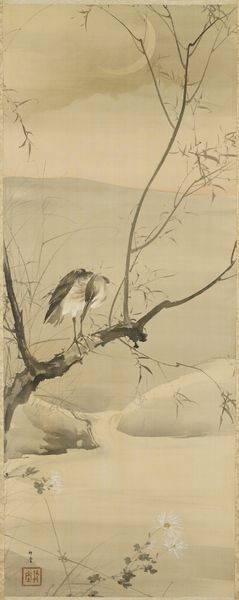
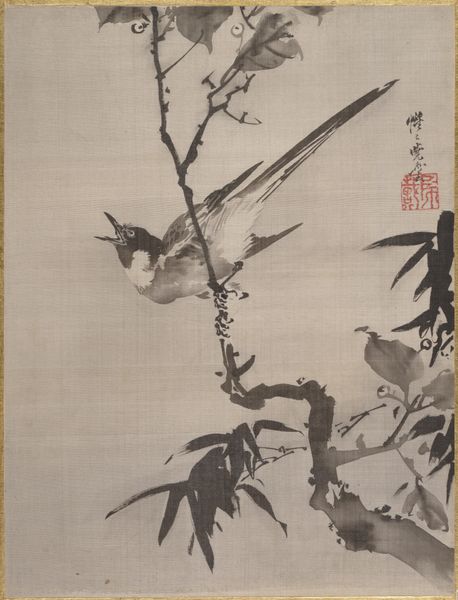
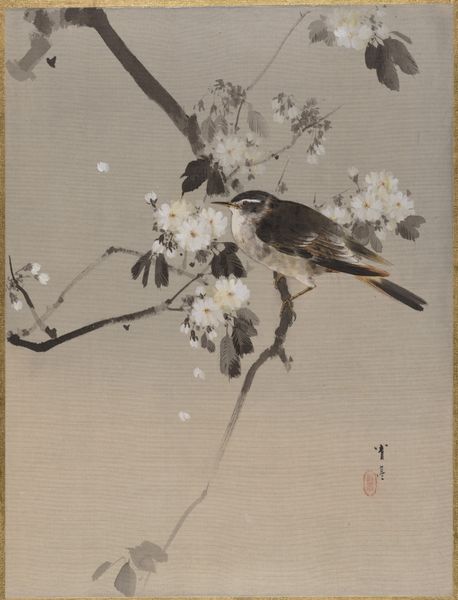
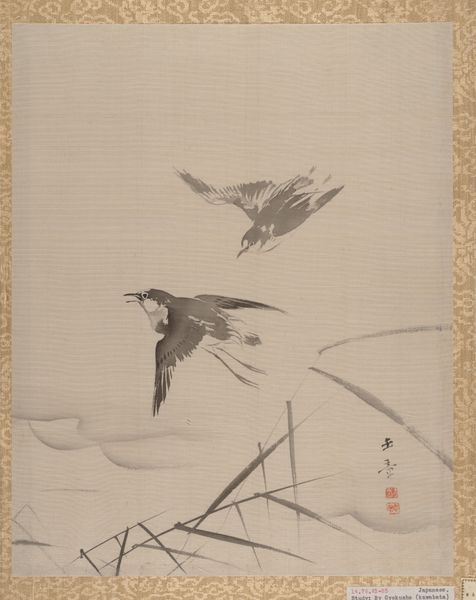
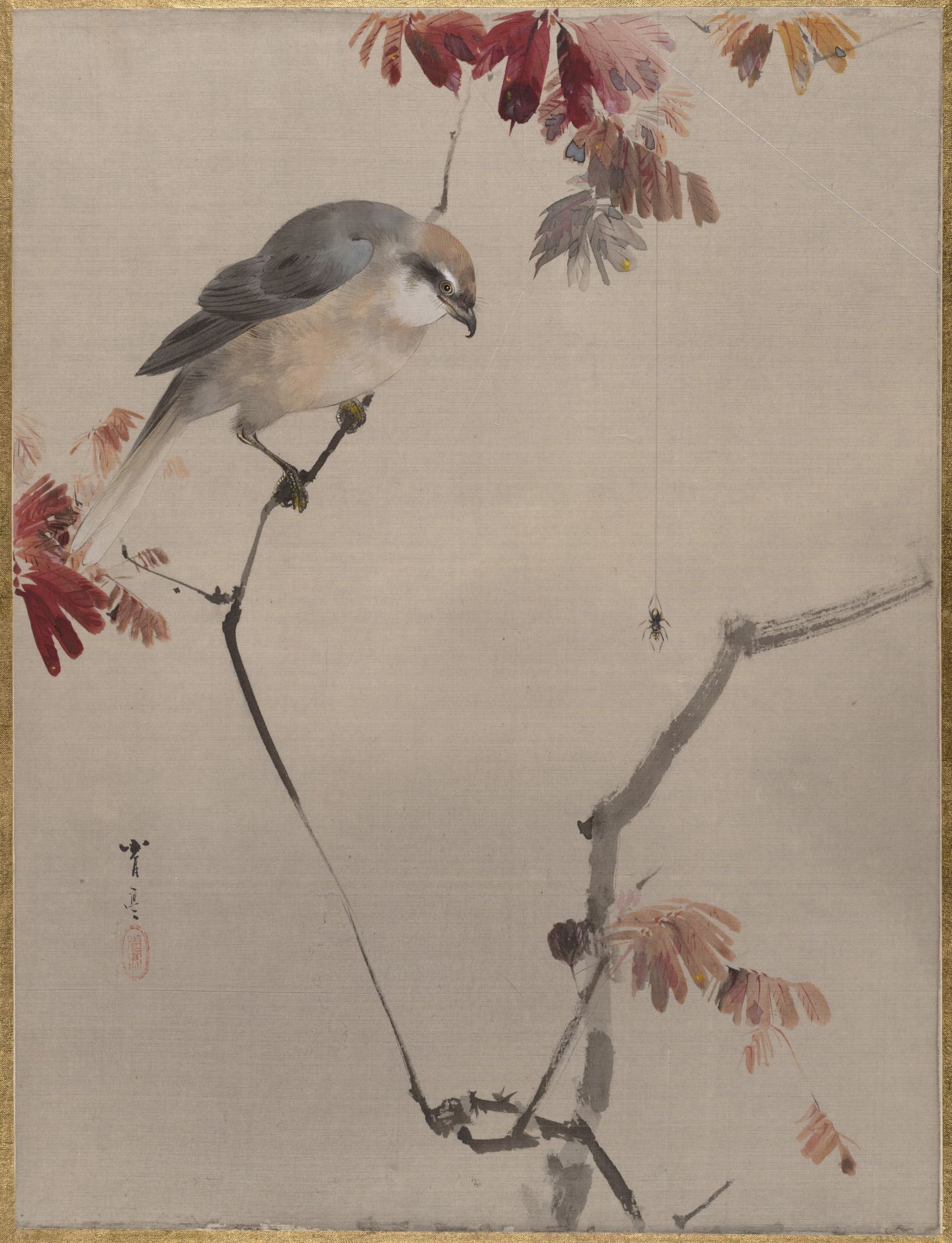
Watanabe Seitei made this painting of a bird on a branch watching a spider, sometime in the late 19th or early 20th century. It’s painted on silk, a precious material that speaks to Japan’s long history of refined craftsmanship. The artist used delicate brushwork and subtle gradations of ink and color to create a sense of depth and texture. Look closely, and you can almost feel the downy softness of the bird’s feathers, the crispness of the leaves, and the gossamer strands of the spider’s web. The silk support allows the pigments to subtly bleed, creating a soft, atmospheric effect. Seitei was trained in traditional Japanese painting techniques, but he also studied Western art. This combination of influences is evident in his naturalistic style and his attention to detail. The artist’s skill in capturing the fleeting moment, and the beauty of the natural world, elevates the work beyond mere representation. It invites us to contemplate the interconnectedness of all things, and the delicate balance of life and death.
Bird on Branch Watching Spider
1877 - 1897

Watanabe Seitei 渡辺省亭
1851 - 1918
The Metropolitan Museum of Art
Metropolitan Museum of Art, New York, NYArtwork details
- Dimensions
- 14 1/4 x 10 3/8 in. (36.2 x 26.4 cm)
- Location
- Metropolitan Museum of Art, New York, NY
- Copyright
- Public Domain
Comments
Share your thoughts
About this artwork
Watanabe Seitei made this painting of a bird on a branch watching a spider, sometime in the late 19th or early 20th century. It’s painted on silk, a precious material that speaks to Japan’s long history of refined craftsmanship. The artist used delicate brushwork and subtle gradations of ink and color to create a sense of depth and texture. Look closely, and you can almost feel the downy softness of the bird’s feathers, the crispness of the leaves, and the gossamer strands of the spider’s web. The silk support allows the pigments to subtly bleed, creating a soft, atmospheric effect. Seitei was trained in traditional Japanese painting techniques, but he also studied Western art. This combination of influences is evident in his naturalistic style and his attention to detail. The artist’s skill in capturing the fleeting moment, and the beauty of the natural world, elevates the work beyond mere representation. It invites us to contemplate the interconnectedness of all things, and the delicate balance of life and death.
Comments
Share your thoughts