1833 - 1869
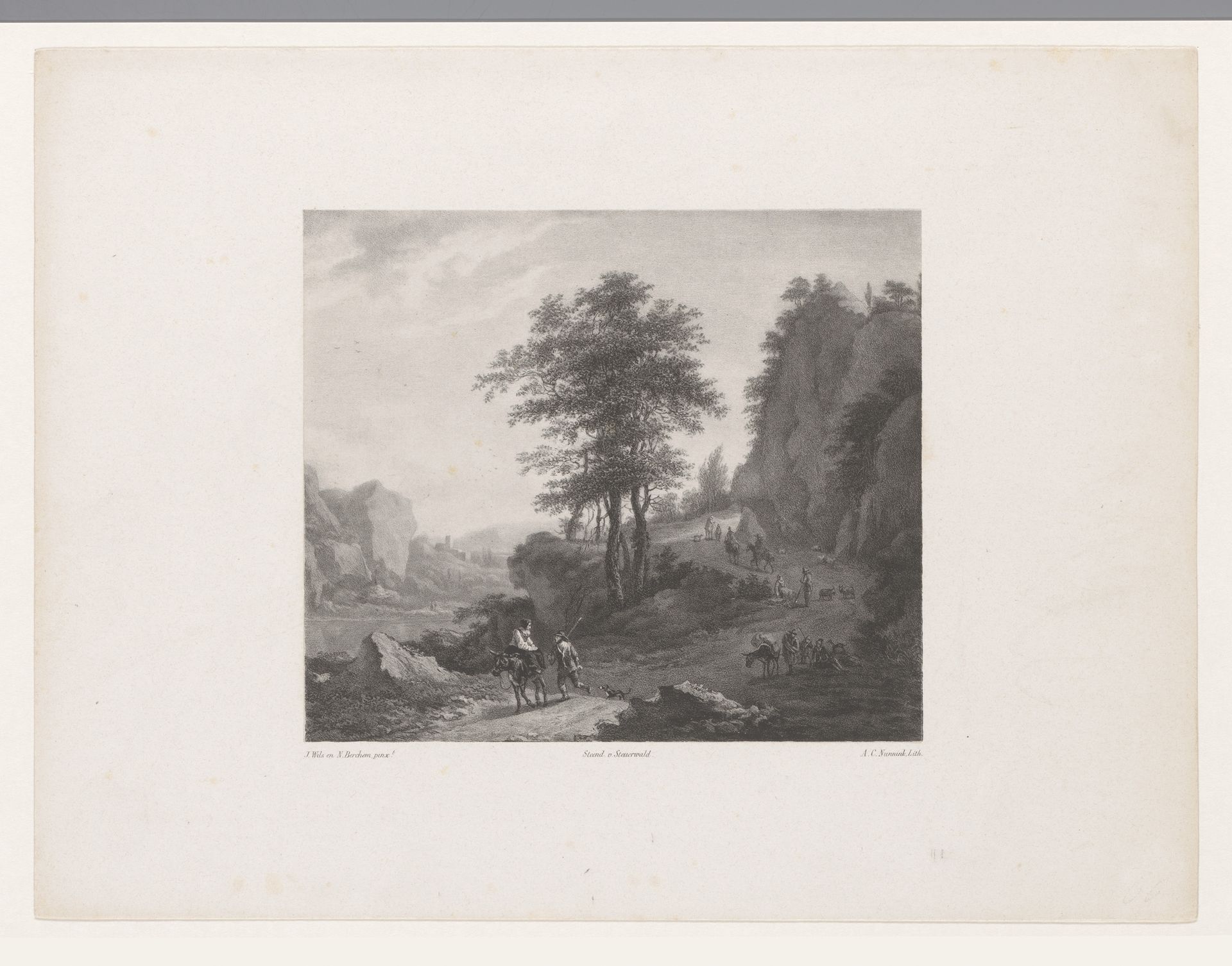
Figuren in berglandschap

Adolf Carel Nunnink
1813 - 1894Location
RijksmuseumListen to curator's interpretation
Curatorial notes
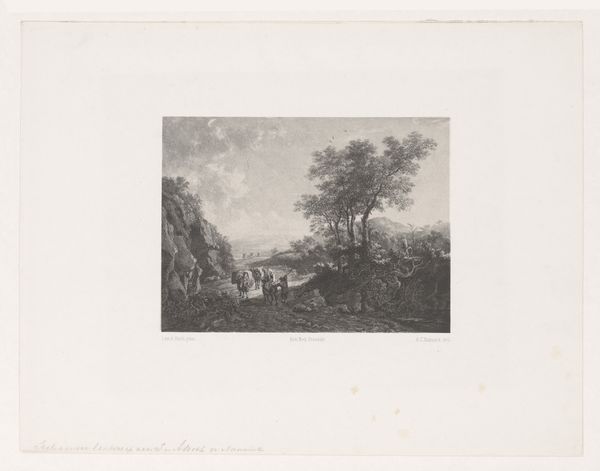
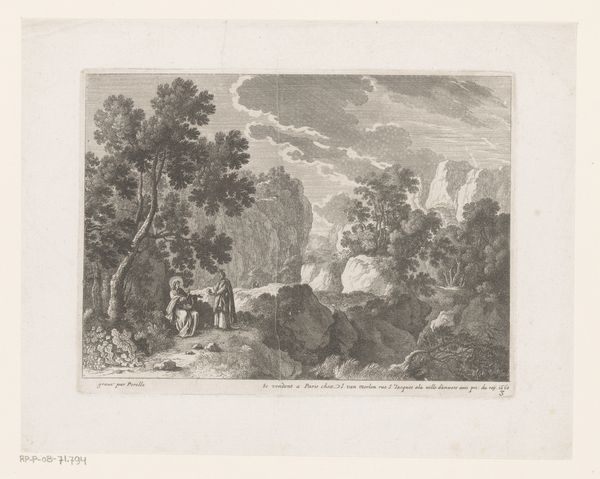
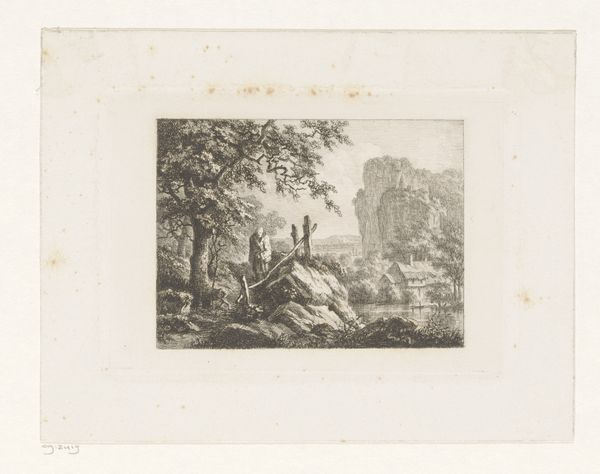
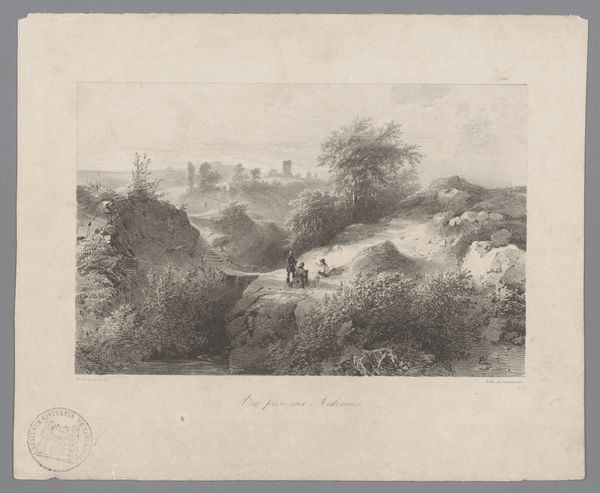
Adolf Carel Nunnink created this print, 'Figures in a Mountainous Landscape,' in the nineteenth century. The scene is dominated by natural elements. The road, a key motif, suggests journeys and transitions. Consider the road in ancient Roman art, often depicted as a symbol of power, control, and connectivity across vast territories. In contrast, here, the road seems more modest. It is a path for ordinary travelers, a group of figures moving on a track that winds through a natural, rather than urban or controlled, landscape. This subtly indicates a shift from the grand narratives of empire to the intimate experiences of individuals within nature. Note how the road leads the eye, drawing the viewer into the landscape. This reflects humanity's constant negotiation with the natural world. It speaks to our ingrained need to explore, to find our path, and to experience change and growth. Like a returning symbol, it reflects a cyclical journey that remains fundamentally unchanged through time.