1887
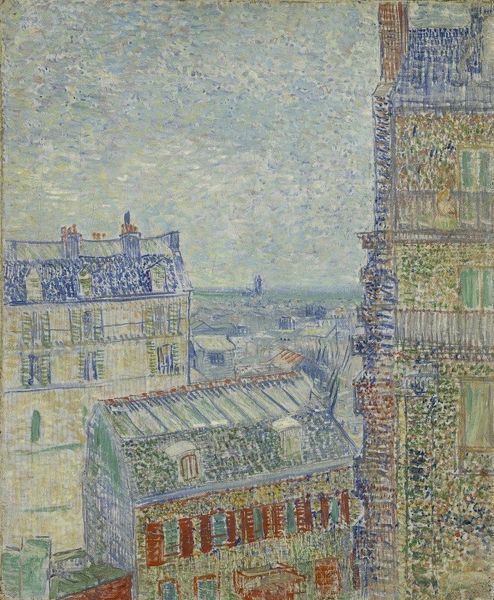
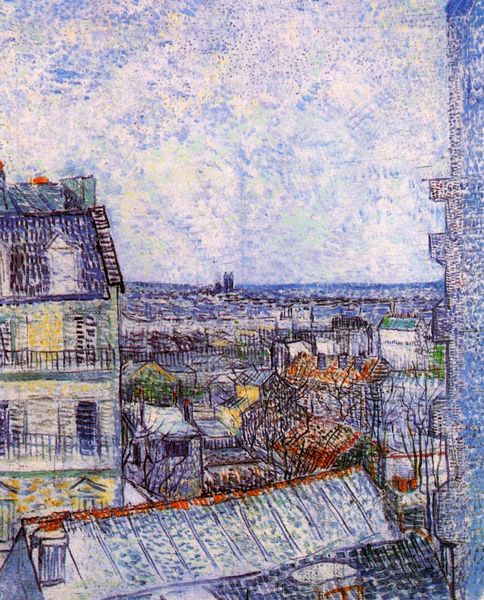
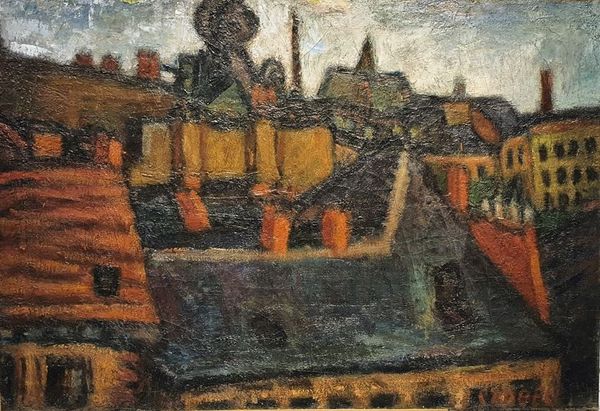
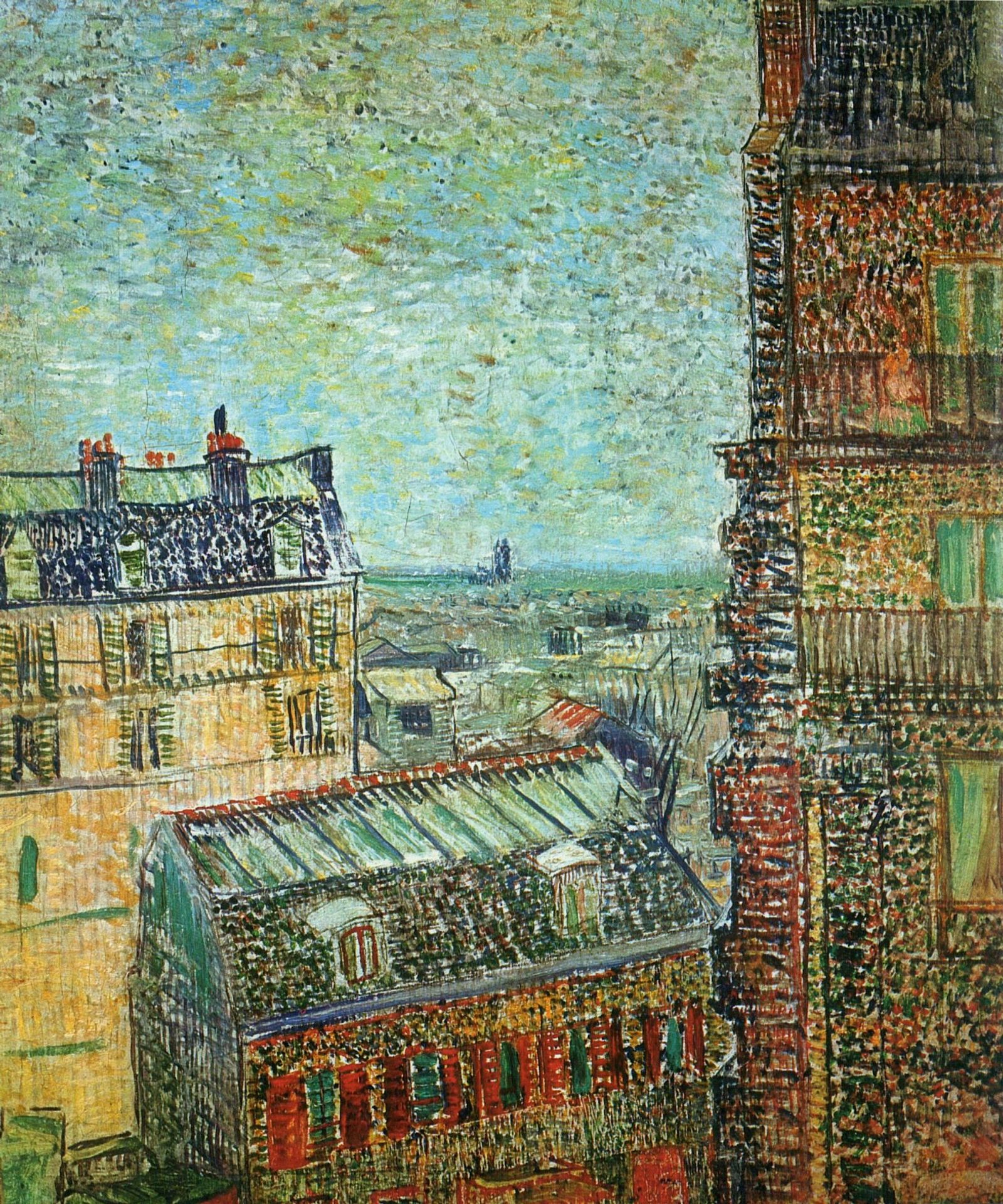
View of Paris from Vincent's Room in the Rue Lepic


Listen to curator's interpretation
Curatorial notes
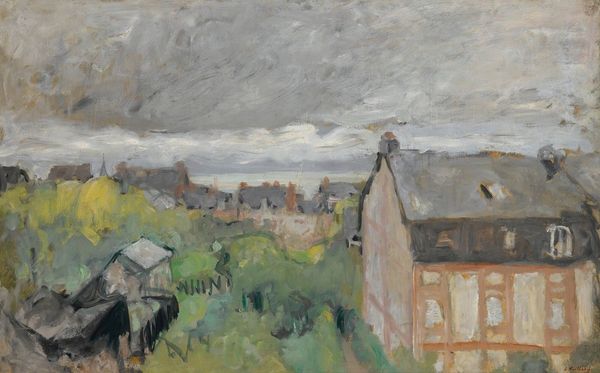
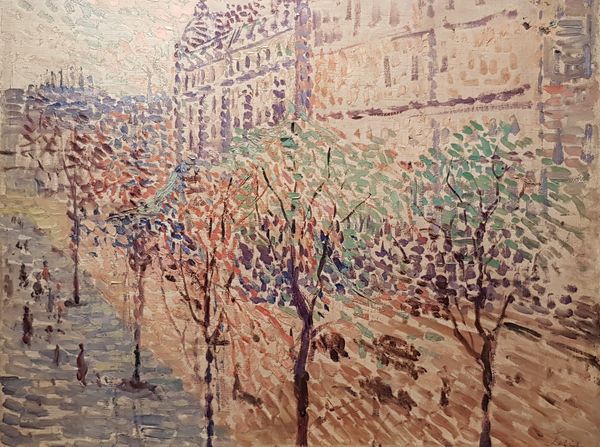
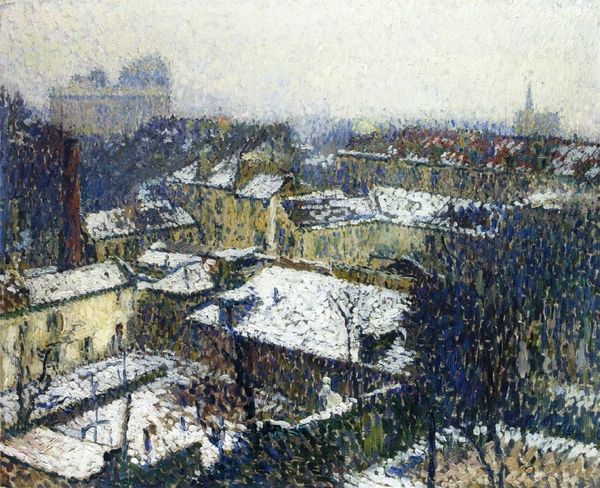
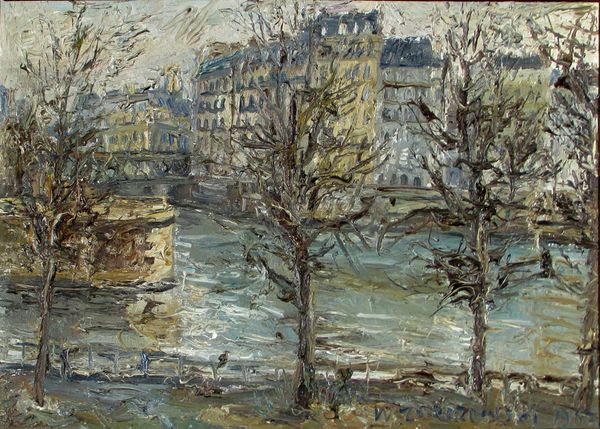
Curator: Here we have Van Gogh’s "View of Paris from Vincent's Room in the Rue Lepic," painted in 1887. It is currently housed at the Van Gogh Museum in Amsterdam. Editor: My immediate feeling is one of slight unease. There’s something about the close proximity to the buildings, the high vantage point, that creates a sense of being trapped, perhaps reflecting Van Gogh’s own internal state at the time. Curator: It's intriguing you say that. Considering Van Gogh’s stay in Paris was supposed to be a period of growth, influenced by Impressionism and Post-Impressionism, there is some melancholy present. The building facades feel imposing. I can’t help but see how he depicts the symbolic meaning behind domestic spaces. Editor: Absolutely. And what do you make of the obscured view? It's a cityscape, but not the triumphant cityscape we might expect. There’s a limited perspective, an obstructed horizon. It almost feels like a deliberate choice to convey social and emotional constriction. How much of it reflected social conditions around Parisian living? Curator: That reading resonates deeply. Think about the symbol of windows – they should offer possibility and connection with the outside world. But in this piece, they seem more like barriers, individual cells in a larger societal structure, trapping lives and aspirations, which leads to social critique. The impasto, thick paint, also accentuates the buildings’ solid and impassable nature. Editor: The way the buildings loom, with their geometric presence, against the swirling sky hints, maybe, to a city and its societal pressures beginning to overtake nature and rural settings. Curator: That’s a fascinating point. The turbulent sky almost feels like a premonition of his later, more expressive works, foreshadowing the emotional intensity to come, but also as an acknowledgment of what cities are made of: nature and culture coexisting in strange ways. It leaves me considering how our environment shapes us, and how we shape it. Editor: Indeed. Ultimately, "View of Paris" becomes a powerful statement about the complexities of urban existence and the individual’s place within it, as relevant today as it was then.