1760
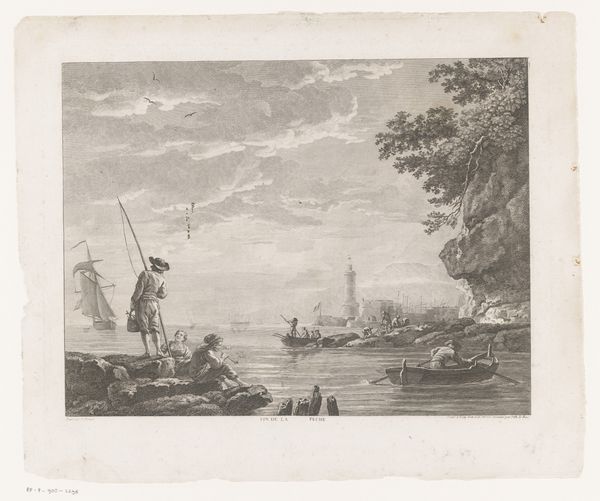
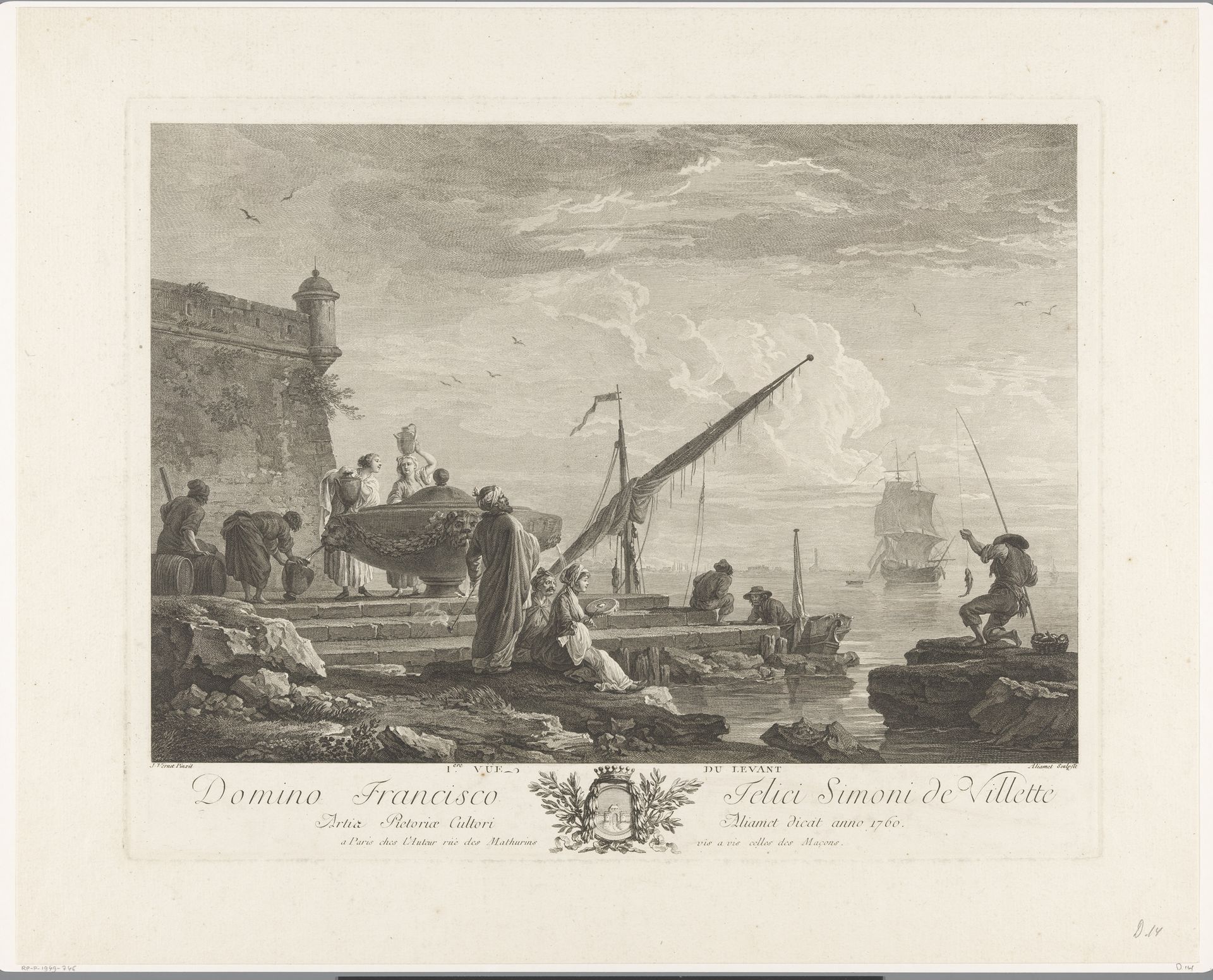
Figuren aan een rivieroever in de Levant

Jacques Aliamet
1726 - 1788Location
RijksmuseumListen to curator's interpretation
Curatorial notes
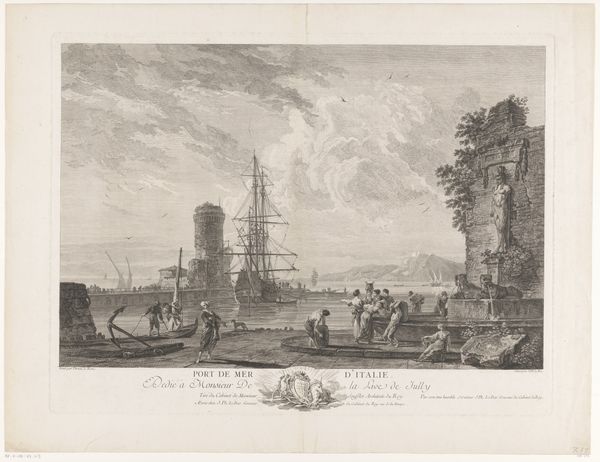
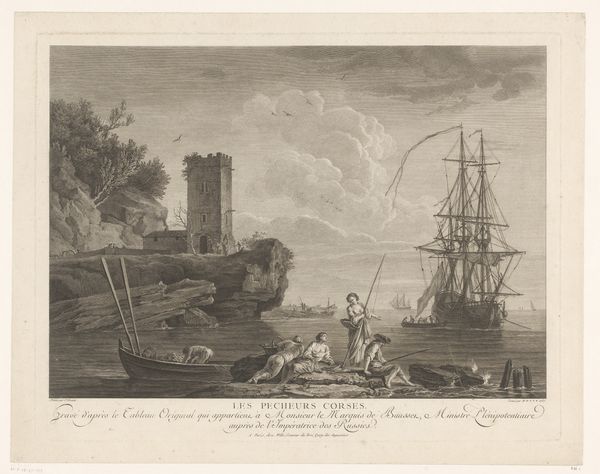
Jacques Aliamet's print, "Figures on a Riverbank in the Levant," created around 1786, depicts a serene coastal scene imbued with subtle yet resonant symbols. At the heart of the composition, figures gather around an ornate vase, reminiscent of classical urns used in funerary rites. This motif, suggesting mortality and memory, echoes across cultures, from ancient Greek amphorae to Renaissance vanitas paintings. The fishermen, poised between the known and the unknown, remind us of humanity's timeless dance with fate. Such imagery evokes profound psychological responses. The vase, a vessel of memories, speaks to our collective consciousness, stirring primal emotions linked to loss and remembrance. The sea, with its vastness, represents both opportunity and peril, engaging viewers on a deep, subconscious level. This interplay of symbols transcends time. The vase, the sea, and the fisherman reappear in various guises throughout art history, each epoch imbuing them with new layers of meaning. They echo and evolve, reflecting our enduring human condition.