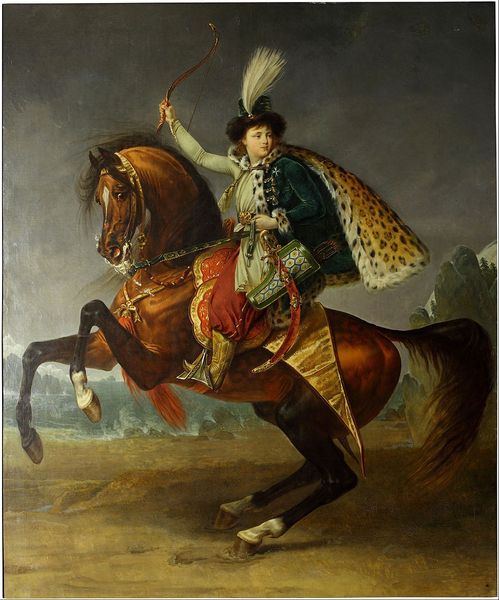
painting, oil-paint
#
portrait
#
figurative
#
character portrait
#
painting
#
oil-paint
#
landscape
#
oil painting
#
animal portrait
#
painting painterly
#
history-painting
#
academic-art
Copyright: Public Domain: Artvee
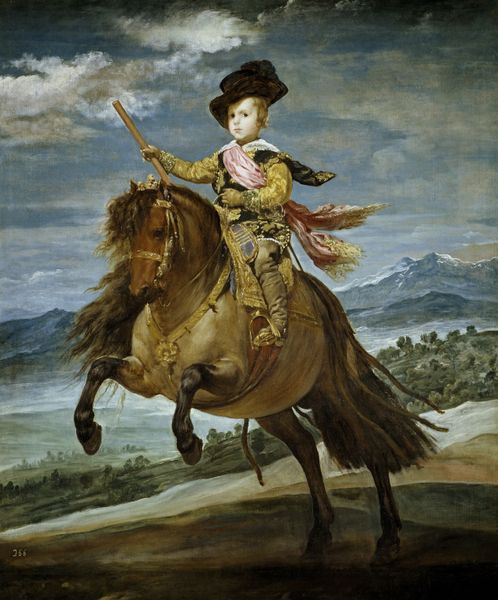
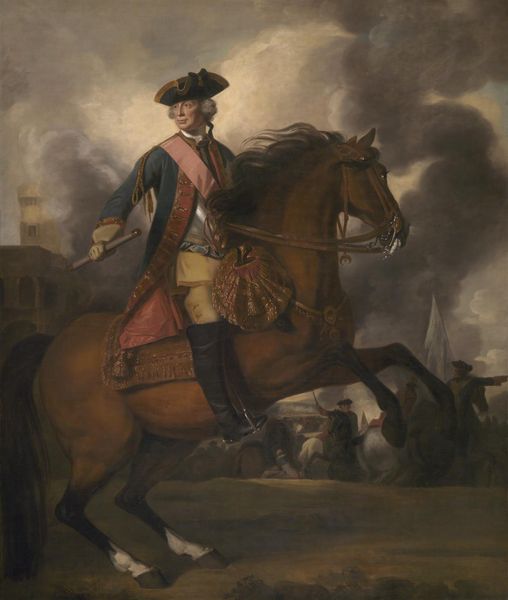
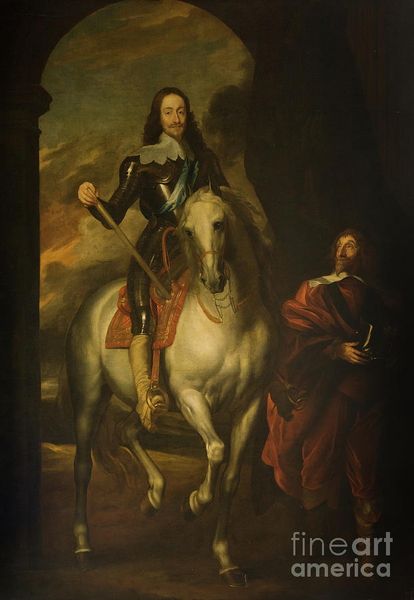
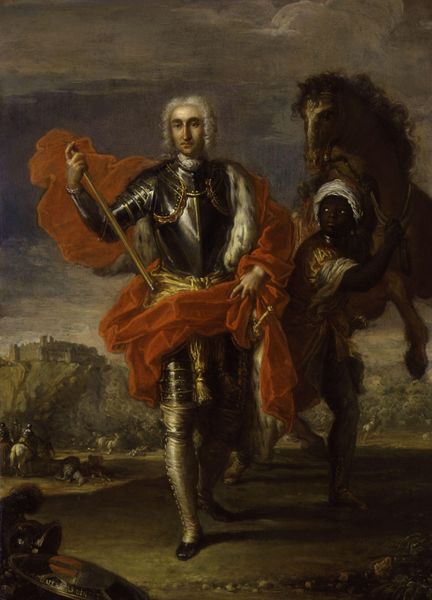
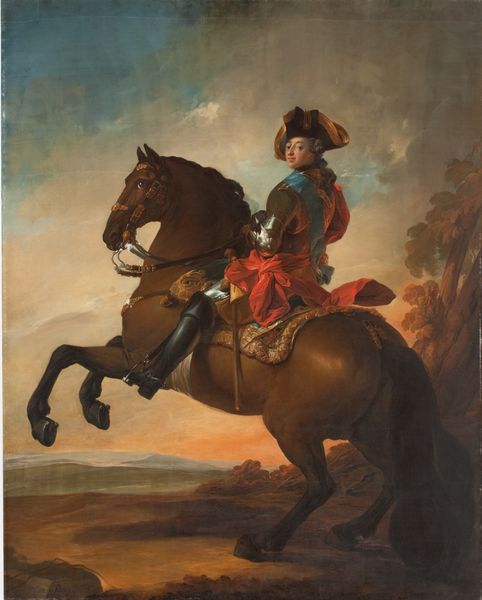
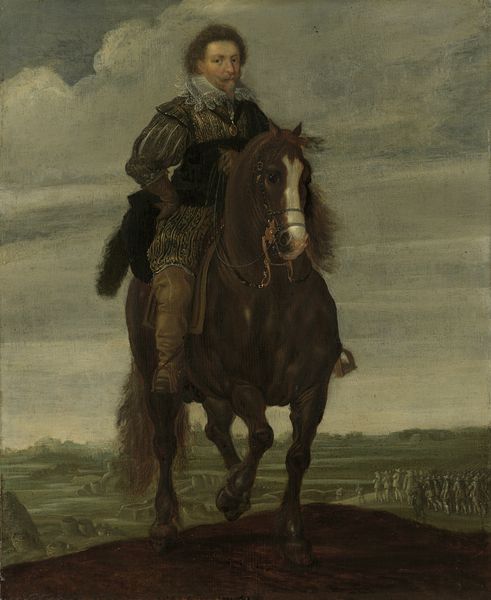
Editor: Here we have Jacques Louis David's "Equestrian portrait of Stanisław Kostka Potocki" from 1781, an oil painting. There's a real sense of stately elegance to it, almost theatrical in its presentation. What can you tell us about the context surrounding this work? Curator: Well, this portrait offers a glimpse into the social and political aspirations of the Polish aristocracy during a turbulent period. The subject, Stanisław Kostka Potocki, was a prominent figure, and his depiction here is less about individual likeness and more about conveying a carefully constructed image of power and enlightened nobility. Consider the classical ruins in the background; how do they function within this portrayal? Editor: It almost feels like setting a stage. Highlighting Potocki's connection to something greater than himself. But did Potocki commission this, aiming for something specific? Curator: Precisely! Portraits like this weren't just records, they were active tools in shaping public perception. The equestrian motif is itself loaded with symbolism. Think about how throughout history, horses have been associated with leadership and control. David is subtly aligning Potocki with that legacy, and furthermore linking Poland to the legacy of leadership from the past. Editor: So the art isn't just *art* here; it's an act of political maneuvering? Curator: Absolutely! Art becomes a form of cultural currency, used to negotiate power dynamics and influence social standing. Consider the Salon system at the time. It wasn't just about taste, but about cultural dominance. How the painting looks visually—academic, smooth, controlled—serves this function perfectly. What did you learn looking closer? Editor: I definitely see the "behind-the-scenes" action that the artist is crafting, more than just aesthetics. Curator: Exactly, it reflects a strategic use of visual language to communicate social and political ambitions within a specific historical context. It makes you look at art, not just as artwork, but how social power plays out.
Comments
No comments
Be the first to comment and join the conversation on the ultimate creative platform.
 Collect
 React
React Comment
More like this