About this artwork
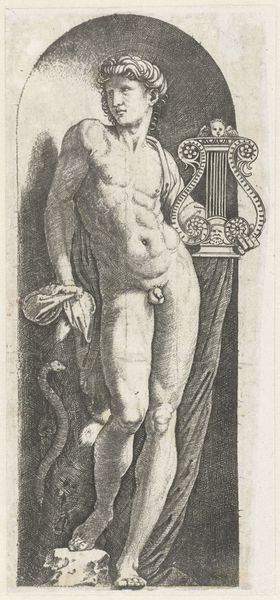
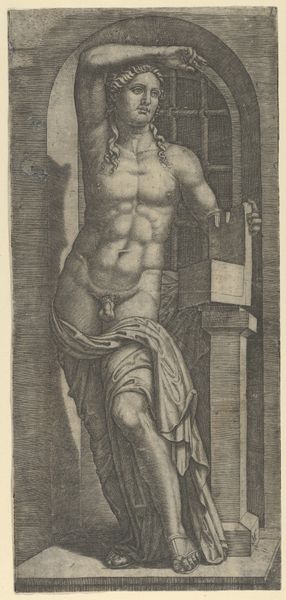
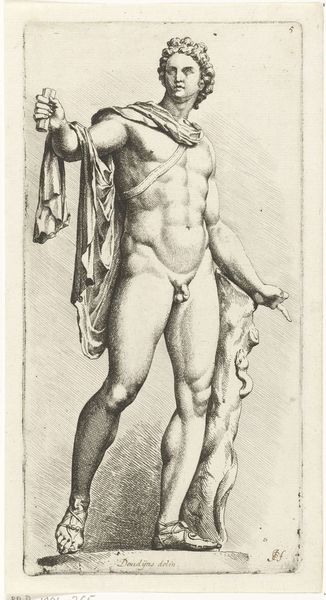
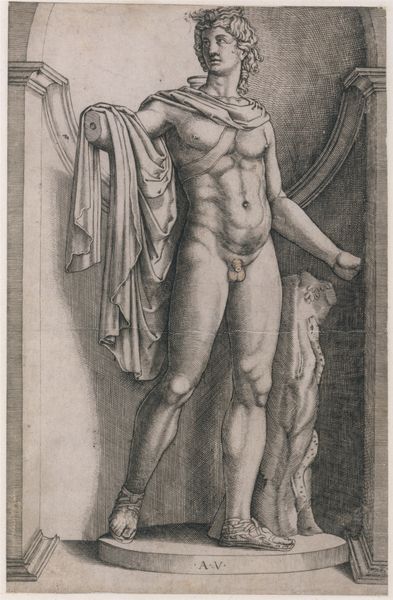
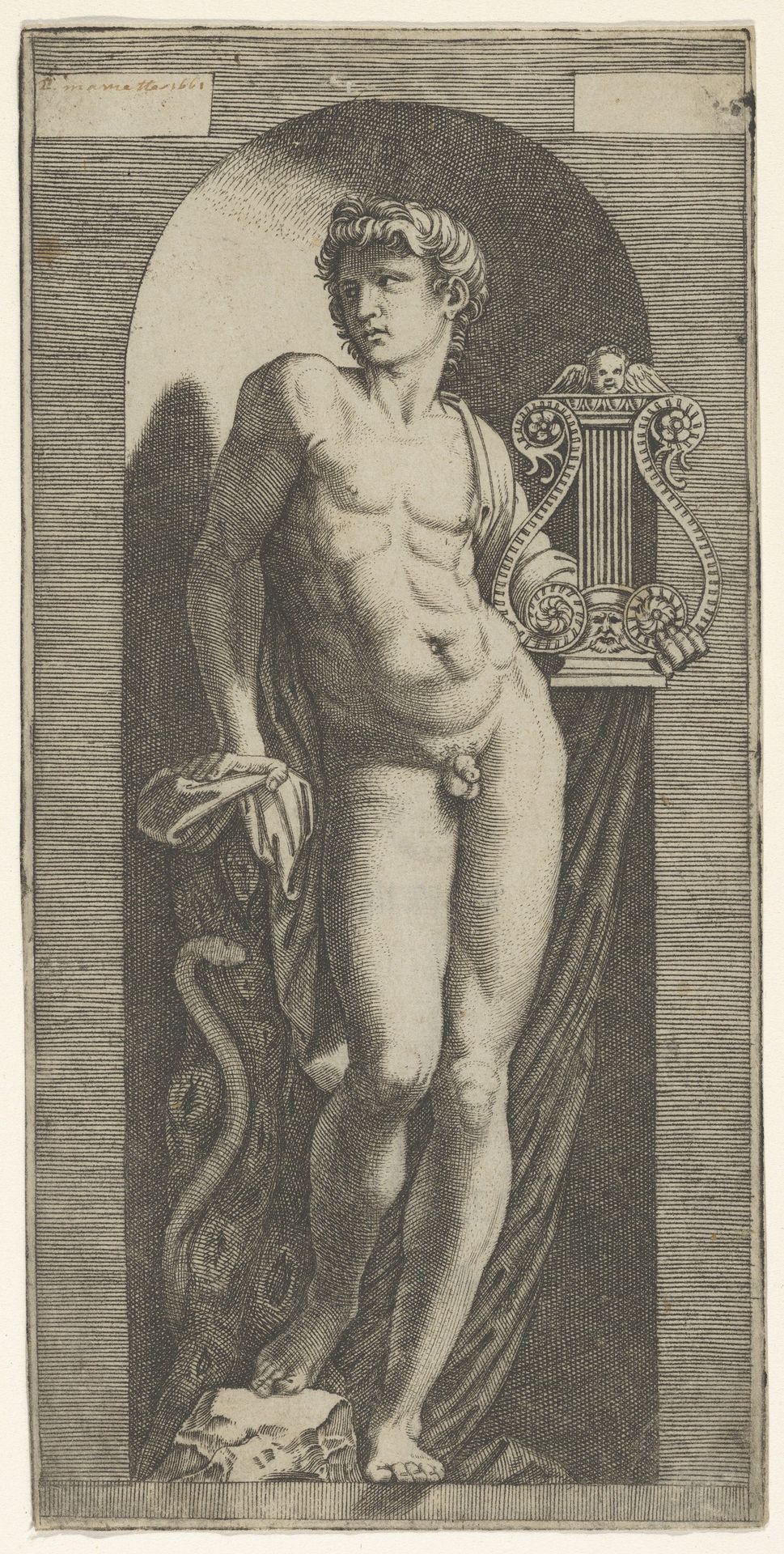
Editor: This is a print made by Marcantonio Raimondi between 1512 and 1515, now at the Met. It depicts a nude Apollo standing in a niche. It's interesting to me how stark and simple the composition is for such a complex mythological figure. What do you see when you look at this work? Curator: I see a fascinating intersection of artistic labor and cultural production. Raimondi was instrumental in popularizing engravings of Raphael's designs. The material process here – the act of translating Raphael’s vision into a reproducible print – speaks to the burgeoning print market and its impact on disseminating artistic ideas. The line work itself reveals the labor involved, doesn’t it? Editor: Absolutely, you can almost feel the artist meticulously etching each line. And it wasn't considered "high art" at the time, was it? Curator: Precisely. Engravings were often viewed as a commercial craft, a means of mass production rather than singular artistic expression. This piece complicates the traditional hierarchy. It blurs the lines between reproduction, authorship, and artistic value. The materials - the paper, the ink, the metal plate - and their transformation through skilled labor is key. It shows that cultural value can arise from production and consumption processes. Where do we position this from an economic perspective? Editor: That makes me think about the demand for these images, like, people wanting to own a piece of the Renaissance without commissioning an original. Curator: Exactly. And who were these consumers? How did this image circulate within different social circles? Consider the labor dynamics. Skilled artisans dedicating hours to reproduce classical ideals for an eager market – an intersection of high culture and mass production that raises vital questions about artistic creation, worth, and dissemination during the Renaissance. Editor: I hadn’t considered the economic implications of printmaking at the time. It’s fascinating to view it through that lens. Curator: It’s a potent reminder that art is inextricably linked to its material and economic context. I hadn’t placed economic questions into my initial viewpoint.
A statue of Apollo, naked standing in a niche, holding a lyre in his left hand and leaning on a tree trunk 1512 - 1515

Marcantonio Raimondi
1475 - 1534
The Metropolitan Museum of Art
Metropolitan Museum of Art, New York, NYArtwork details
- Medium
- drawing, print, engraving
- Dimensions
- 8 11/16 x 4 1/4 in. (22.1 x 10.8 cm)
- Location
- Metropolitan Museum of Art, New York, NY
- Copyright
- Public Domain
Tags
pencil drawn
drawing
allegory
old engraving style
classical-realism
figuration
11_renaissance
history-painting
italian-renaissance
nude
engraving
Comments
No comments
About this artwork
Editor: This is a print made by Marcantonio Raimondi between 1512 and 1515, now at the Met. It depicts a nude Apollo standing in a niche. It's interesting to me how stark and simple the composition is for such a complex mythological figure. What do you see when you look at this work? Curator: I see a fascinating intersection of artistic labor and cultural production. Raimondi was instrumental in popularizing engravings of Raphael's designs. The material process here – the act of translating Raphael’s vision into a reproducible print – speaks to the burgeoning print market and its impact on disseminating artistic ideas. The line work itself reveals the labor involved, doesn’t it? Editor: Absolutely, you can almost feel the artist meticulously etching each line. And it wasn't considered "high art" at the time, was it? Curator: Precisely. Engravings were often viewed as a commercial craft, a means of mass production rather than singular artistic expression. This piece complicates the traditional hierarchy. It blurs the lines between reproduction, authorship, and artistic value. The materials - the paper, the ink, the metal plate - and their transformation through skilled labor is key. It shows that cultural value can arise from production and consumption processes. Where do we position this from an economic perspective? Editor: That makes me think about the demand for these images, like, people wanting to own a piece of the Renaissance without commissioning an original. Curator: Exactly. And who were these consumers? How did this image circulate within different social circles? Consider the labor dynamics. Skilled artisans dedicating hours to reproduce classical ideals for an eager market – an intersection of high culture and mass production that raises vital questions about artistic creation, worth, and dissemination during the Renaissance. Editor: I hadn’t considered the economic implications of printmaking at the time. It’s fascinating to view it through that lens. Curator: It’s a potent reminder that art is inextricably linked to its material and economic context. I hadn’t placed economic questions into my initial viewpoint.
Comments
No comments