1820
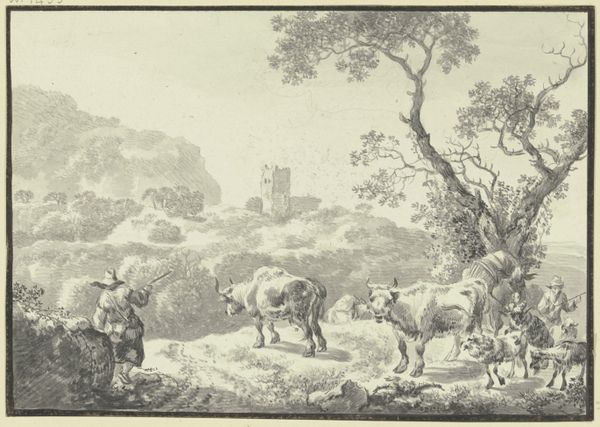
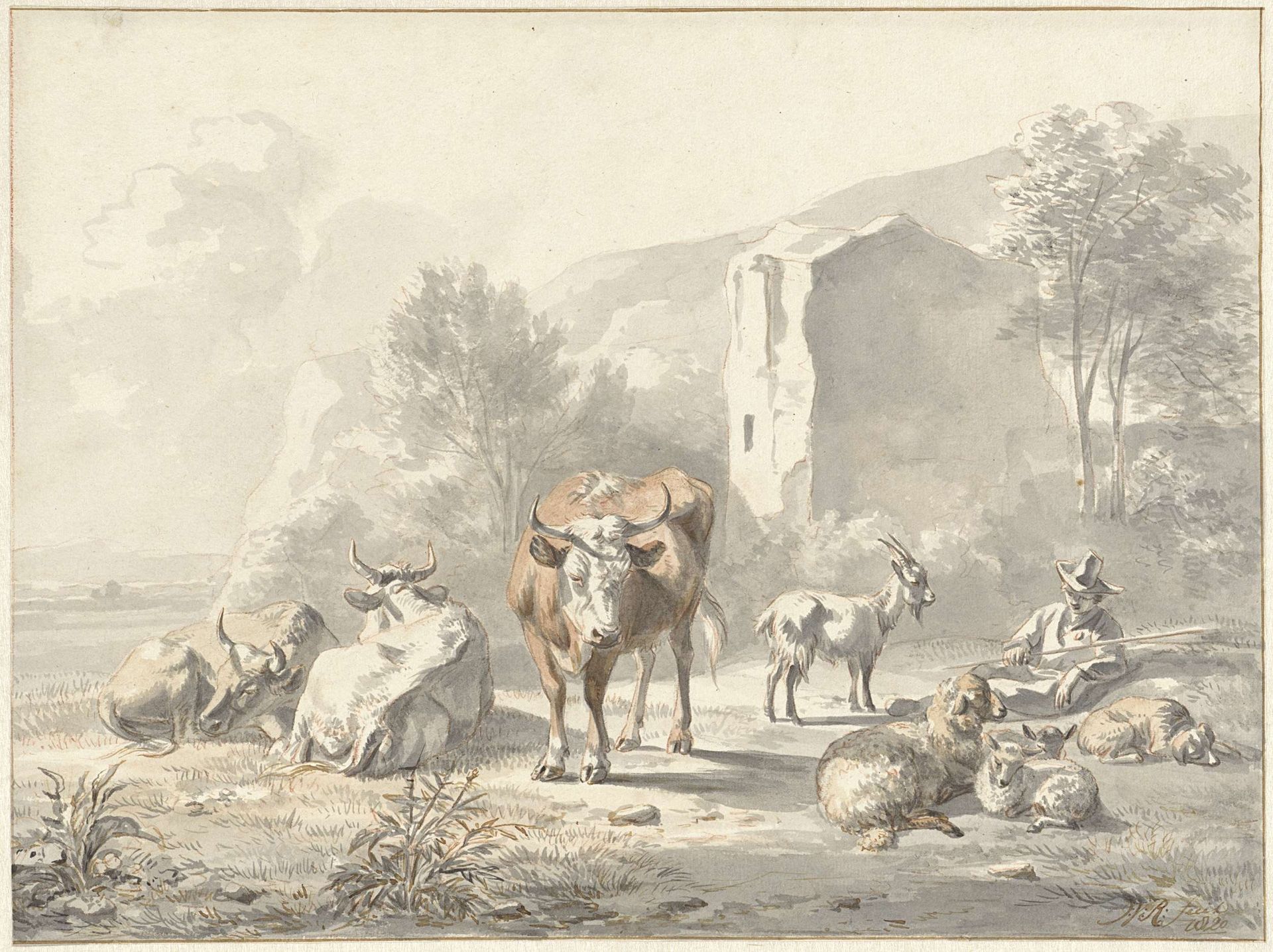
Landschap met vee en ruïne

Listen to curator's interpretation
Curatorial notes
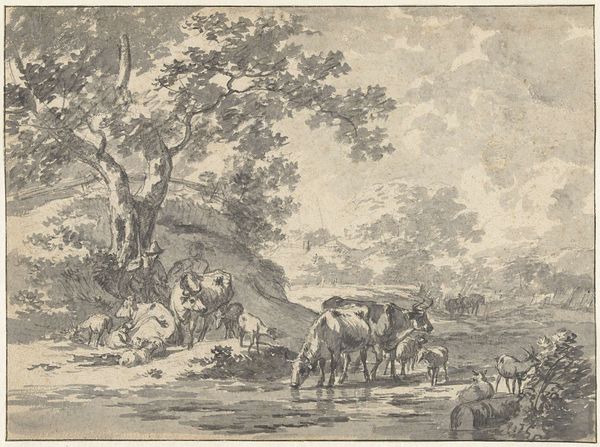
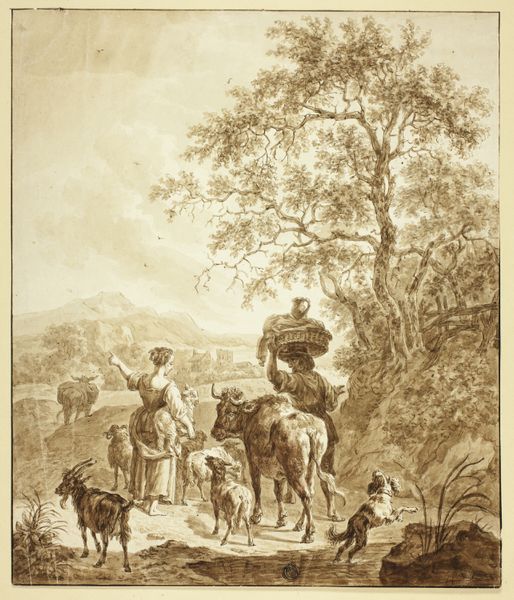
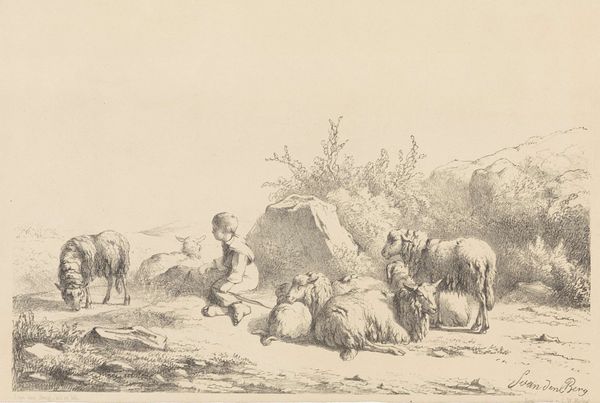
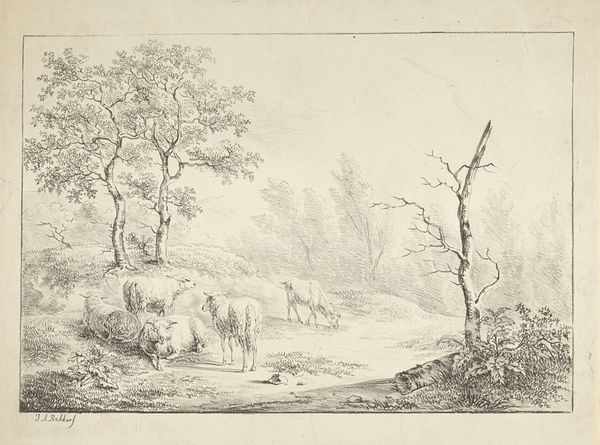
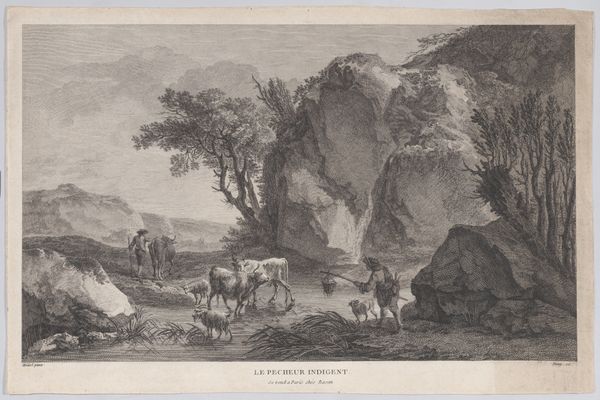
This is ‘Landscape with Cattle and Ruins’ by Jan van Ravenswaay. It is a drawing made with pen in gray ink. The artwork shows us more than just a peaceful pasture. Cows have been linked to early mother goddesses throughout history, and we find sheep in Christian symbolism to represent innocence. See how this man blends into the landscape, passively watching his animals; his presence evokes a connection to the pastoral tradition of Arcadia. The ruin in the distance is key: it reminds us of the fleeting nature of human achievement, while the natural world continues undisturbed. In classical art, ruins were often used to evoke a sense of nostalgia for a bygone era, but also to invite reflection on the cycles of history. Such ruin is a reminder of humanity's collective memory and its potential for melancholic reflection. These symbols—of life, innocence, and the passage of time—recur throughout art history, constantly evolving and reshaping, but retaining their emotional power.