

n.d.
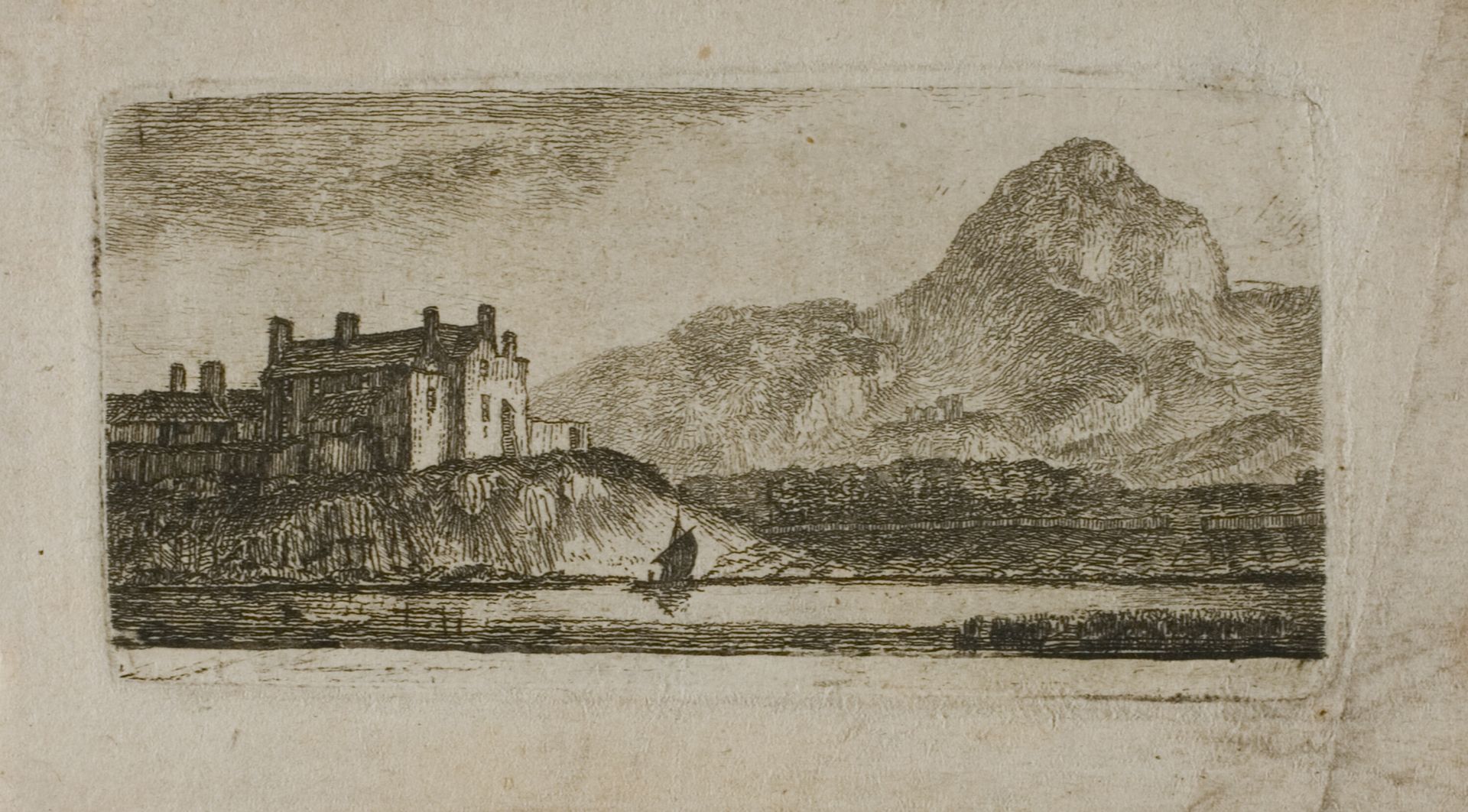
Arthur's Seat


Listen to curator's interpretation
Curatorial notes
Curator: This etching is titled "Arthur's Seat," created by John Clerk of Eldin. The artwork, rendered on paper, resides here at The Art Institute of Chicago. Editor: Hmm. I am immediately struck by its modesty, its small size, and the tremendous sense of space it manages to evoke nonetheless. It’s wistful and sort of melancholy. Curator: That pensiveness aligns, I think, with Clerk's broader artistic motivations. He was interested in capturing not just a scene, but the sublime feelings evoked by landscape, specifically those that echoed throughout Scotland. Editor: Well, it's succeeding. Knowing Arthur's Seat as I do—as a place steeped in Arthurian legend and a vital site of geological and botanical significance—it’s interesting to view it via the lens of someone seemingly distant, almost detached. You see the landscape filtered through the burgeoning aesthetic of Romanticism, where it became acceptable, even fashionable, to idealize raw, rugged nature. It represents a pivot from agricultural uses towards concepts of wilderness. Curator: Right, the Romantics sought to explore the inner self through immersion in the natural world. But let's remember, there's an intellectual and scientific element here as well. Clerk was very invested in portraying geology and atmospheric effects realistically, he wasn’t just painting pretty scenery, right? Editor: And, crucially, access to that romanticised wilderness remains extremely unevenly distributed. While people may yearn for the vast open, unspoiled spaces, those aspirations remain tethered to our respective positions within socio-economic hierarchies. Arthur’s Seat can seem an escapist fantasy in such a frame. Curator: Very true. Still, I see something enduringly tender about this work. It reminds me that nature writing—landscape painting too, perhaps—at its core seeks to reconnect us to our surroundings. To remind us we are but small pieces of something much larger and more beautiful, that surpasses individual concerns, which can be pretty powerful and reassuring. Editor: And to me, this tiny artwork hints at all those layers, all that inherent tension. Its strength lies not just in what it shows but also what it subtly questions. Thank you for this conversation! Curator: A thought-provoking viewpoint indeed. Thank you!