print, etching
etching
old engraving style
genre-painting
rococo
Dimensions: height 215 mm, width 288 mm
Copyright: Rijks Museum: Open Domain
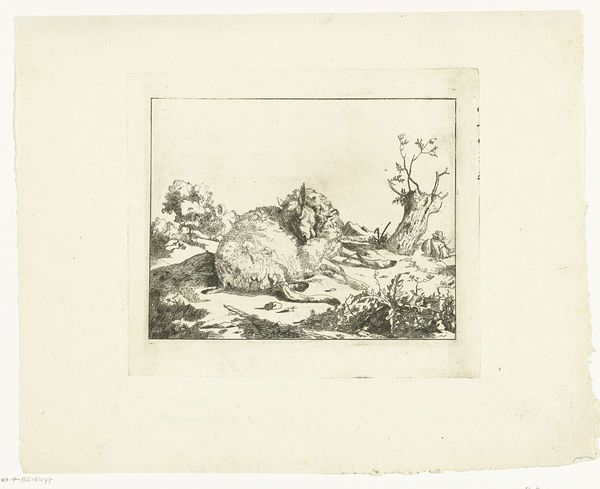
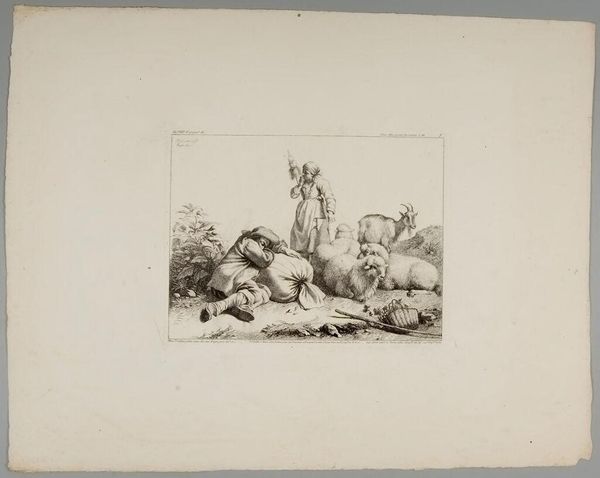
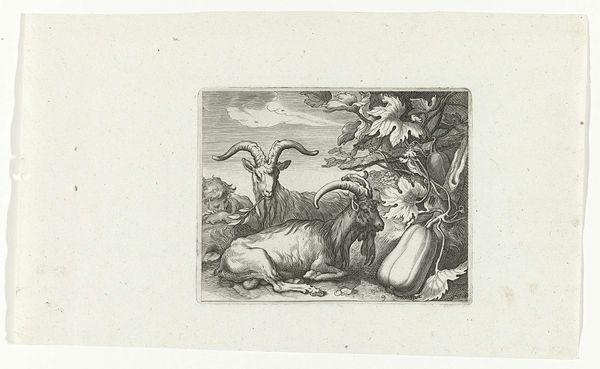
Editor: Here we have "Liggende schapen en geit," or "Lying Sheep and Goat," an etching by Gilles Demarteau from sometime between 1732 and 1776. It's got a sepia tone and depicts, well, sheep and a goat! What do you see in this seemingly simple genre scene? Curator: The simplicity you observe is precisely where the cultural memory resides. The Rococo era, of which this work is an example, played with the idyllic, often using pastoral scenes to evoke a sense of leisure and connection to nature, even for those far removed from rural life. Do you notice how the etching medium itself lends a certain delicacy and almost ephemeral quality? Editor: Yes, it feels very light and airy, not heavy at all. Is there any significance to having a goat among sheep, or am I reading too much into it? Curator: Ah, excellent question! The goat disrupts the visual harmony. In classical symbolism, goats are associated with wildness, untamed nature, even lust. By inserting this figure, Demarteau introduces a subtle tension, a reminder that even in the most peaceful settings, the potential for disruption exists. What emotional impact does this juxtaposition create for you? Editor: It does add an interesting dynamic. I initially saw it as just a tranquil scene, but the goat hints at something else, a sort of... restlessness, maybe? Curator: Precisely! This etching, therefore, becomes more than just a pleasant image. It's a carefully constructed symbol that speaks to deeper human experiences and societal tensions masked by outward appearances. It’s a reminder that visual imagery can often hide emotional complexity beneath a surface of calm. Editor: I wouldn't have guessed there was so much to unpack from some resting farm animals! I'll definitely look closer at seemingly simple images from now on.
Comments
No comments
Be the first to comment and join the conversation on the ultimate creative platform.
 React
React Comment