About this artwork
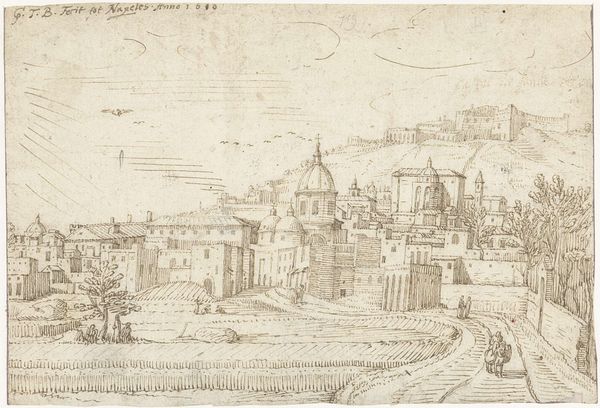
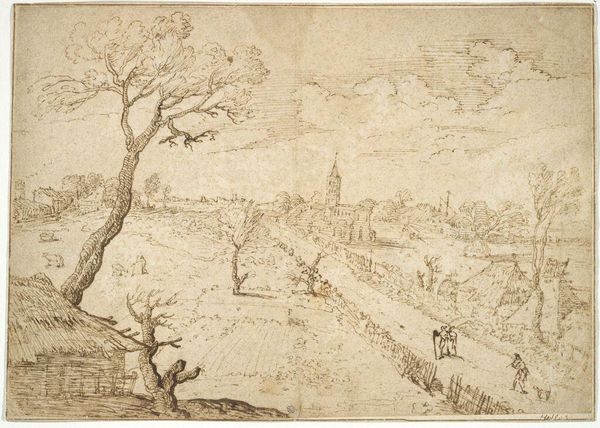
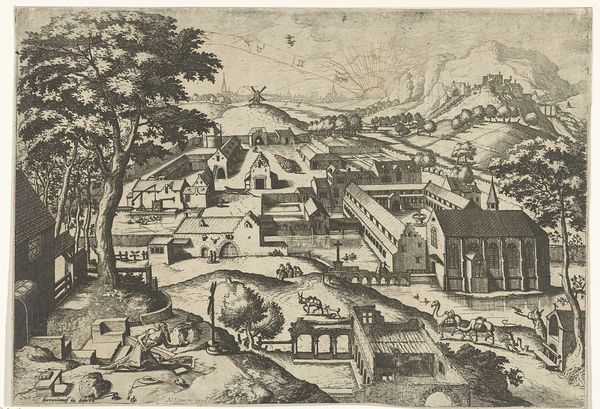
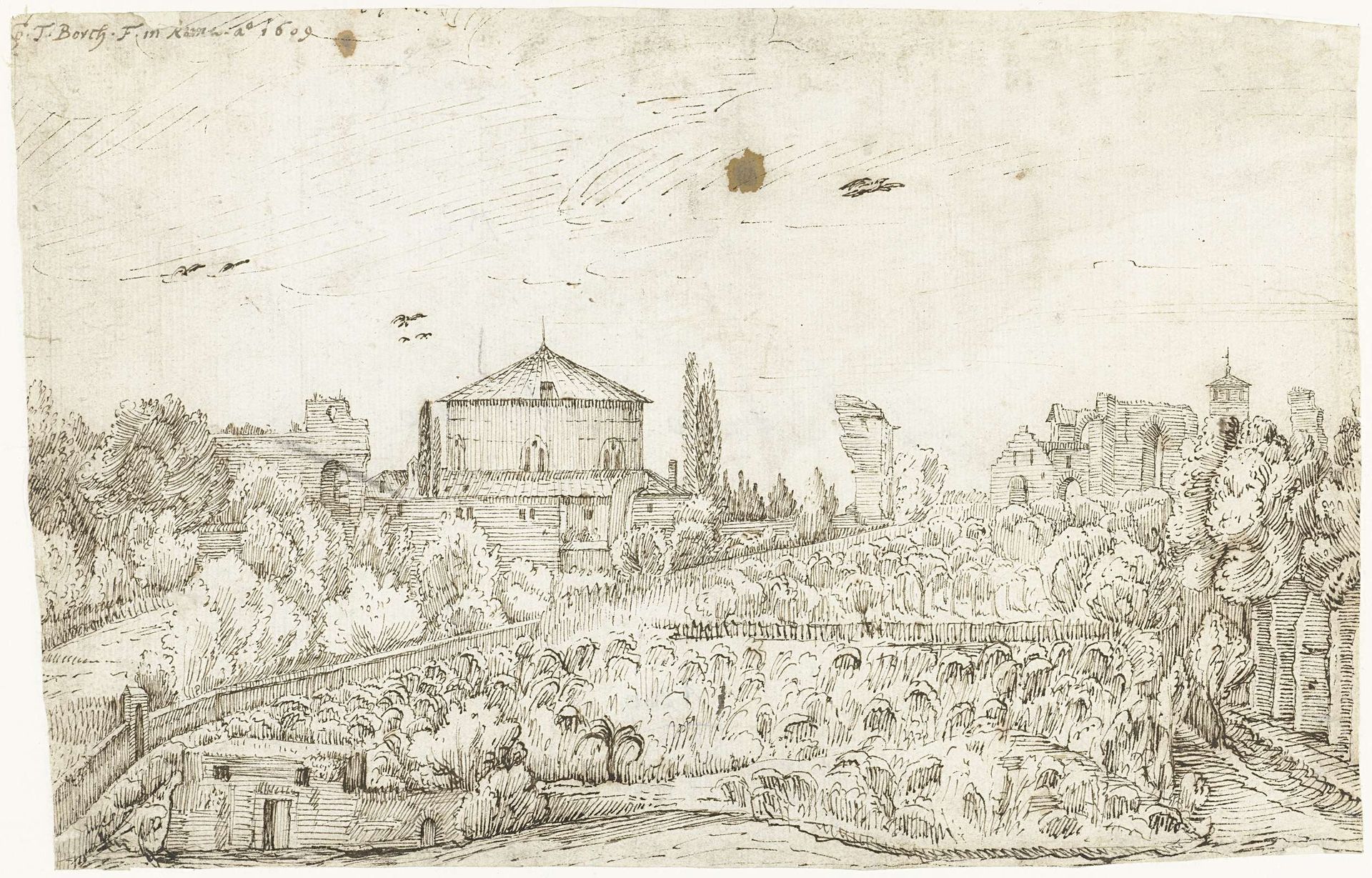
Gerard ter Borch's pen and brown ink drawing offers a northern view of the San Stefano Rotondo in Rome. The drawing presents a study in contrasts, where delicate, thin lines define the architectural forms against the soft, textured vegetation. The San Stefano Rotondo, centrally placed, commands attention through its geometric clarity, a round structure of simple lines and precise angles. The artist employs a structural approach, using lines to construct a scene that's both representational and interpretive. The texture of the foliage is suggested through a series of repeated marks, creating a visual rhythm that complements the static nature of the building. This method of contrasting architectural precision with organic looseness challenges fixed meanings and offers new ways of seeing space. Ultimately, the drawing invites us to reflect on how simple lines and forms function as part of a larger cultural dialogue, open to ongoing interpretation and re-interpretation.
Gezicht op de San Stefano Rotondo, Rome, vanuit het noorden
1609

Gerard ter (I) Borch
1584 - 1662Location
RijksmuseumArtwork details
- Medium
- drawing, ink
- Dimensions
- height 165 mm, width 258 mm
- Location
- Rijksmuseum
- Copyright
- Rijks Museum: Open Domain
Tags
Comments
Share your thoughts
About this artwork
Gerard ter Borch's pen and brown ink drawing offers a northern view of the San Stefano Rotondo in Rome. The drawing presents a study in contrasts, where delicate, thin lines define the architectural forms against the soft, textured vegetation. The San Stefano Rotondo, centrally placed, commands attention through its geometric clarity, a round structure of simple lines and precise angles. The artist employs a structural approach, using lines to construct a scene that's both representational and interpretive. The texture of the foliage is suggested through a series of repeated marks, creating a visual rhythm that complements the static nature of the building. This method of contrasting architectural precision with organic looseness challenges fixed meanings and offers new ways of seeing space. Ultimately, the drawing invites us to reflect on how simple lines and forms function as part of a larger cultural dialogue, open to ongoing interpretation and re-interpretation.
Comments
Share your thoughts