c. 1954 - 1955
Congressional 16


Listen to curator's interpretation
Curatorial notes
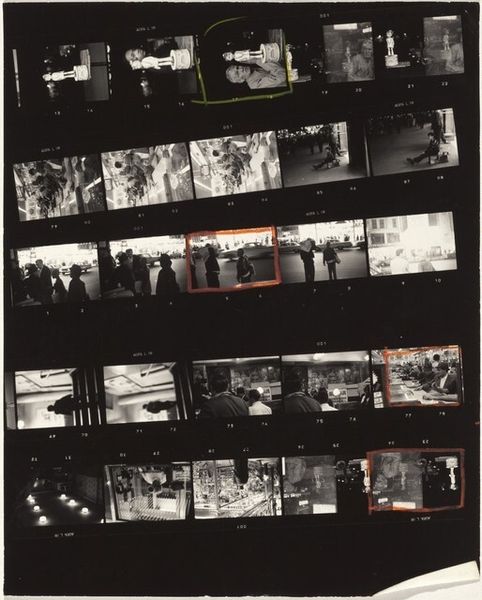
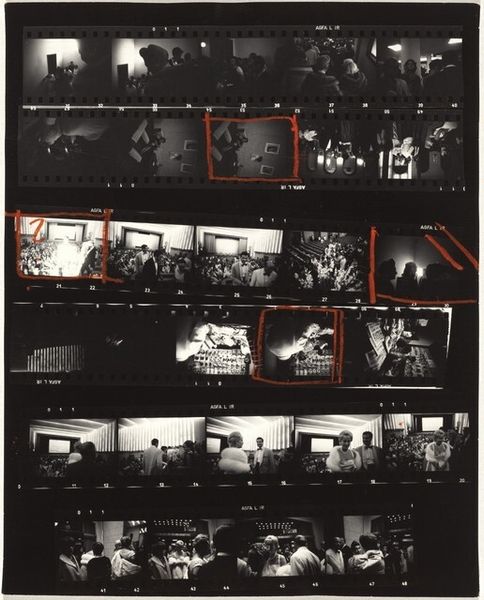
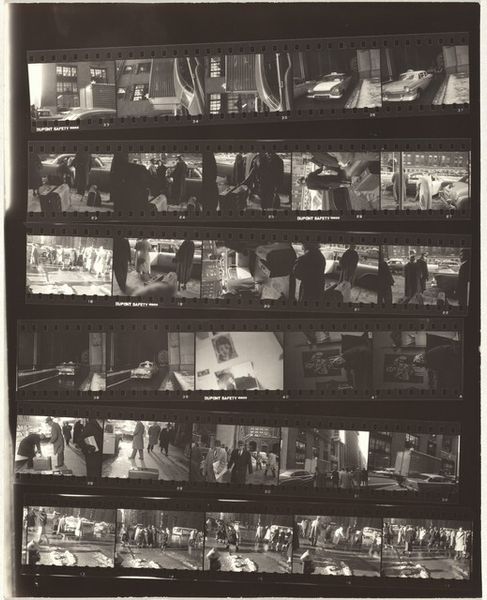
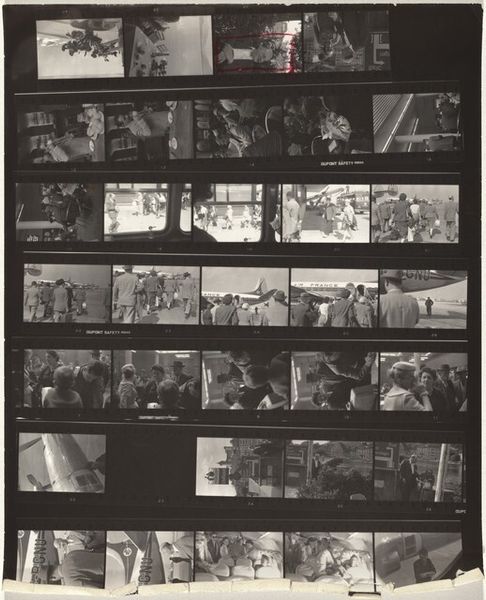
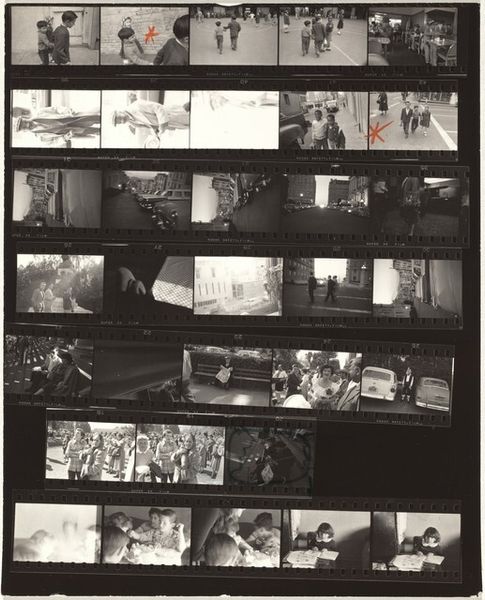
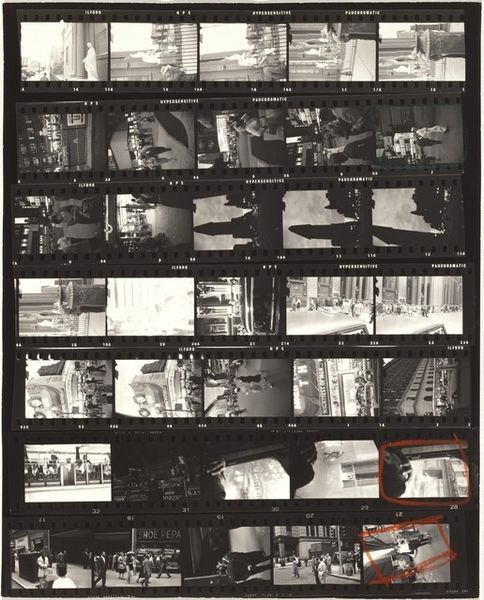
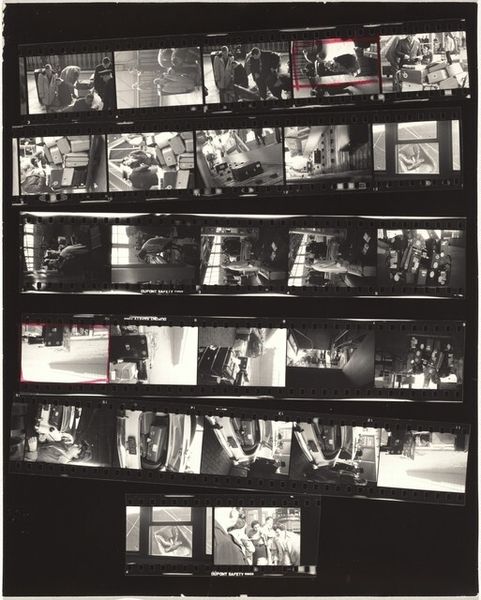
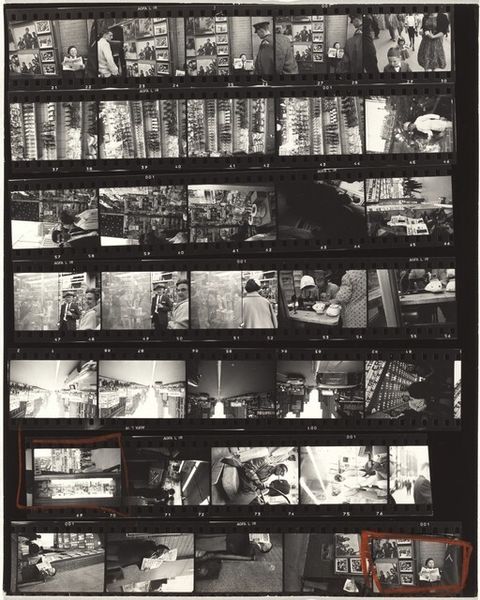
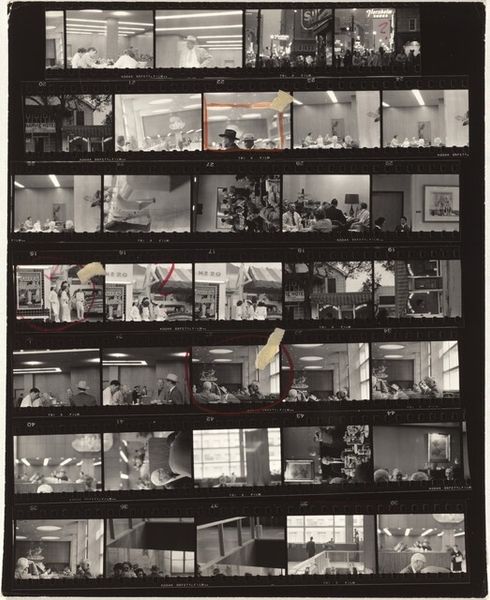
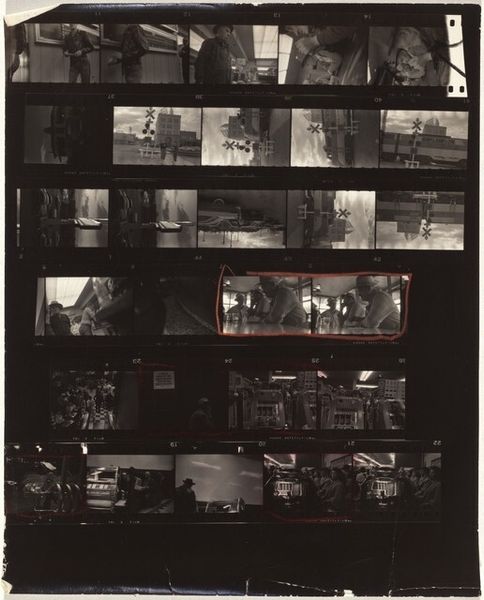
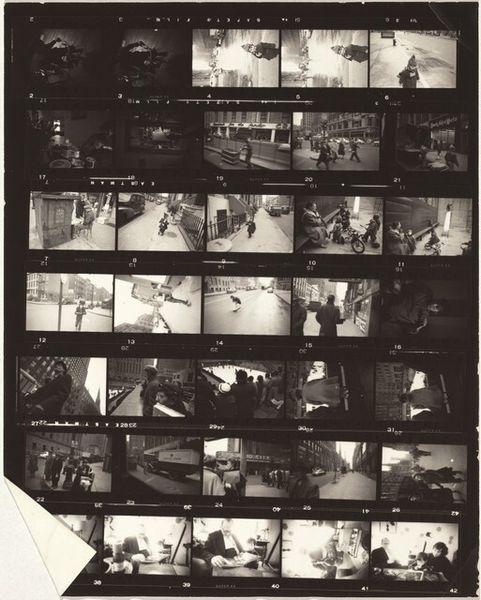
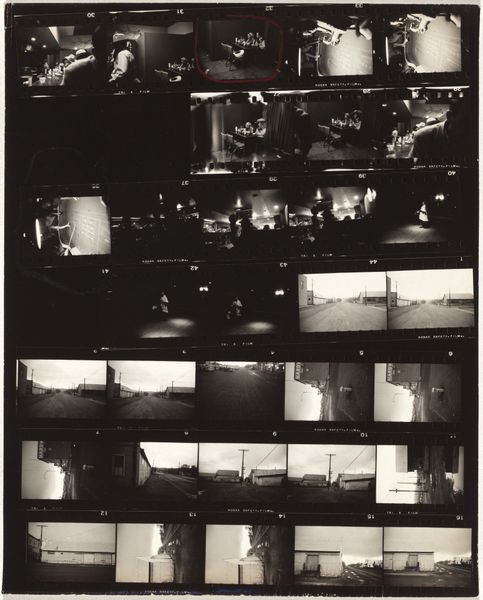
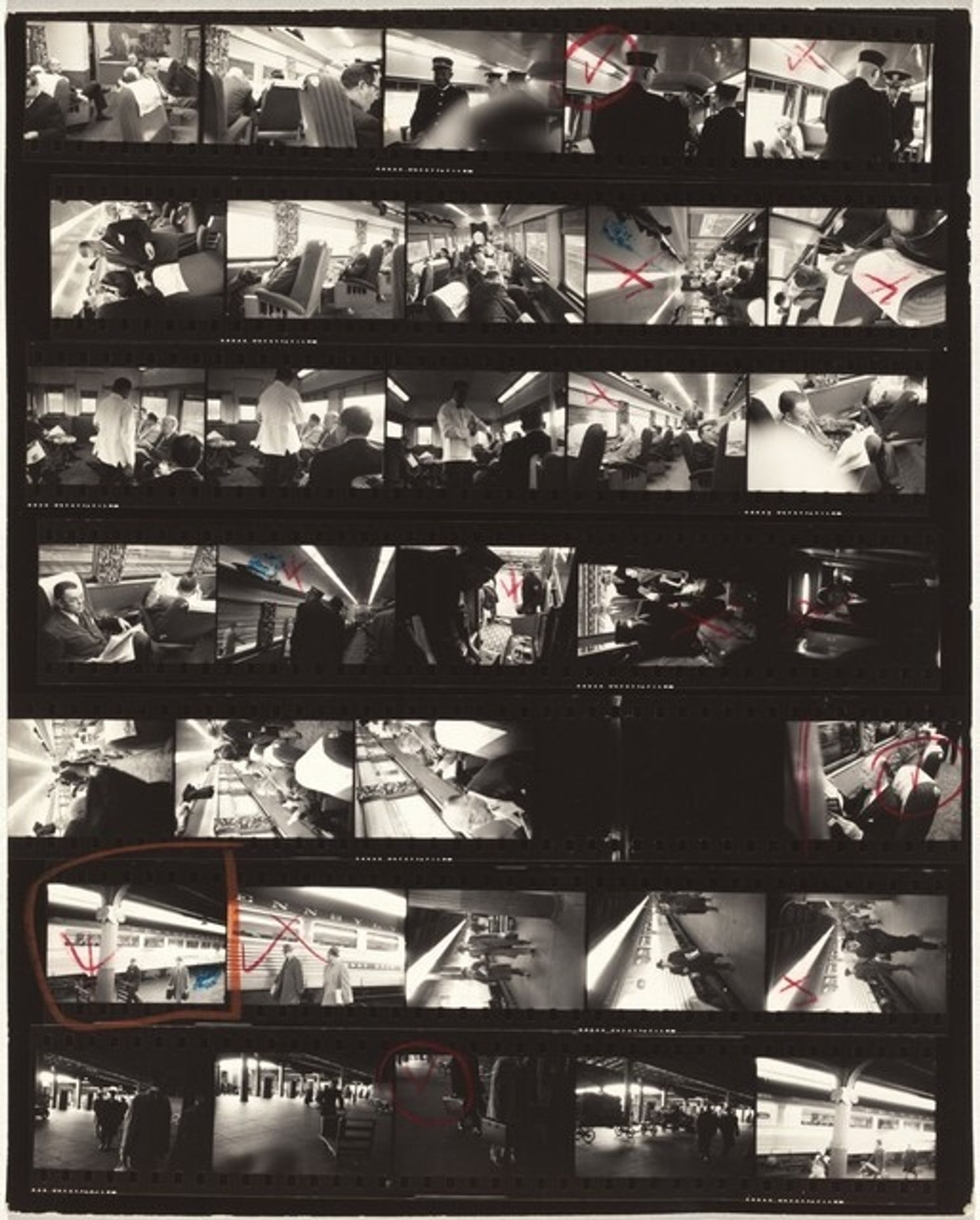
Editor: We're looking at Robert Frank’s “Congressional 16,” a gelatin-silver print from around 1954 or 1955. It's a contact sheet with many images of passengers on a train and some scenes from what appears to be a train station, with several images marked with an "X". It makes me wonder about the choices he made when curating his famous book *The Americans.* What do you see in this contact sheet? Curator: What I see here is a fascinating insight into Frank's editorial process, and perhaps more broadly, the socio-political context of 1950s America. This contact sheet shows outtakes from his project *The Americans* a project made possible with funds from a Guggenheim Fellowship. Think about what Frank, as a Swiss immigrant, was capturing. Editor: What do you mean? Curator: Well, he received criticisms for the "un-American" perspective portrayed in his work; this sheet reflects his grappling with American society, particularly regarding themes of social class, race, and consumer culture during a time of intense political polarization. Those "X" marks are more than mere editing choices; they highlight the suppression or exclusion of certain narratives. Editor: So, he was purposefully documenting the disparities he witnessed? Curator: Precisely! And deciding which of those glimpses made the final cut speaks volumes about his message, as well as the social constraints influencing it. Think about who gets a voice, whose images are circulated, and how art can challenge established norms. Editor: That gives me a whole new way to look at these images. I see Frank using his work to engage with important cultural themes and not just simply archiving mid-century life. Curator: Indeed! And by studying the outtakes and his choices, we are given the chance to ask, who has the power to determine whose story is told, and who is silenced?