#
landscape illustration sketch
#
ink drawing
#
pen sketch
#
pencil sketch
#
incomplete sketchy
#
ink drawing experimentation
#
pen-ink sketch
#
pencil work
#
pencil art
#
fantasy sketch
Dimensions: height 1024 mm, width 689 mm
Copyright: Rijks Museum: Open Domain
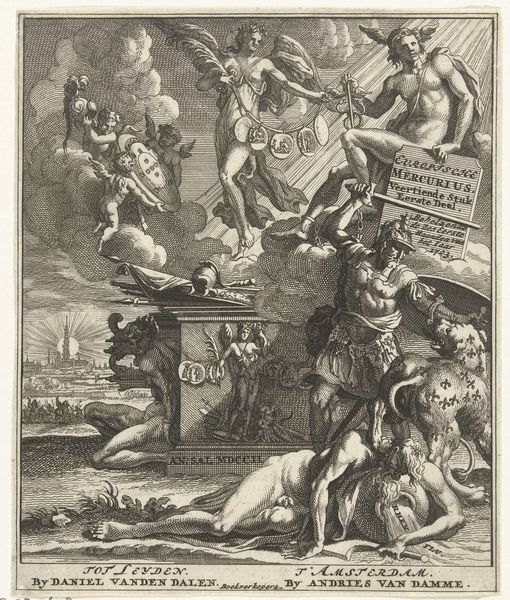
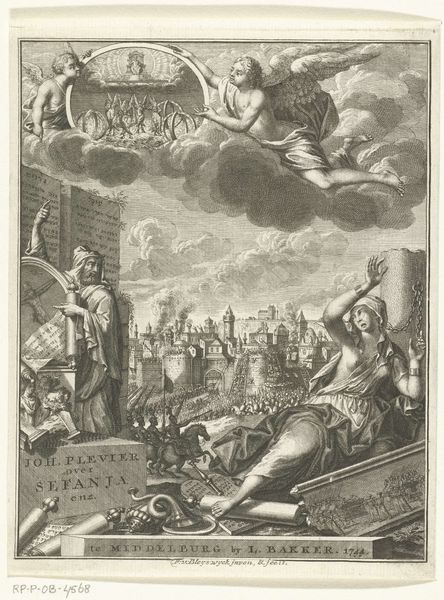
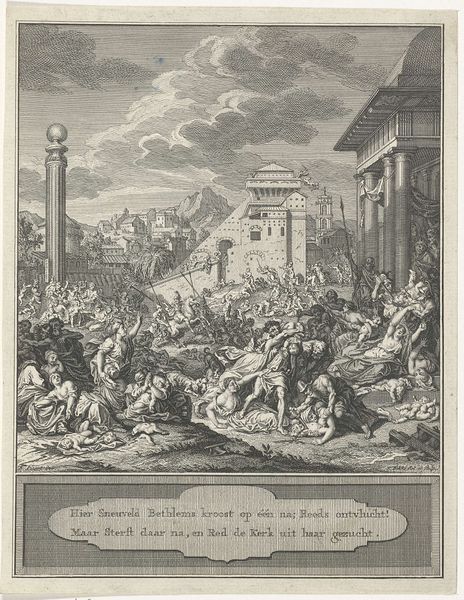
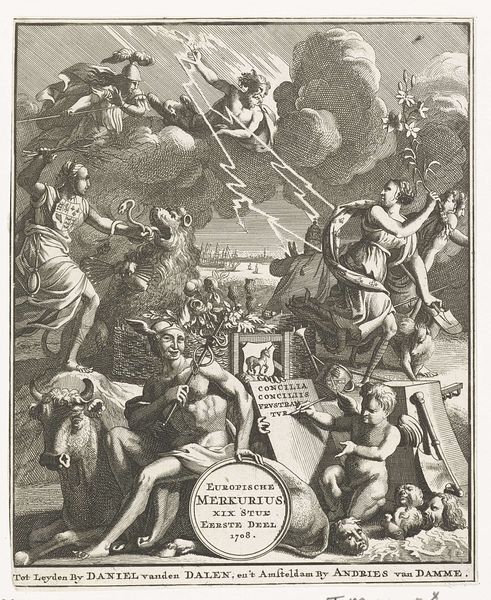
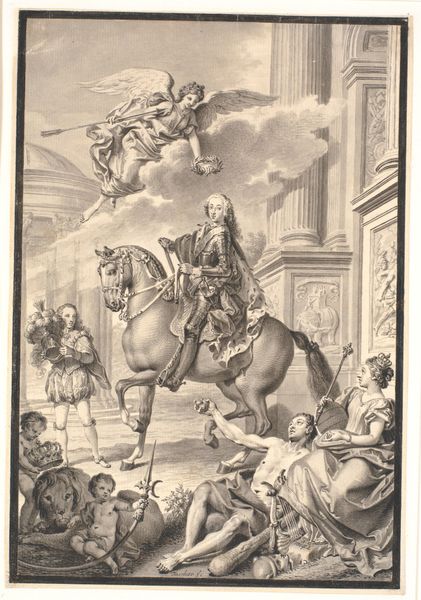
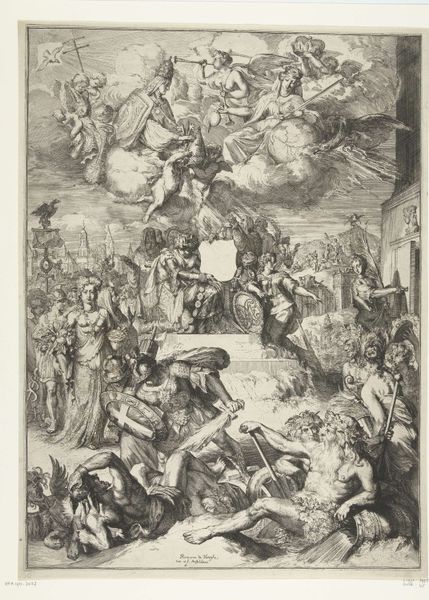
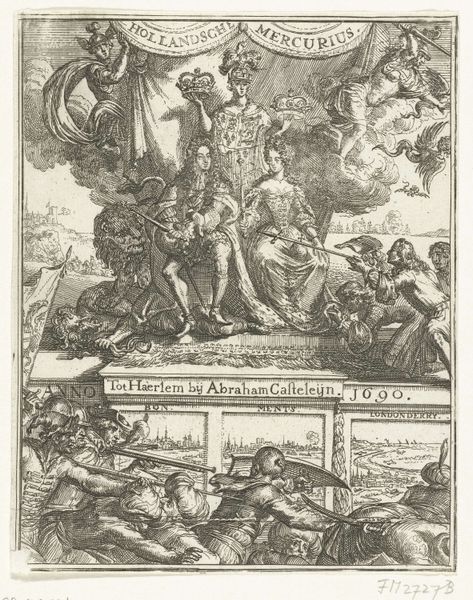
Curator: Here we have a promotional print of Claudius von Collalto, created in 1645, currently residing in the Rijksmuseum. Editor: My first thought is, what an intricate piece of craftsmanship! The sheer detail achieved through lines is remarkable, almost overwhelming. It feels like the labor involved must have been extensive. Curator: Indeed. Considering the context, Collalto was a significant military figure during the Thirty Years' War. The print functions as a form of propaganda, carefully constructing his image and legacy through various visual cues. The cherubs, the imposing architecture, even his lineage hinted at by the figures – it all builds a narrative of power and divine right. Editor: Absolutely. And let’s look closer at the materials, the inks and the paper. Think about the engraver, likely Paulus Pontius, and their access to materials and the printing process itself. There's a direct link to social power at play here; who gets to be memorialized and how. And who profits from the creation and dissemination of this image? Curator: A very relevant question. Consider also how the portrayal of power normalizes certain societal structures. The imagery of the ruling class is carefully constructed to seem natural and ordained, a process in which artistic production plays a vital role. Note how the artist is reinforcing particular gender roles and social hierarchies in the arrangement of the family. Editor: I also keep coming back to the repetition in the text blocks held by these small angelic figures. Is there some deeper level that can be extracted when examining the work this imagery puts in versus merely decoding it? Curator: That’s a sharp observation. The texts indeed demand interpretation and likely served to emphasize Collalto’s virtues and achievements. Considering feminist theory, how much does this imagery reinforce a patriarchal system that excludes diverse perspectives and solidifies male authority through art? Editor: Right, and if we start digging, perhaps we can examine the production chains and understand who might have labored, not out of nobility, but economic desperation, to manufacture this portrait. Curator: Thinking about the long-term impact, such works contribute to historical narratives that may need to be deconstructed in contemporary discussions of equality and representation. Editor: Exactly. This wasn't just aesthetic creation; it was also about the socio-political economy. Investigating the relationship between art and labor creates the space to consider how our current cultural landscape has been influenced by this image. Curator: Examining how art influences broader historical perceptions gives insight into modern power dynamics, prompting considerations regarding agency and the stories being communicated now. Editor: It provides the basis from which to pose some relevant questions of material origins and cultural reproduction, giving us valuable tools with which to engage these works and ask, ‘Who profits and at what cost?’
Comments
No comments
Be the first to comment and join the conversation on the ultimate creative platform.
 Collect
 React
React Comment
More like this