About this artwork
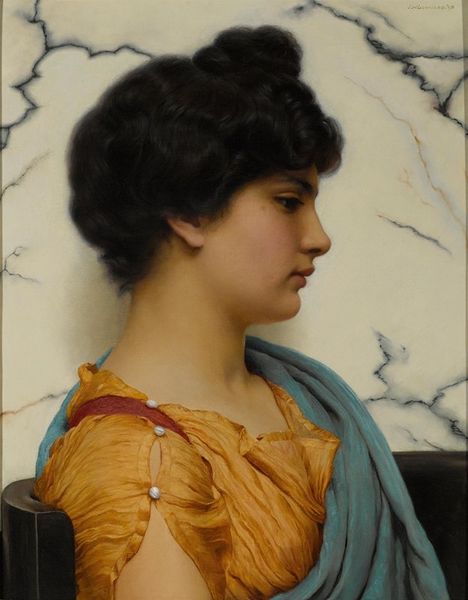
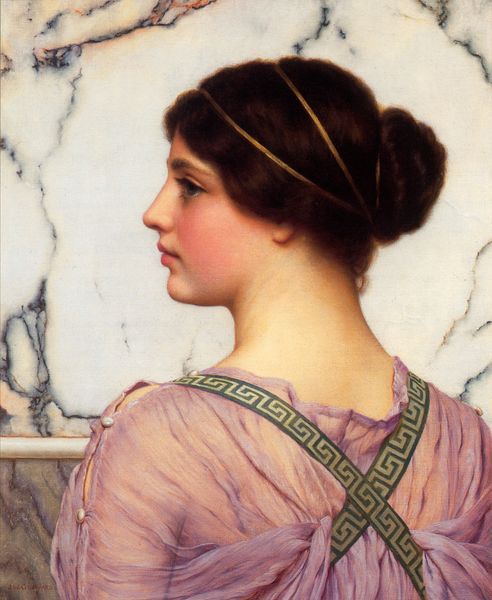
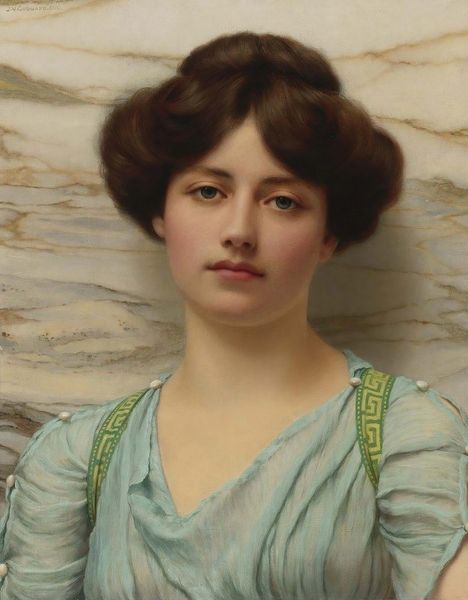
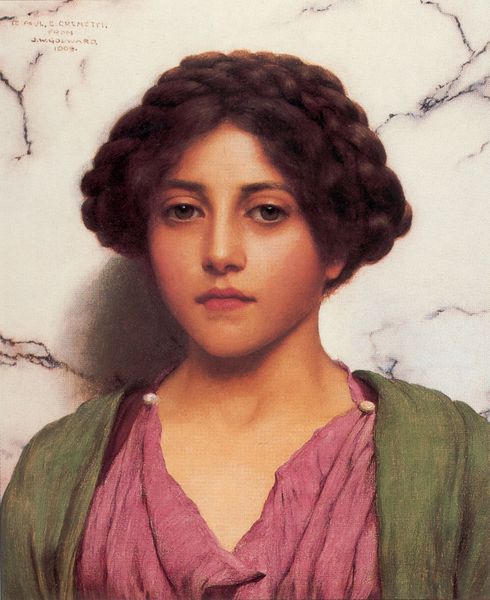
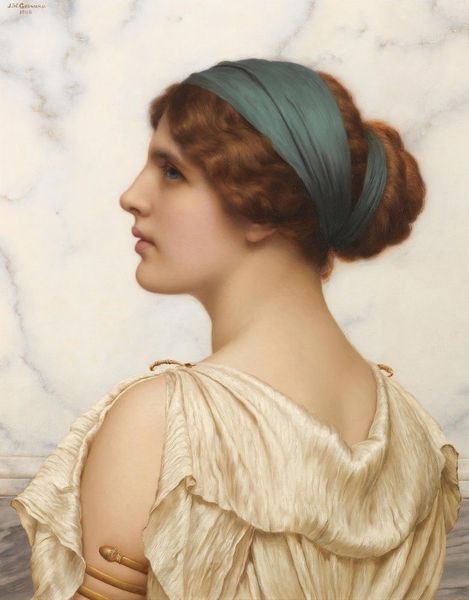
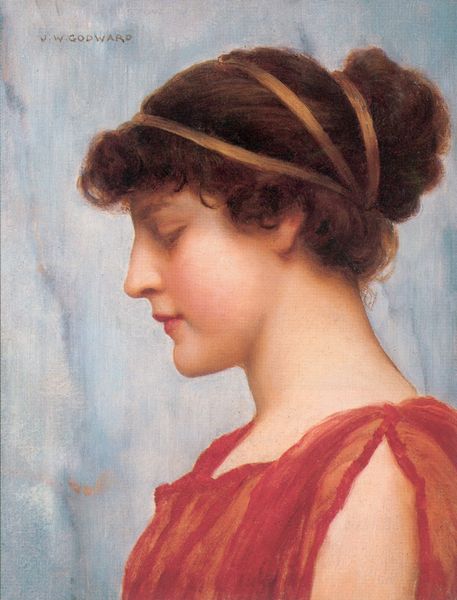
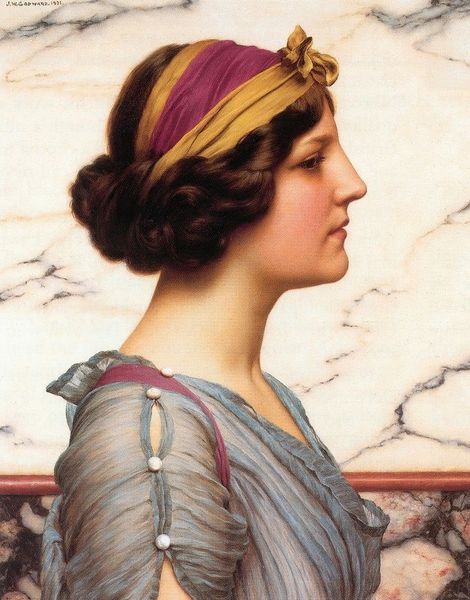
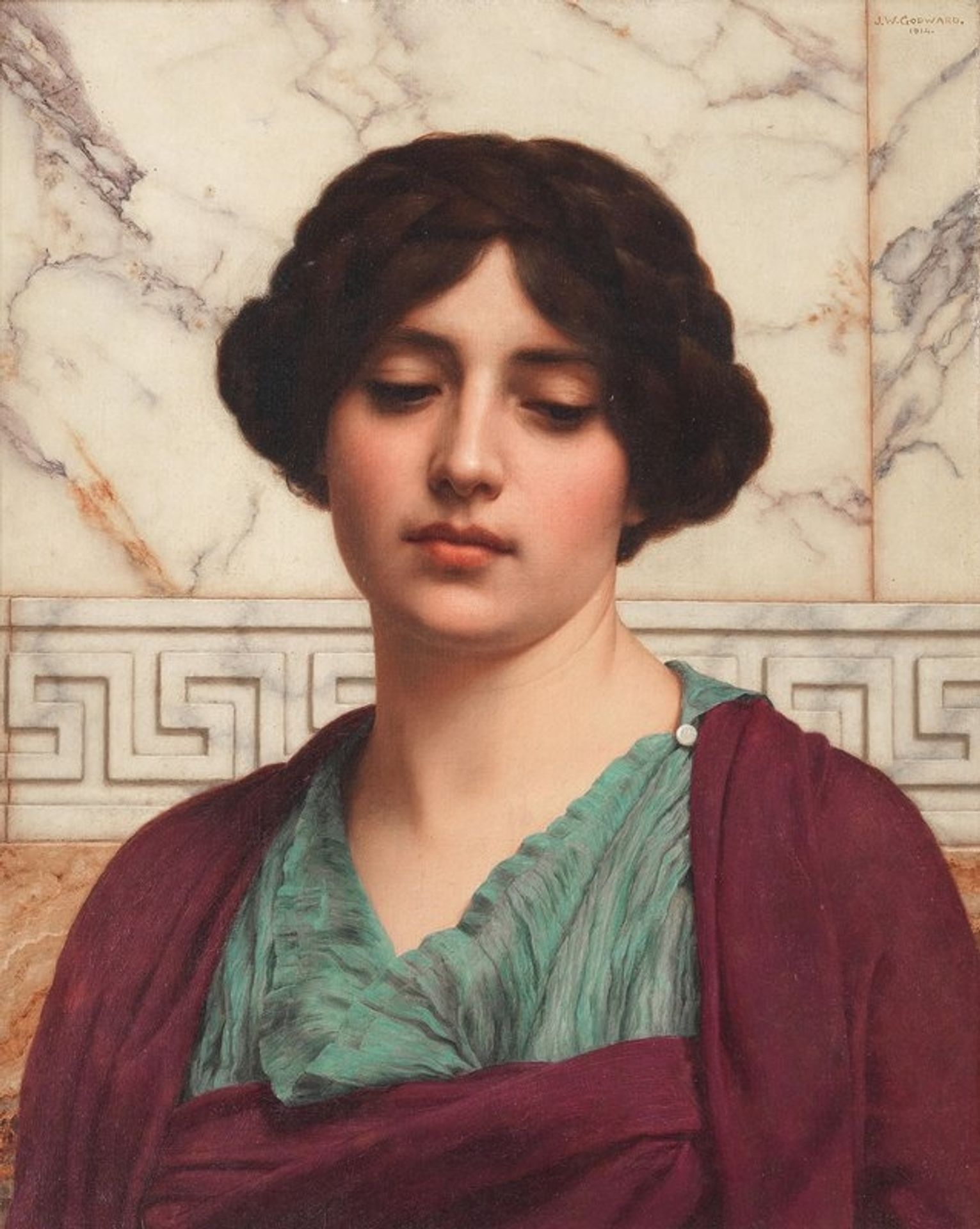
Editor: This is John William Godward’s “Stesicrate,” painted in 1914. There's such a melancholic air to her, like she's caught in a moment of quiet contemplation. What catches your eye when you look at it? Curator: The symbols speak volumes. The marble, the meander pattern—these aren't just decorative; they’re deliberate allusions to classical antiquity. They evoke a cultural memory, a longing for an idealized past. And that lowered gaze, does it suggest resignation or quiet defiance? It’s potent. Editor: Defiance? I mostly see a subdued acceptance. Curator: Perhaps. But think about the period. In 1914, the world was on the brink of war. Could this painting be an allegory for a world about to be lost, clinging to the values of the past? That cool color palette even adds a sense of foreboding. What do you make of the subject's simple attire? Editor: It makes her seem accessible. Not idealized like a goddess, but human. Curator: Precisely! Godward walks a line between classical idealism and realistic portraiture. He gives us a woman steeped in history, yet palpably present. A figure caught between worlds, echoing a sentiment perhaps very current to audiences then, and even now. Editor: I never considered how contemporary anxieties could seep into something that seems so rooted in the past. Curator: Art always holds a mirror, doesn't it? It reflects not just the subject, but also the anxieties and aspirations of its time. “Stesicrate” invites us to ponder our own relationship with history and beauty. Editor: It definitely gives me a lot to think about. It's amazing how much history and emotion can be packed into one image.

Artwork details
- Medium
- painting, oil-paint
- Copyright
- Public Domain: Artvee
Tags
Comments
Share your thoughts
About this artwork
Editor: This is John William Godward’s “Stesicrate,” painted in 1914. There's such a melancholic air to her, like she's caught in a moment of quiet contemplation. What catches your eye when you look at it? Curator: The symbols speak volumes. The marble, the meander pattern—these aren't just decorative; they’re deliberate allusions to classical antiquity. They evoke a cultural memory, a longing for an idealized past. And that lowered gaze, does it suggest resignation or quiet defiance? It’s potent. Editor: Defiance? I mostly see a subdued acceptance. Curator: Perhaps. But think about the period. In 1914, the world was on the brink of war. Could this painting be an allegory for a world about to be lost, clinging to the values of the past? That cool color palette even adds a sense of foreboding. What do you make of the subject's simple attire? Editor: It makes her seem accessible. Not idealized like a goddess, but human. Curator: Precisely! Godward walks a line between classical idealism and realistic portraiture. He gives us a woman steeped in history, yet palpably present. A figure caught between worlds, echoing a sentiment perhaps very current to audiences then, and even now. Editor: I never considered how contemporary anxieties could seep into something that seems so rooted in the past. Curator: Art always holds a mirror, doesn't it? It reflects not just the subject, but also the anxieties and aspirations of its time. “Stesicrate” invites us to ponder our own relationship with history and beauty. Editor: It definitely gives me a lot to think about. It's amazing how much history and emotion can be packed into one image.
Comments
Share your thoughts