1859
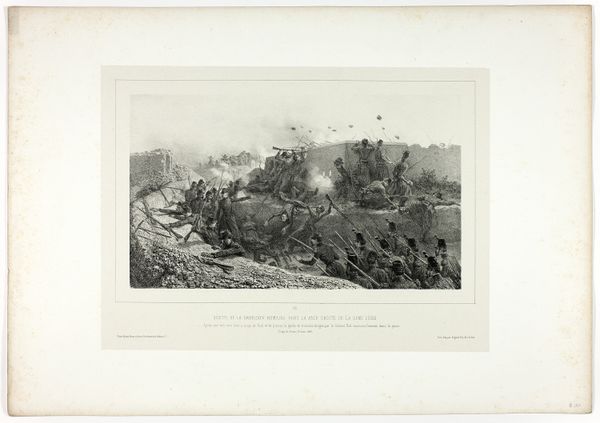
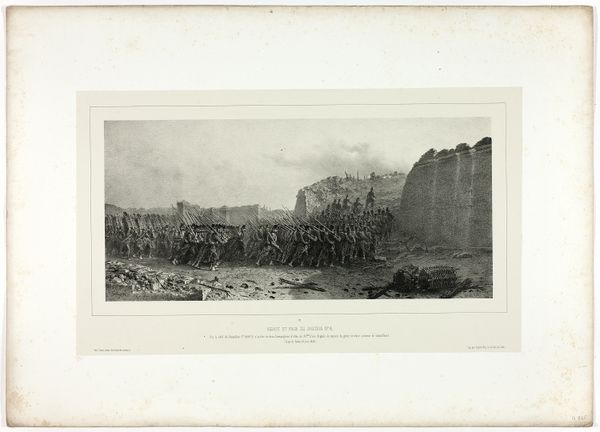
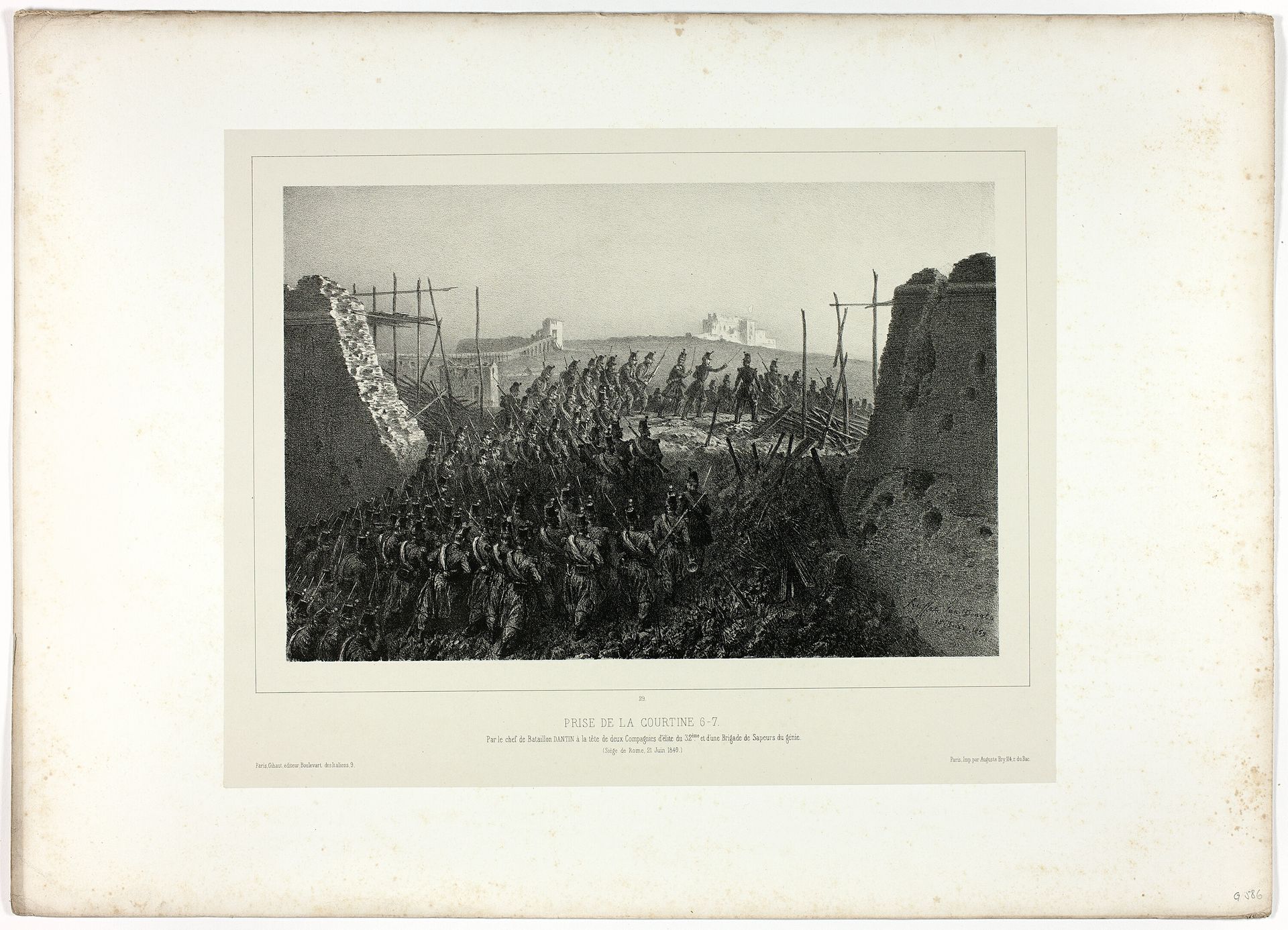
Capture of the Courtine 6-7, from Souvenirs d’Italie: Expédition de Rome


Listen to curator's interpretation
Curatorial notes
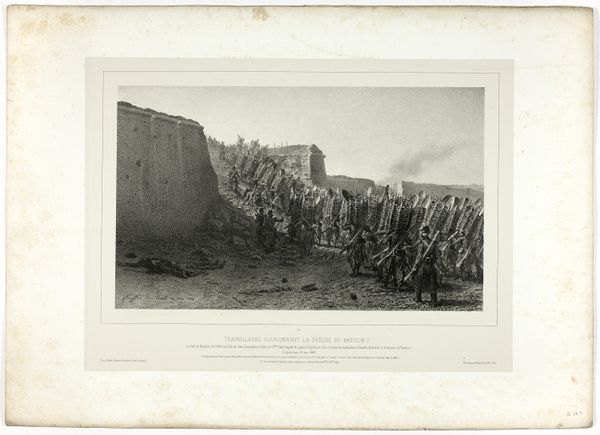
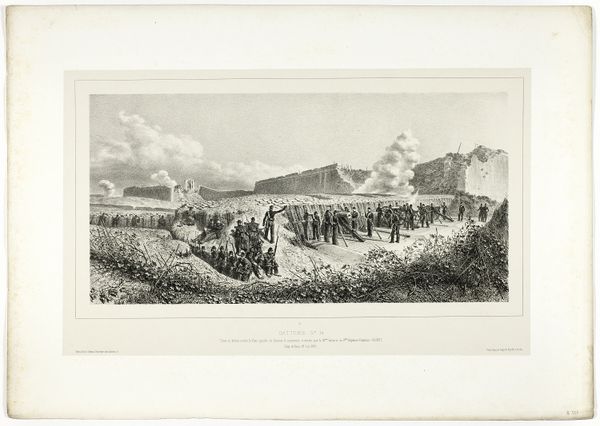
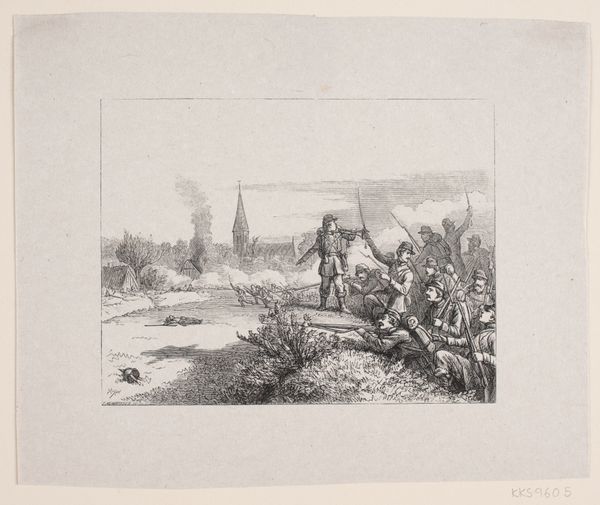
Auguste Raffet's "Capture of the Courtine 6-7," is a print, made using lithography. The process involves drawing on a flat stone with a greasy crayon, then treating the stone so that ink adheres only to the drawn areas. What we see is a dramatic clash: French soldiers storming a barricade. Raffet masterfully uses lithography's tonal range to create depth and texture. Notice the densely packed figures in the foreground, rendered with fine lines, contrasting with the blurred background. But it's not just what is shown, it’s the how. Lithography, a relatively new technology in the 19th century, allowed for the mass production of images. In this case, it served a political purpose, glorifying military action for public consumption. Consider the labor involved in producing such prints, not just by the artist, but also the printers, distributors, and consumers. This piece reflects how printmaking democratized image-making, yet also served the powerful. By understanding the materials, the making, and the context, we gain a deeper appreciation of Raffet's work, challenging any strict boundaries between art, craft, and social commentary.