About this artwork
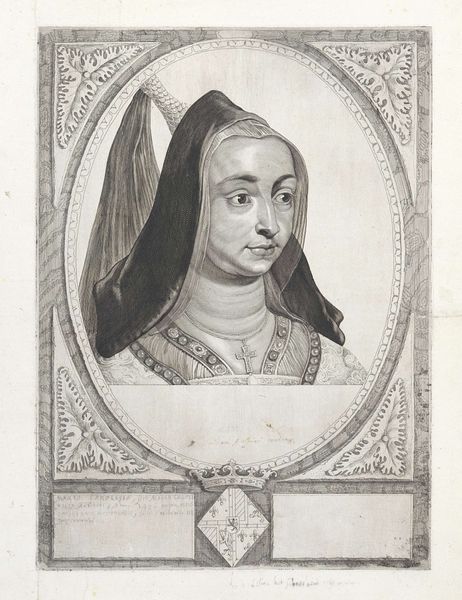
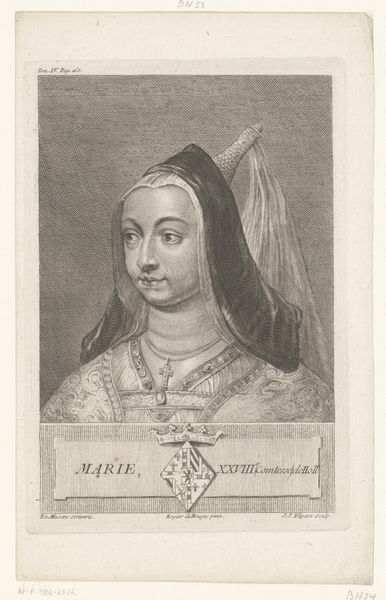
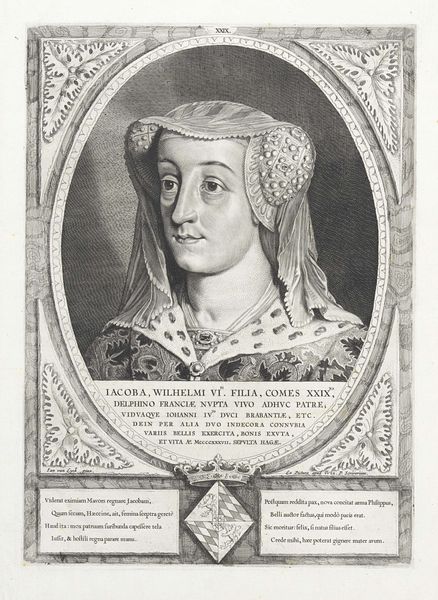
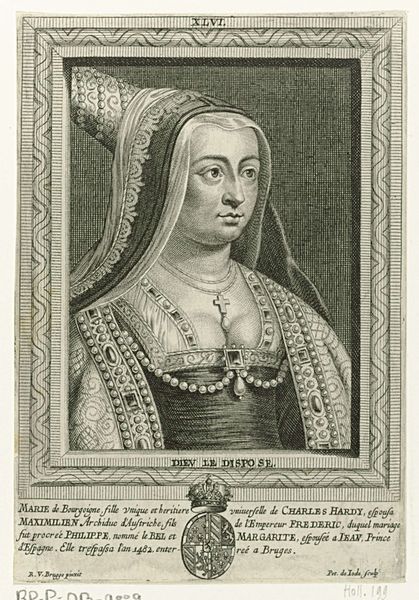
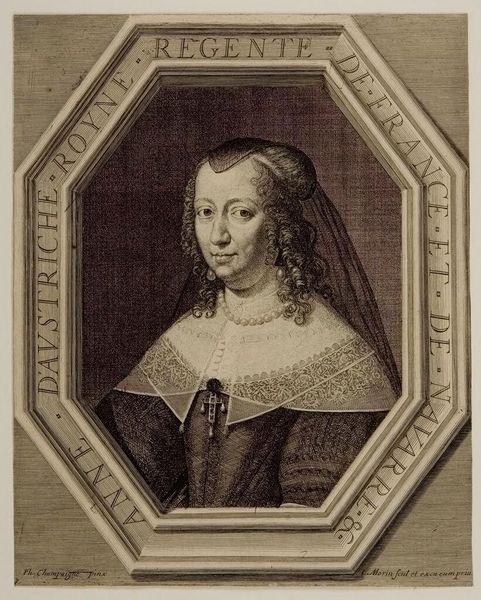
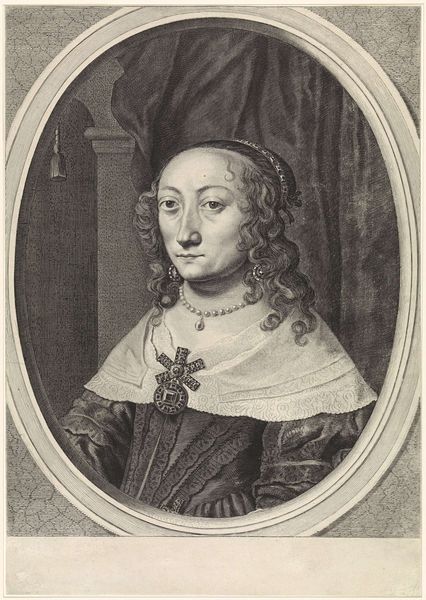
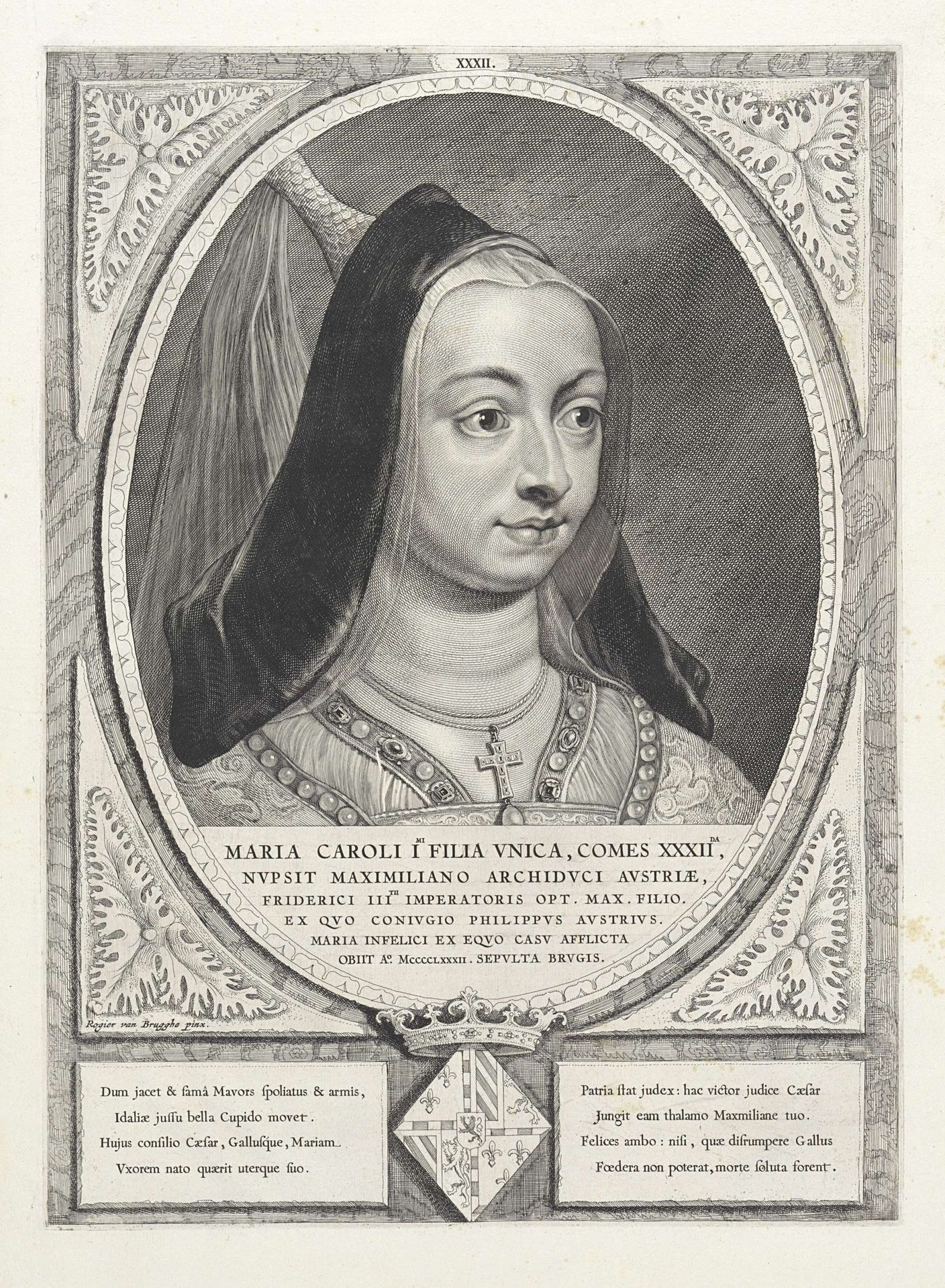
This engraving, made by Cornelis Visscher around the mid-17th century, presents a formal portrait of Maria, Duchess of Burgundy, encased within an oval frame. The composition employs a stark contrast between the dark, solid areas of her headdress and the delicate, detailed lines used to render her face and attire. Visscher masterfully uses line work to suggest depth and texture, particularly noticeable in the intricate patterns of the frame and the subtle shading of Maria's features. The oval format, typical of portraiture of the era, serves to isolate and elevate the subject, creating a sense of formality and timelessness. The structural arrangement—the figure centered, framed, and balanced—speaks to the conventions of representation and power. Here, the artist navigates and reinforces social hierarchies through visual language. The visual elements do more than depict; they construct a statement about status and historical continuity.
Portret van Maria, hertogin van Bourgondië
1650

Cornelis Visscher
1628 - 1658Location
RijksmuseumArtwork details
- Medium
- drawing, print, engraving
- Dimensions
- height 294 mm, width 405 mm
- Location
- Rijksmuseum
- Copyright
- Rijks Museum: Open Domain
Tags
Comments
Share your thoughts
About this artwork
This engraving, made by Cornelis Visscher around the mid-17th century, presents a formal portrait of Maria, Duchess of Burgundy, encased within an oval frame. The composition employs a stark contrast between the dark, solid areas of her headdress and the delicate, detailed lines used to render her face and attire. Visscher masterfully uses line work to suggest depth and texture, particularly noticeable in the intricate patterns of the frame and the subtle shading of Maria's features. The oval format, typical of portraiture of the era, serves to isolate and elevate the subject, creating a sense of formality and timelessness. The structural arrangement—the figure centered, framed, and balanced—speaks to the conventions of representation and power. Here, the artist navigates and reinforces social hierarchies through visual language. The visual elements do more than depict; they construct a statement about status and historical continuity.
Comments
Share your thoughts