About this artwork
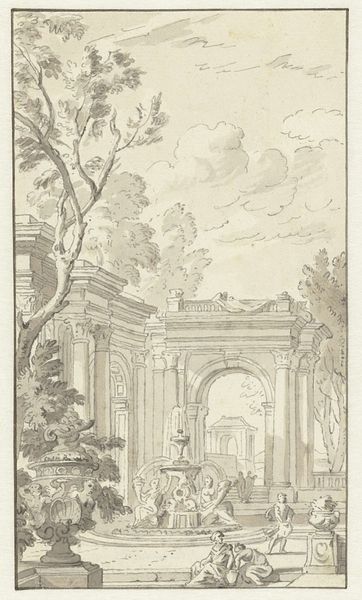
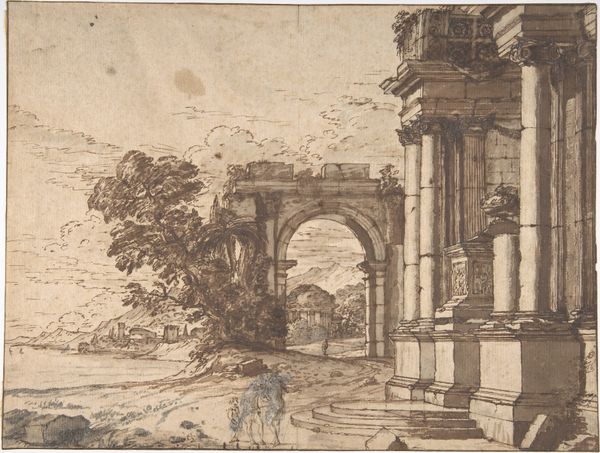
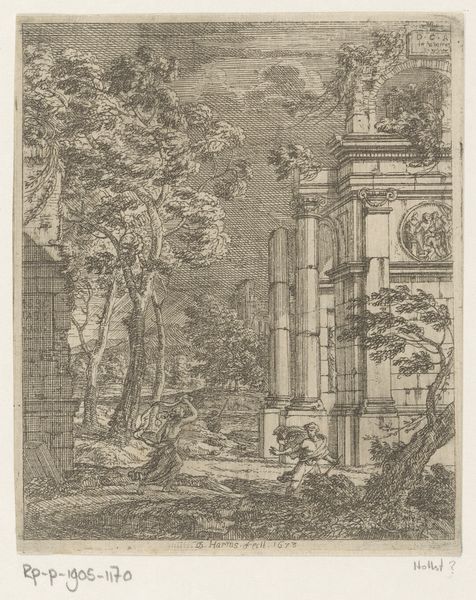
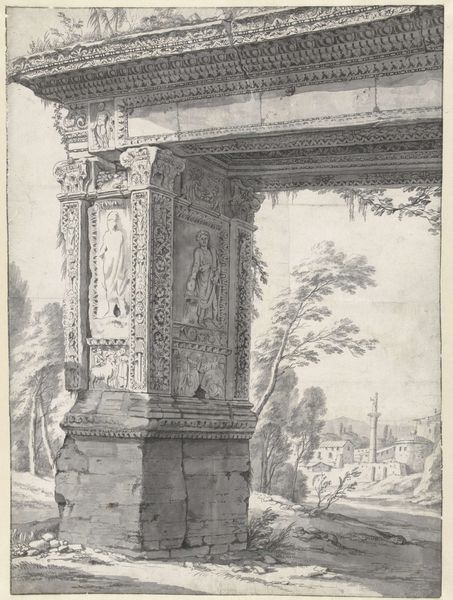
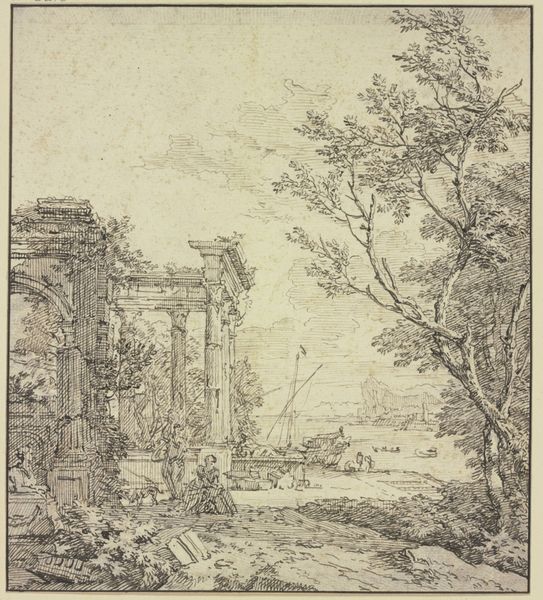
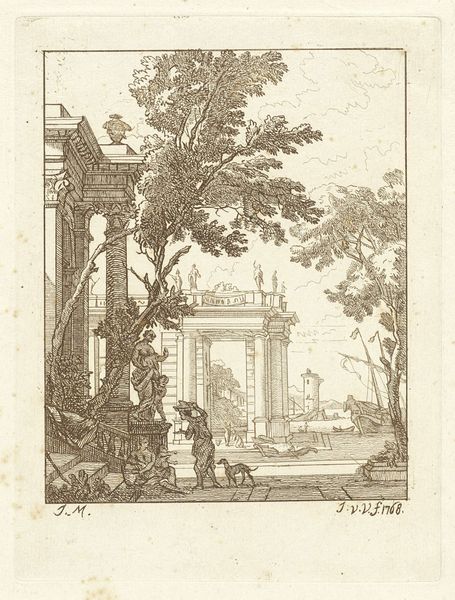
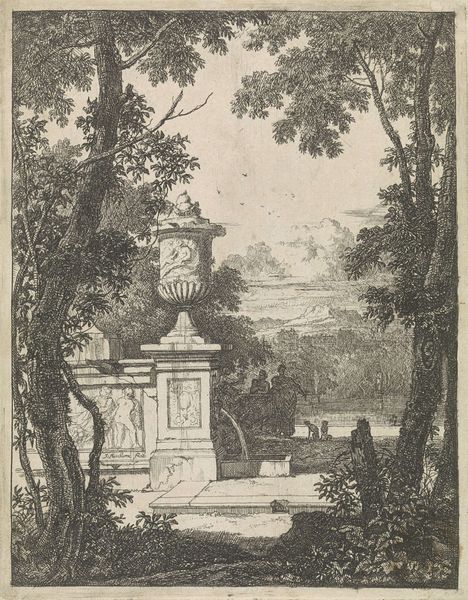
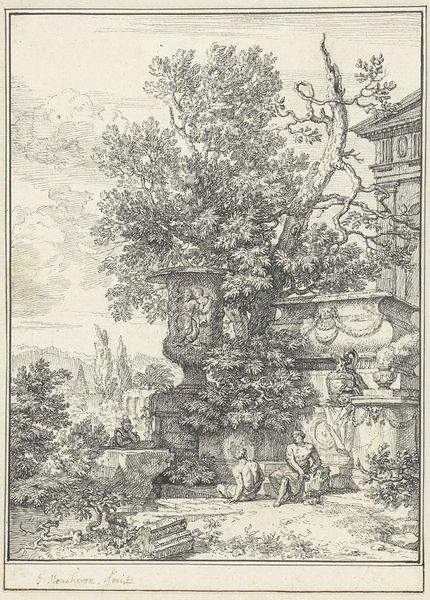
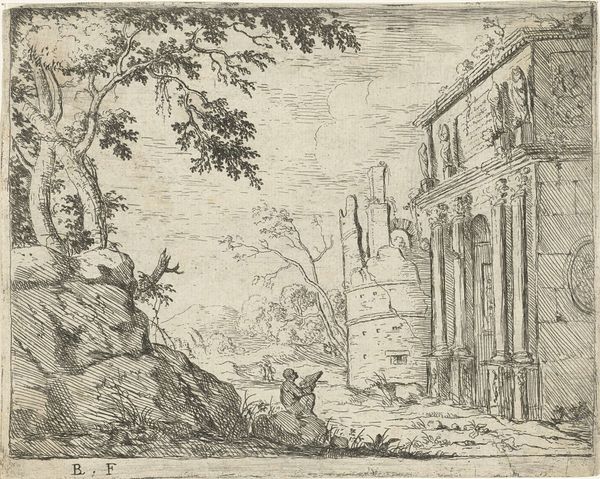
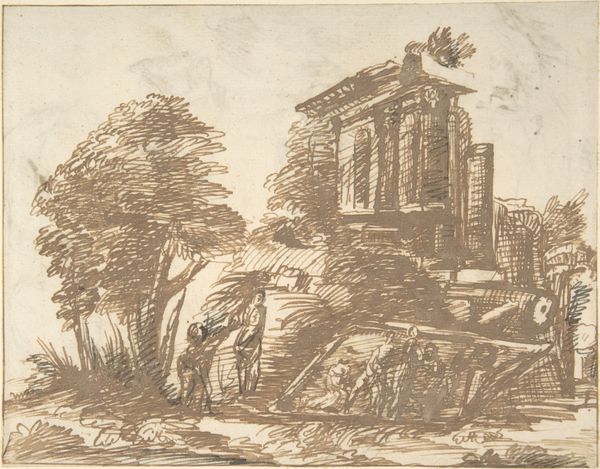
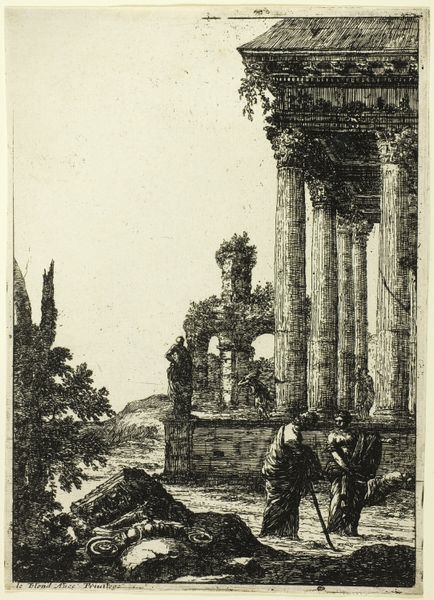
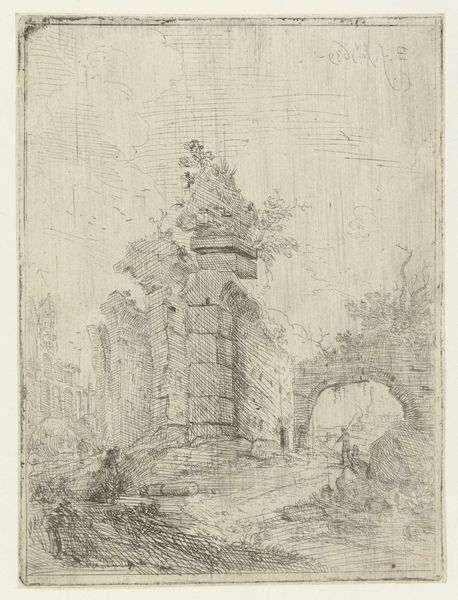
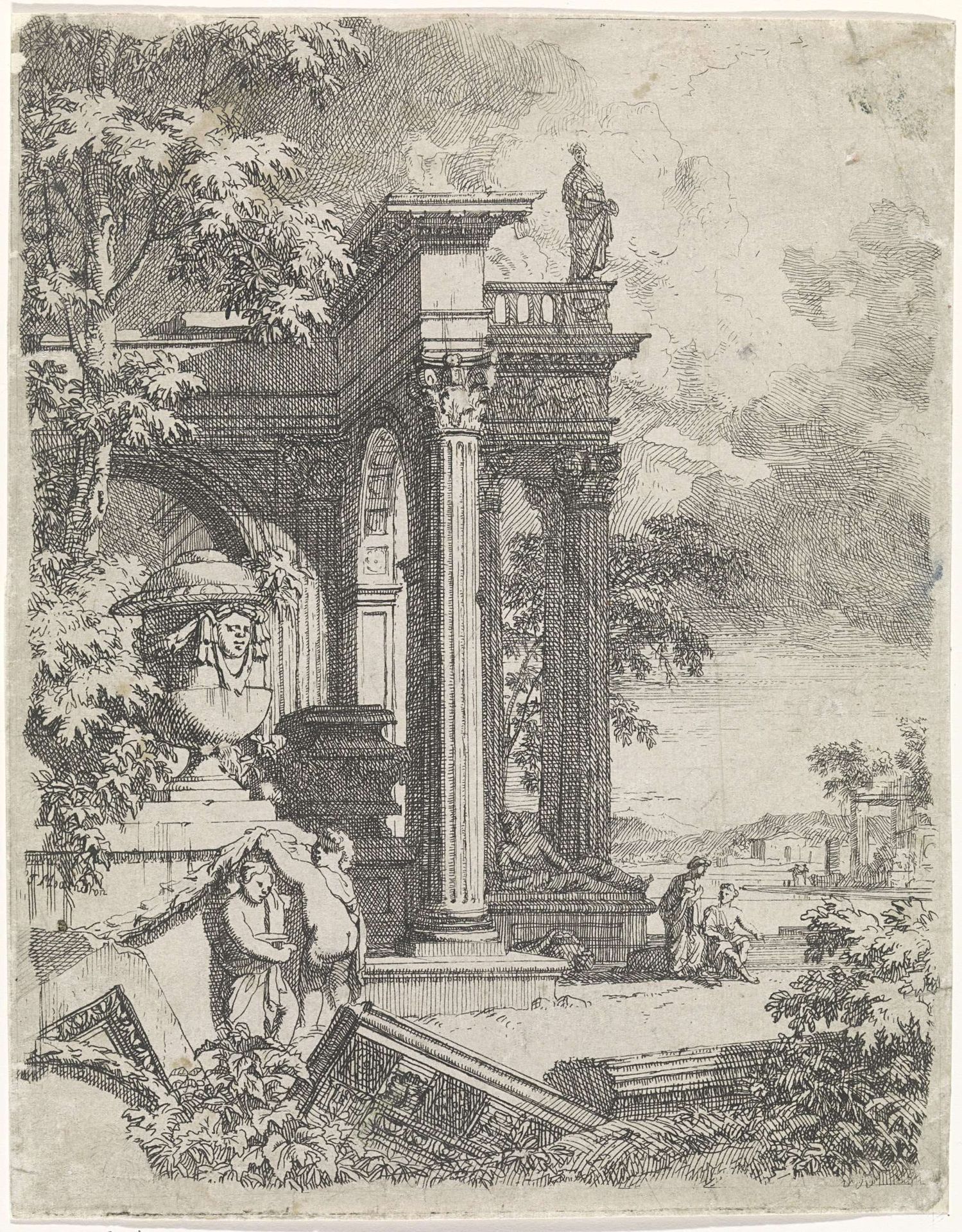
Pieter van den Berge created this landscape with a classical temple using etching, sometime around the turn of the 18th century in the Netherlands. It depicts, as was fashionable at the time, a classical temple in the Italian style, as a romantic ruin. But what does it mean for the people depicted to be sheltering amongst the ruins of great empires? The Dutch Golden Age was coming to an end. By this time, the Dutch Republic’s dominance in trade was slowly being eclipsed by England and France. The ruins in this etching might be seen as an allegory of the decline of a once-great empire. They were also a status symbol of wealthy Dutchmen who had the means to travel around Europe at the time on what was known as the Grand Tour. To fully understand an image like this, we must consider the contemporary politics of imagery as well as the social conditions that shape artistic production. It’s the art historian's role to delve into these contexts and resources.
Landschap met klassieke tempel 1669 - 1744

Pieter van den Berge
1659 - 1737Location
RijksmuseumArtwork details
- Medium
- etching
- Dimensions
- height 202 mm, width 158 mm
- Location
- Rijksmuseum
- Copyright
- Rijks Museum: Open Domain
Tags
baroque
etching
landscape
classical-realism
Comments
No comments
About this artwork
Pieter van den Berge created this landscape with a classical temple using etching, sometime around the turn of the 18th century in the Netherlands. It depicts, as was fashionable at the time, a classical temple in the Italian style, as a romantic ruin. But what does it mean for the people depicted to be sheltering amongst the ruins of great empires? The Dutch Golden Age was coming to an end. By this time, the Dutch Republic’s dominance in trade was slowly being eclipsed by England and France. The ruins in this etching might be seen as an allegory of the decline of a once-great empire. They were also a status symbol of wealthy Dutchmen who had the means to travel around Europe at the time on what was known as the Grand Tour. To fully understand an image like this, we must consider the contemporary politics of imagery as well as the social conditions that shape artistic production. It’s the art historian's role to delve into these contexts and resources.
Comments
No comments