About this artwork
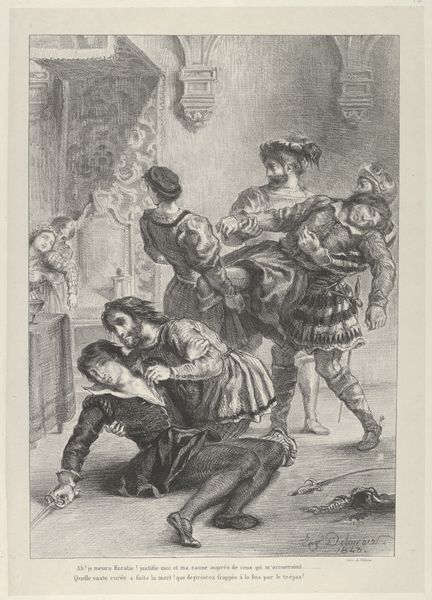
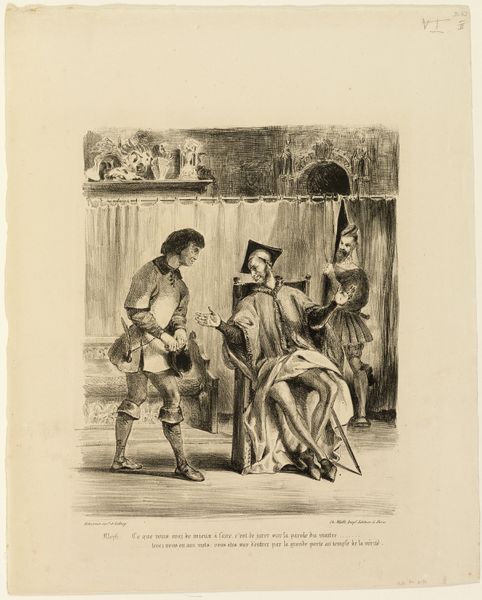
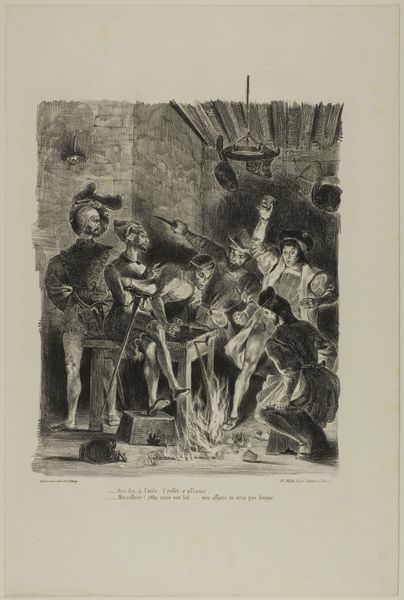
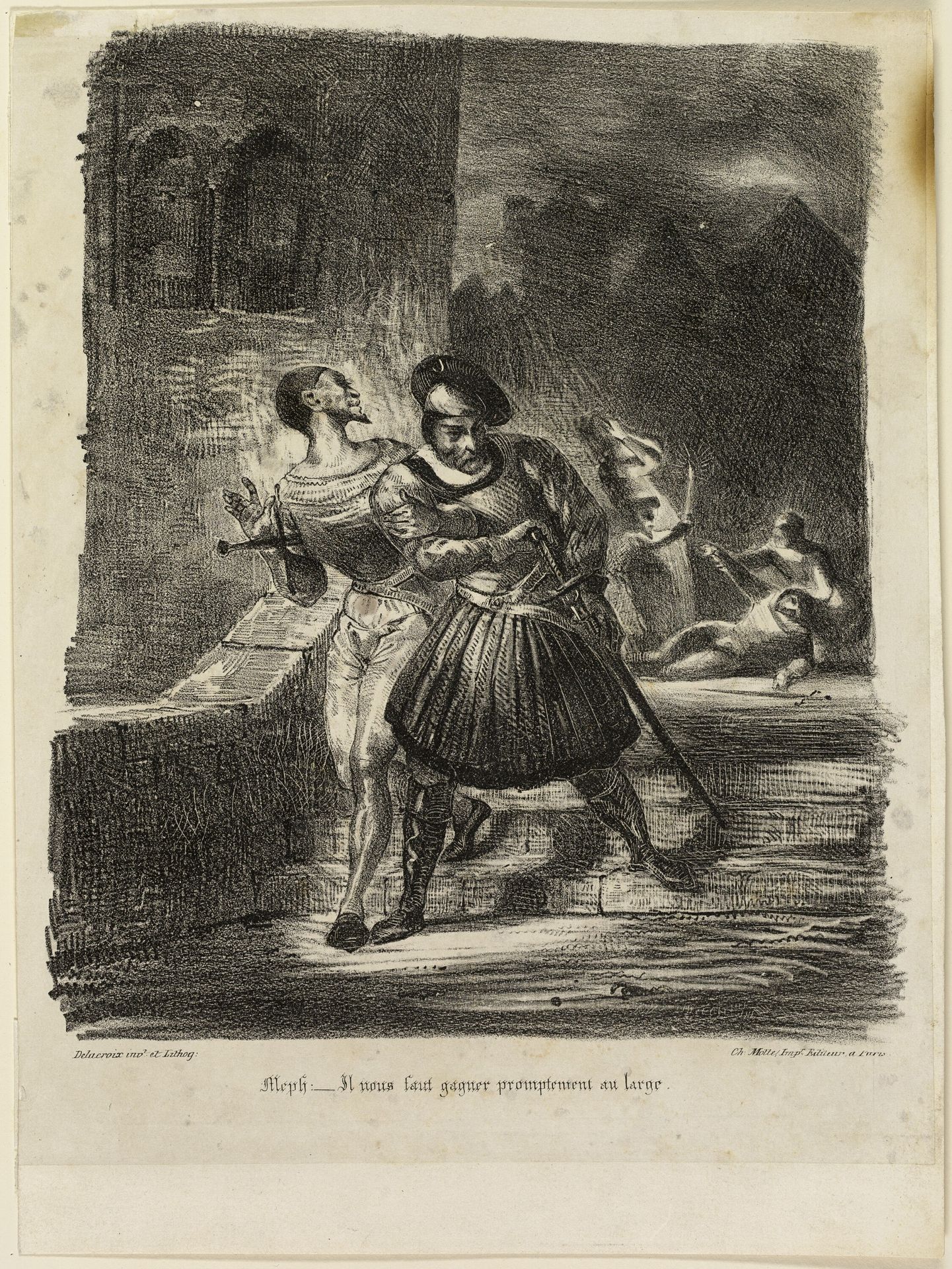
Eugène Delacroix created this lithograph, Mephistopheles and Faust Fleeing after the Duel, in France, during the 19th century. Delacroix was a leading figure in the Romantic movement, which emphasized emotion and individualism, and often challenged the Enlightenment’s focus on reason. This print illustrates a scene from Goethe's "Faust," a play that resonated deeply with Romantic artists. The story tells of Faust, a scholar who makes a pact with the devil, Mephistopheles, in exchange for knowledge and experience. Here, we see them fleeing after a duel, a scene charged with the drama and passion typical of Romanticism. Consider the socio-political context of the time. The French Revolution had shaken the foundations of society, and artists like Delacroix were questioning traditional values and institutions. "Faust," with its themes of rebellion, temptation, and the search for meaning, offered a powerful narrative for exploring these concerns. By studying Delacroix's print in relation to the literature and history of 19th-century France, we can gain a deeper understanding of its cultural significance. Art history is as much about social context as it is about artistic technique.
Mephistopheles and Faust Fleeing after the Duel
1828


Artwork details
- Medium
- drawing, lithograph, print, paper
- Dimensions
- 265 × 225 mm (image); 325 × 242 mm (sheet)
- Location
- The Art Institute of Chicago
- Copyright
- Public Domain
Tags
Comments
Share your thoughts
About this artwork
Eugène Delacroix created this lithograph, Mephistopheles and Faust Fleeing after the Duel, in France, during the 19th century. Delacroix was a leading figure in the Romantic movement, which emphasized emotion and individualism, and often challenged the Enlightenment’s focus on reason. This print illustrates a scene from Goethe's "Faust," a play that resonated deeply with Romantic artists. The story tells of Faust, a scholar who makes a pact with the devil, Mephistopheles, in exchange for knowledge and experience. Here, we see them fleeing after a duel, a scene charged with the drama and passion typical of Romanticism. Consider the socio-political context of the time. The French Revolution had shaken the foundations of society, and artists like Delacroix were questioning traditional values and institutions. "Faust," with its themes of rebellion, temptation, and the search for meaning, offered a powerful narrative for exploring these concerns. By studying Delacroix's print in relation to the literature and history of 19th-century France, we can gain a deeper understanding of its cultural significance. Art history is as much about social context as it is about artistic technique.
Comments
Share your thoughts