c. 19th century
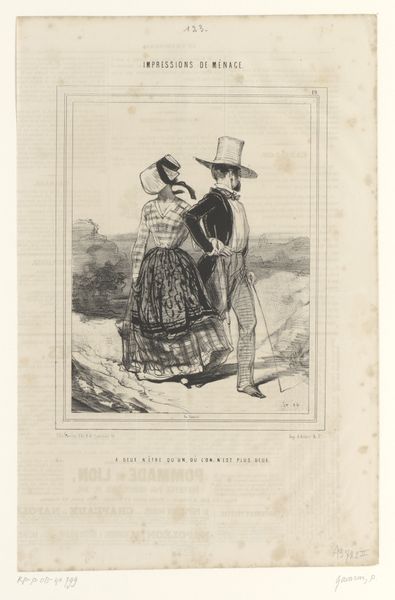
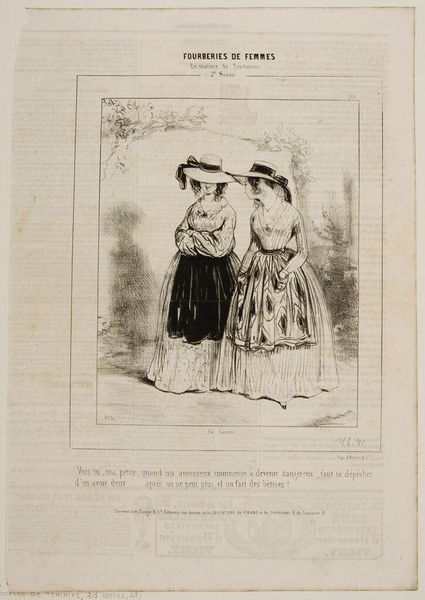
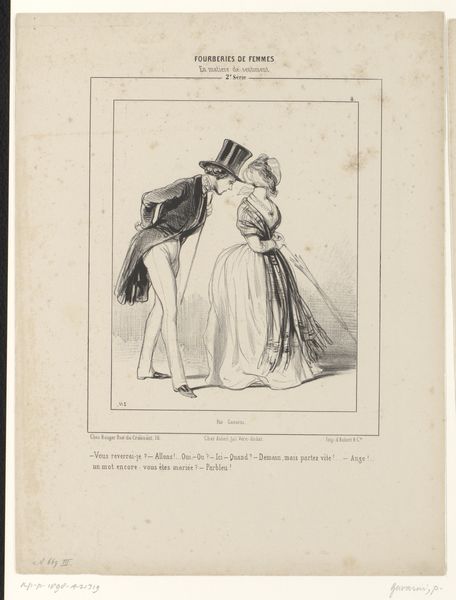
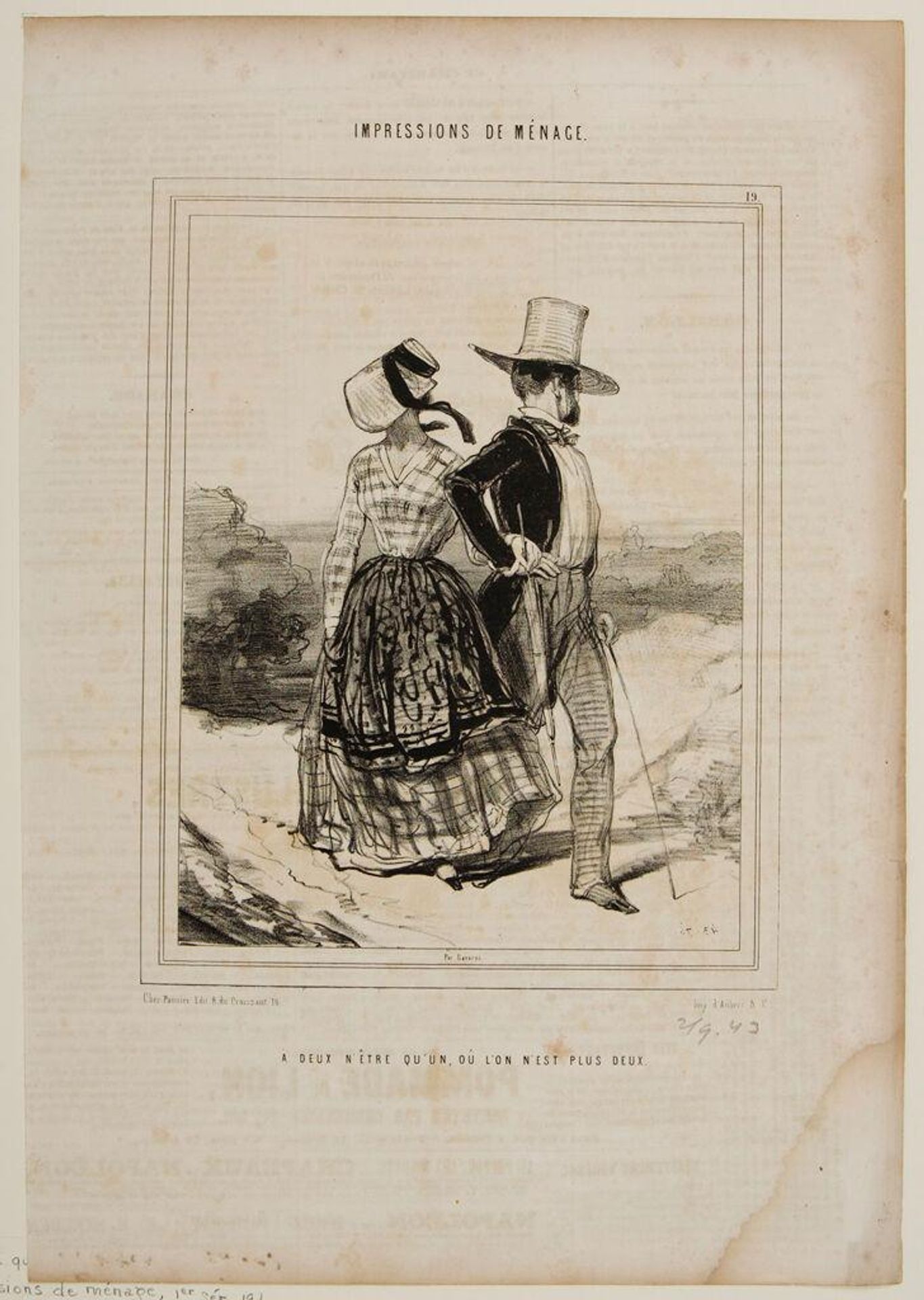
Two can only be one, or one is no longer two


Listen to curator's interpretation
Curatorial notes
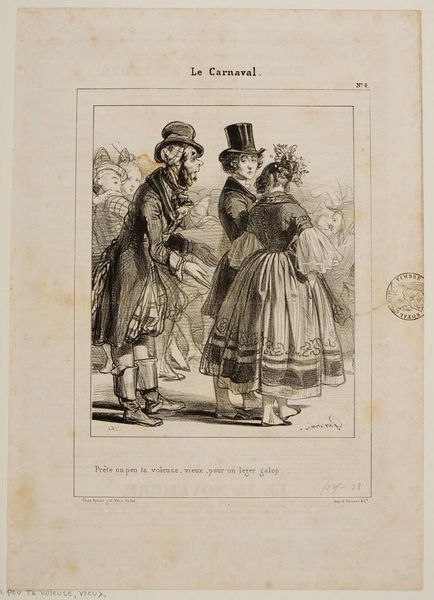
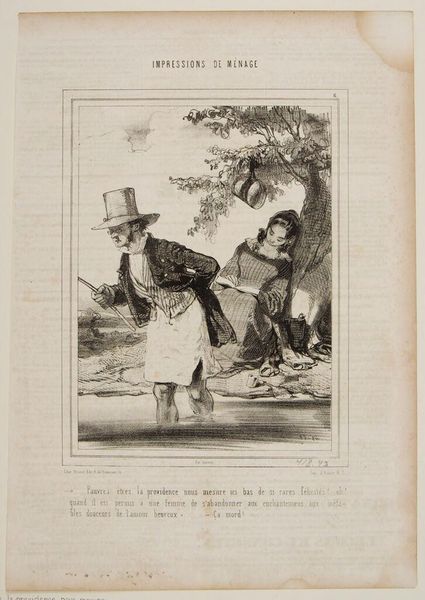
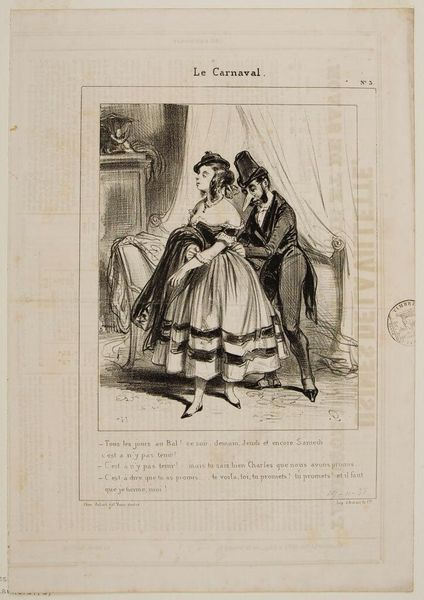
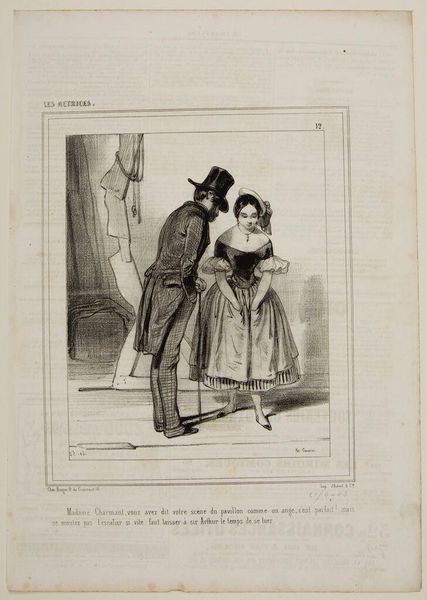
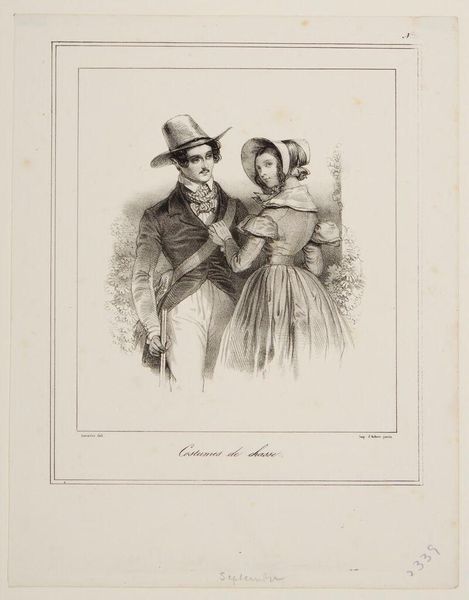
Curator: This is a print by Paul Gavarni titled "Two can only be one, or one is no longer two." It captures a fashionable couple, gazing at a landscape. Editor: There's a melancholy in this scene, almost an isolation despite the couple being together. What do you make of their averted gaze? Curator: The clothing is clearly indicative of the 19th century bourgeoisie. Gavarni was known for depicting scenes of everyday life in Paris, and his lithographs were widely circulated in journals. Editor: I see hints of classical symbolism in the man's upright stance and the woman's slightly retreating posture, suggesting a societal tension between the masculine and feminine. Curator: The printmaking process itself allowed for mass production and consumption of these images. That accessibility challenged the traditional role of art as a luxury. Editor: It's a poignant snapshot, hinting at the complexities within a relationship, especially framed by social expectations of the time. Curator: Indeed, exploring these prints gives us a closer look at the material culture of the period.