c. 1803 - 1842
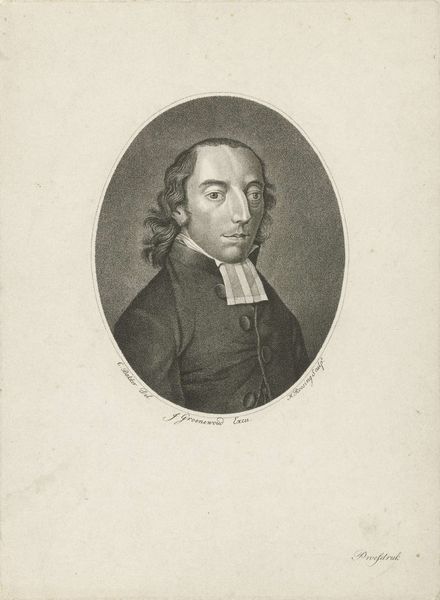
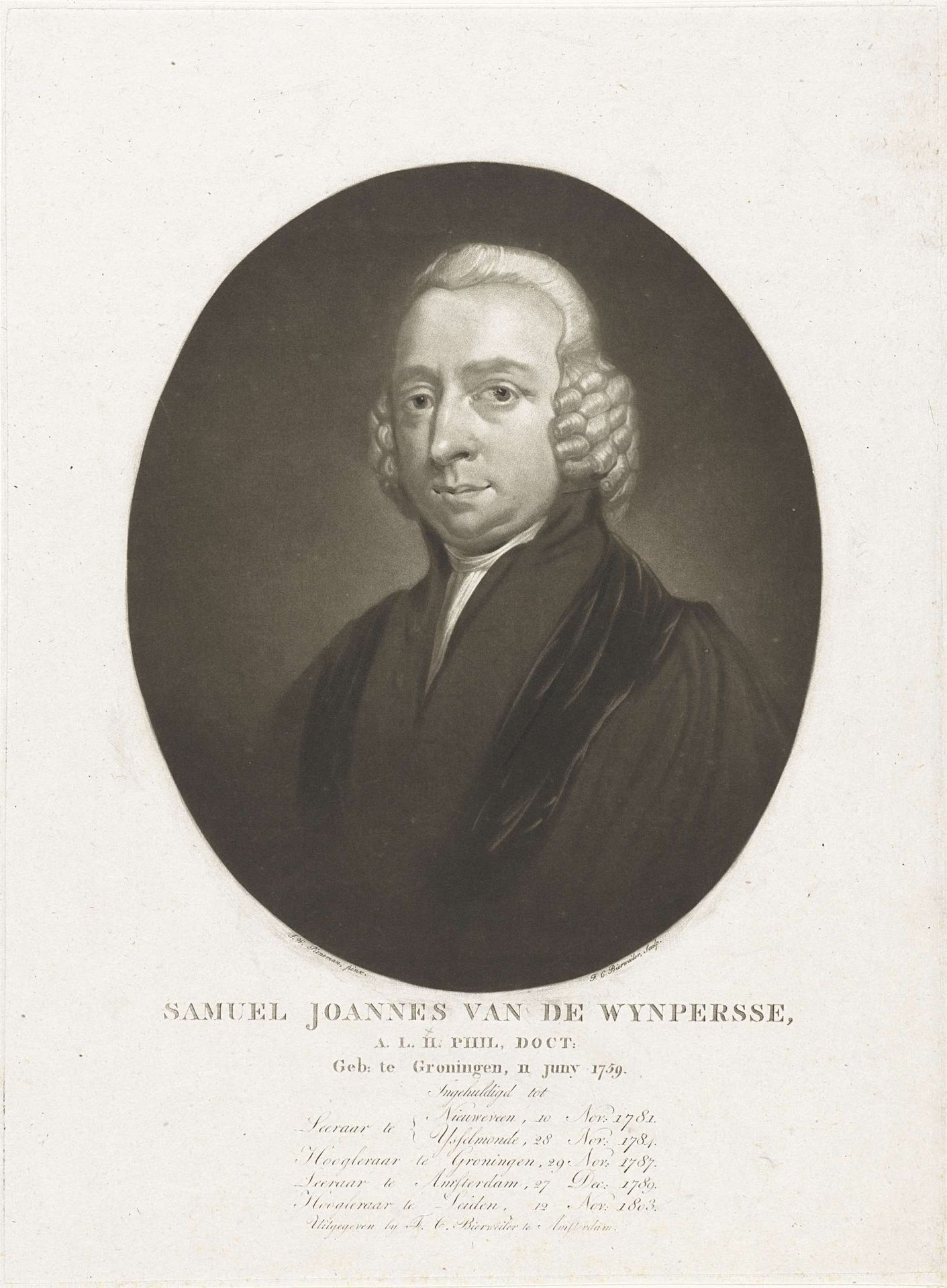
Portret van Samuel Johannes van de Wijnpersse

Frederik Christiaan Bierweiler
1783 - 1831Location
RijksmuseumListen to curator's interpretation
Curatorial notes
Curator: Here we have "Portret van Samuel Johannes van de Wijnpersse" by Frederik Christiaan Bierweiler, estimated to have been created sometime between 1803 and 1842. It's an engraving, etching and print on paper, done in a Neoclassical style. Editor: My first impression is one of solemnity. The stark contrast of light and shadow definitely gives it a somewhat severe air, wouldn't you say? The tight circular composition focuses the gaze entirely on the face. Curator: Absolutely, the artist really leans into that. What fascinates me is the sitter's story. Samuel Johannes was a professor; if we contextualize this image within the period, it reflects the values placed on intellectual pursuits and social standing within the Dutch Golden Age and beyond. Editor: And yet the engraving, with its fine lines and delicate shading, does soften that intellectual rigidity. The oval vignette contributes, creating a sense of intimacy, drawing the viewer into a seemingly private moment with a public figure. Curator: Precisely, portraits such as this served as visual markers of identity and status within a specific social stratum. How individuals chose to portray themselves reflected a curated narrative that was important for upholding cultural norms. Editor: The execution here does convey more than mere documentation of appearance. Look at the way light catches his wig. It seems Bierweiler used these purely representational, structural elements to communicate both personality and position. The slight asymmetry suggests a living, breathing presence, not a statue. Curator: It underscores the interesting intersection of artistic intention and societal expectations within portraiture of the era, doesn’t it? It invites us to contemplate the stories and power dynamics imbedded within representations. Editor: It truly exemplifies how close looking can reveal not just form and function but a silent discourse between the artist and sitter, history and aesthetics. Curator: For me, seeing it displayed here makes me reconsider historical legacies and how art enables these vital discussions on self-representation and socio-cultural values.