1736
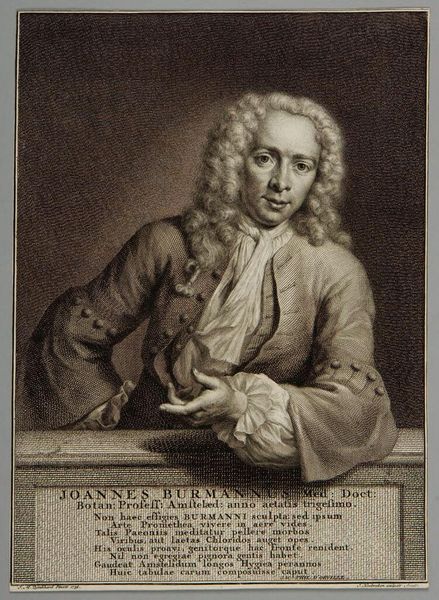
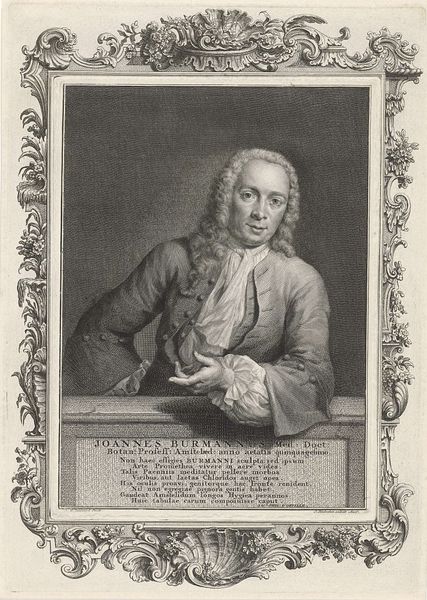
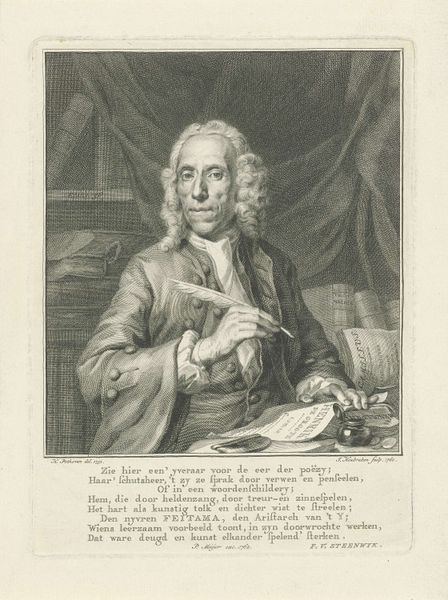
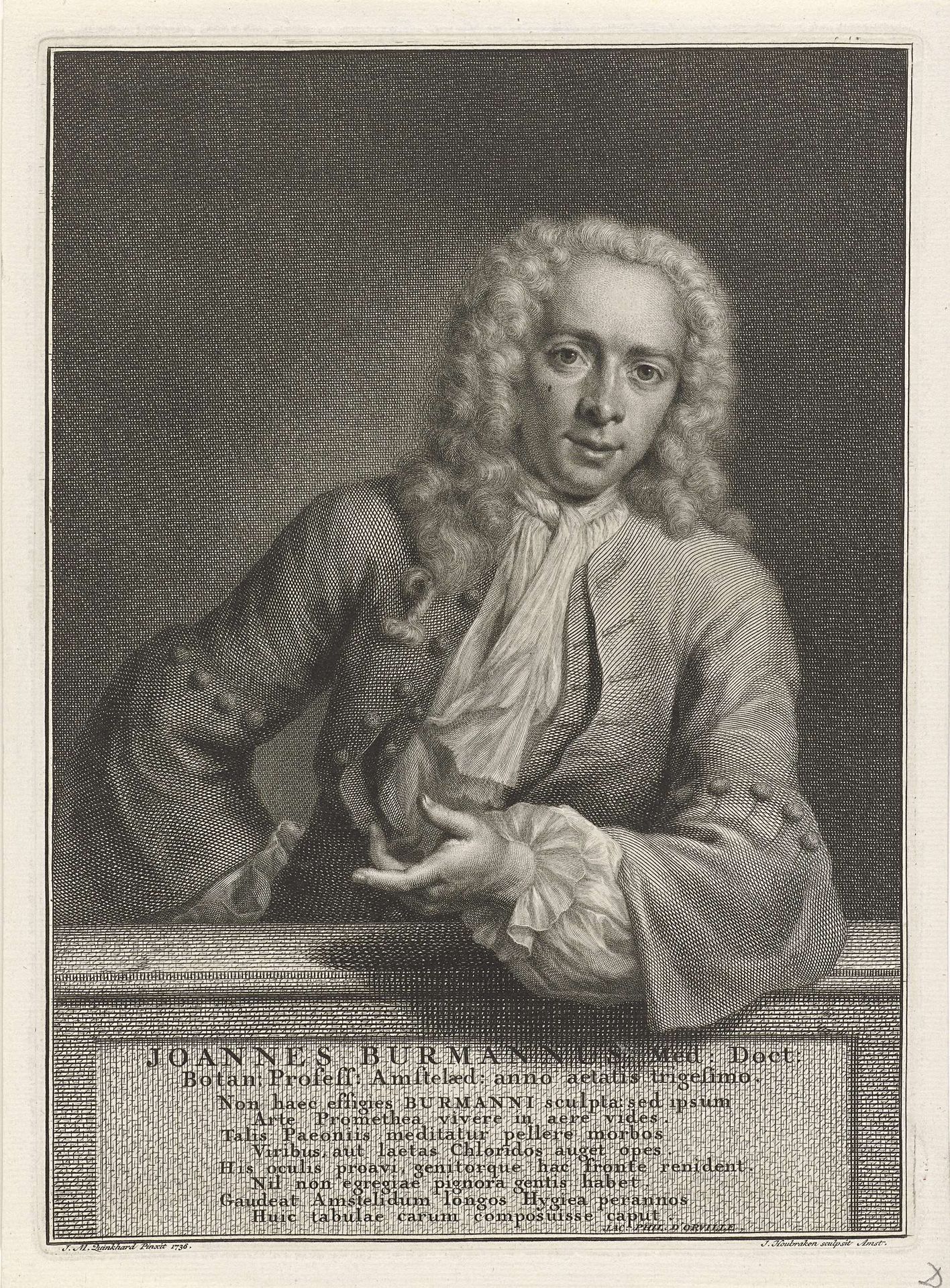
Portret van Johannes Burman

Jacob Houbraken
1698 - 1780Location
RijksmuseumListen to curator's interpretation
Curatorial notes
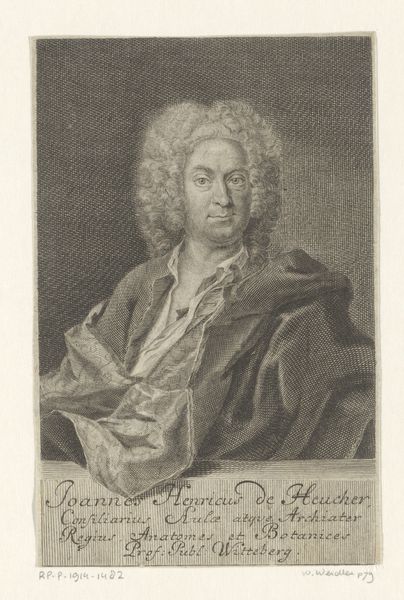
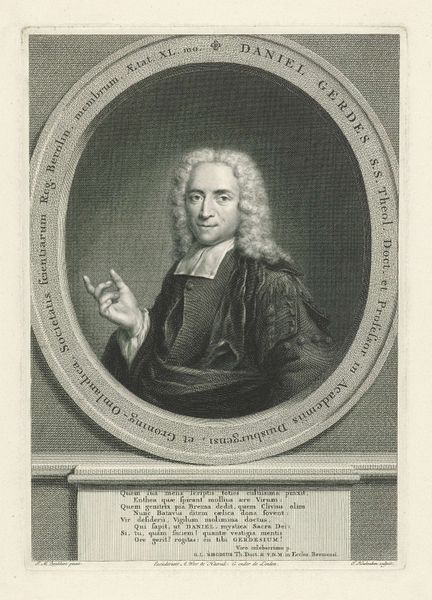
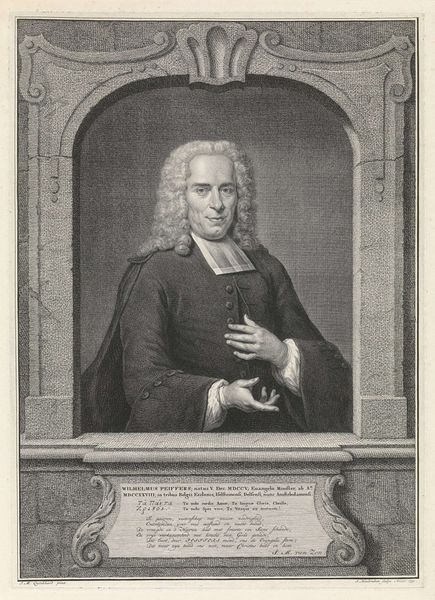
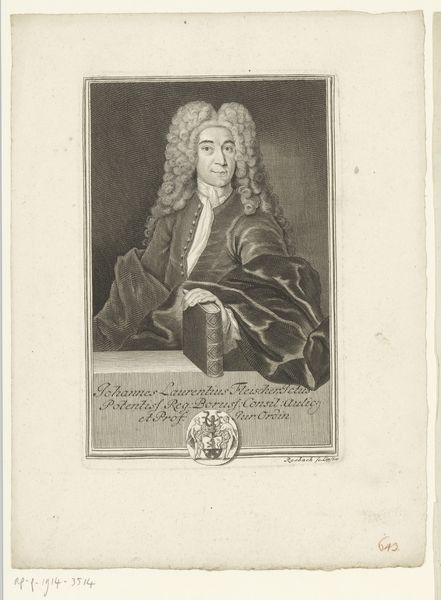
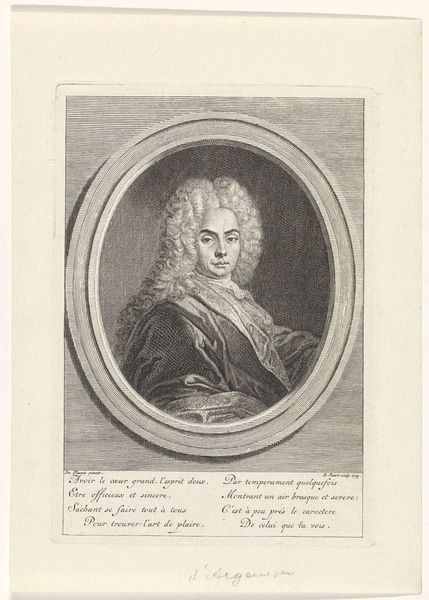
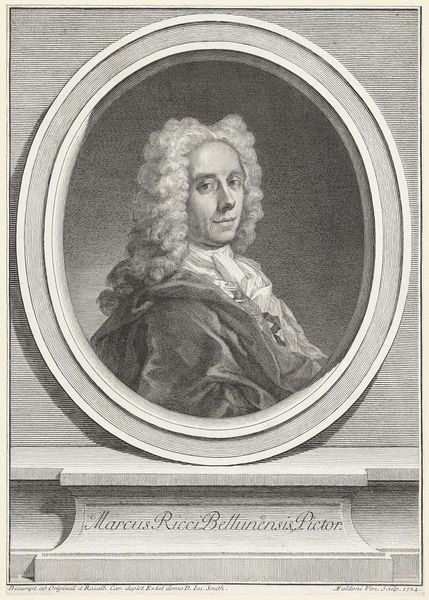
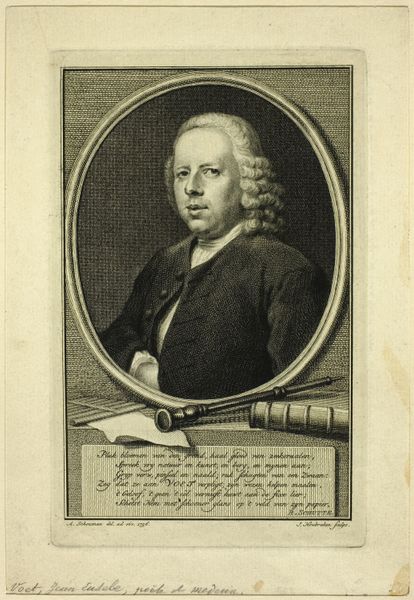
Jacob Houbraken made this portrait of Johannes Burman using engraving, a printmaking process that involves meticulously cutting lines into a metal plate. The incised lines hold ink, which is then transferred to paper, creating the image we see. The engraver's skill is evident in the delicate rendering of Burman's features, the texture of his clothing, and the overall tonal range of the print. This wasn't just about technical mastery; it was about translating the sitter’s likeness and status into a reproducible form. Prints like these played a crucial role in disseminating images and ideas in the 18th century, acting as a kind of visual currency within intellectual and artistic circles. The labor-intensive process of engraving, with its emphasis on precision and control, reflects the values of the Enlightenment era: reason, order, and the pursuit of knowledge. By appreciating the material and processes behind this portrait, we gain a deeper understanding of its cultural significance, blurring the lines between craft, art, and social history.