painting, oil-paint, architecture
#
painting
#
oil-paint
#
landscape
#
oil painting
#
city scape
#
cityscape
#
history-painting
#
watercolor
#
architecture
#
realism
#
rococo
Copyright: Public domain
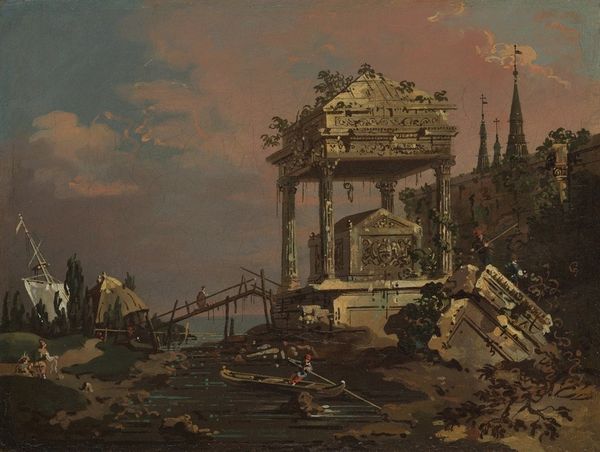
Curator: I’m struck by the sheer melancholic presence of the central structure here, and its power to symbolize human fallibility and the transience of even the most imposing creations. Editor: Indeed. We’re looking at Bernardo Bellotto’s oil on canvas from 1765, "Ruins of Dresden's Kreuzkirche." Bellotto was known for his vedute paintings—detailed, often large-scale city views. This one deviates somewhat, though, by depicting not the glory but the aftermath of destruction. Curator: It's more than just aftermath; there's a distinct feeling of people working amid it all. See the figures perched on top, picking through the ruins. What strikes me are those men actively dismantling or salvaging amidst those majestic ruins; humanity, both destructive and constructive, coexisting. A constant theme throughout time! Editor: Absolutely. The Kreuzkirche was damaged during the Seven Years' War, which concluded just a few years prior to Bellotto creating this scene. Painting such devastation served several purposes, not the least to evoke sympathy for those who suffered—while also perhaps demonstrating the enduring power of Dresden itself, as work continues despite disaster. Curator: Observe the stark contrast between the delicate brushstrokes used to capture the decaying facade and the sharper, more defined lines portraying the individuals at work. Bellotto uses symbols familiar throughout art to show perseverance; there's a strong element of civic and religious imagery present that goes hand in hand. Even amidst ruins, new life is growing – hope and community are being fostered! Editor: And it's important to recall Dresden was an important intellectual and cultural center. By displaying the ruins, yet framing the piece in a rococo, somewhat idealized manner, Bellotto acknowledges the loss while reinforcing a desired civic identity based on recovery. Curator: To your point, by contrasting shadow with soft luminescence on the workers’ faces and the surrounding infrastructure, Bellotto encourages meditation on themes such as sacrifice and dedication amid tragic devastation. Editor: A painting of stark realism with social and political messaging about identity through the ruin that shaped public feeling at the time. The layering of history on this canvas leaves us a profound view into an era of dramatic rebuilding, but I wonder, what do viewers unfamiliar with this story get out of seeing the ruins alone? Curator: That, perhaps, speaks to its universal symbolism - how ruins stand as silent testaments and are a window through which cultural values remain potent across time.
Comments
No comments
Be the first to comment and join the conversation on the ultimate creative platform.
 Collect
 React
React Comment
More like this