About this artwork
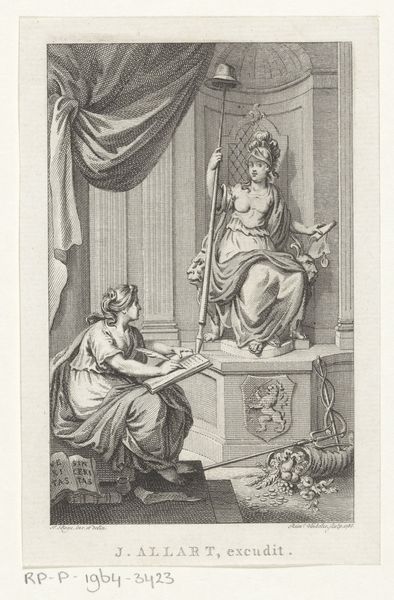
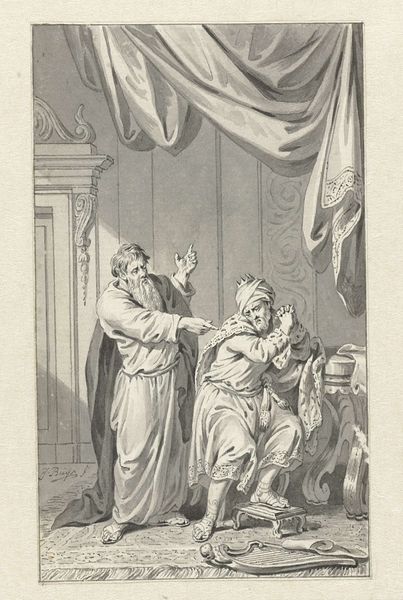
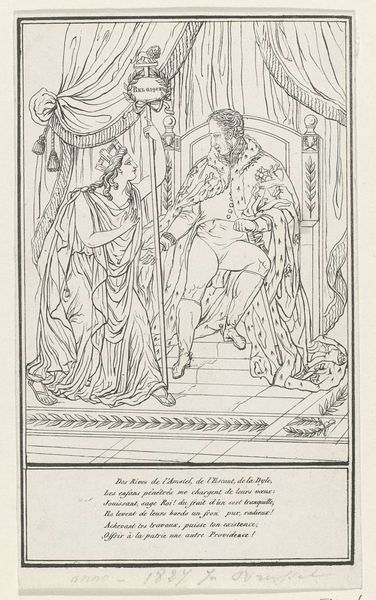
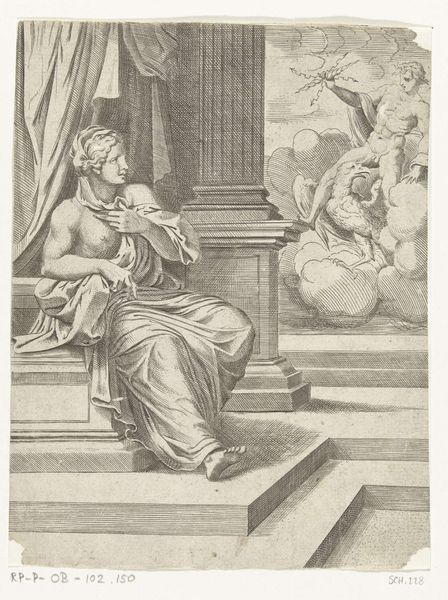
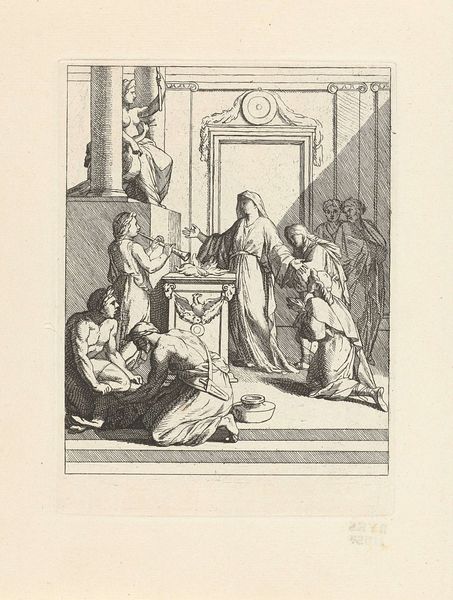
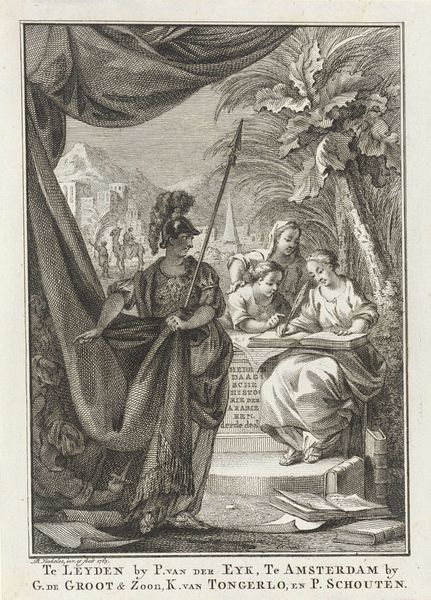
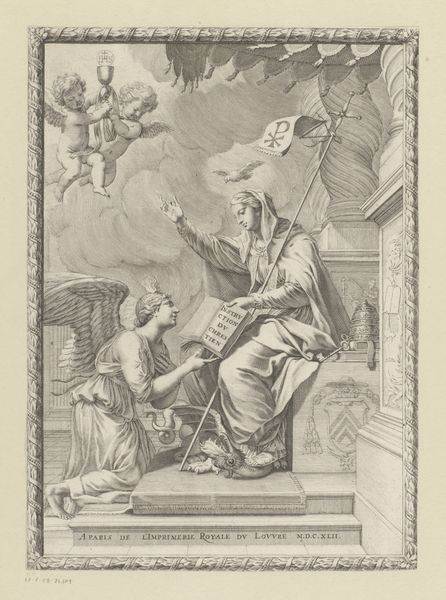
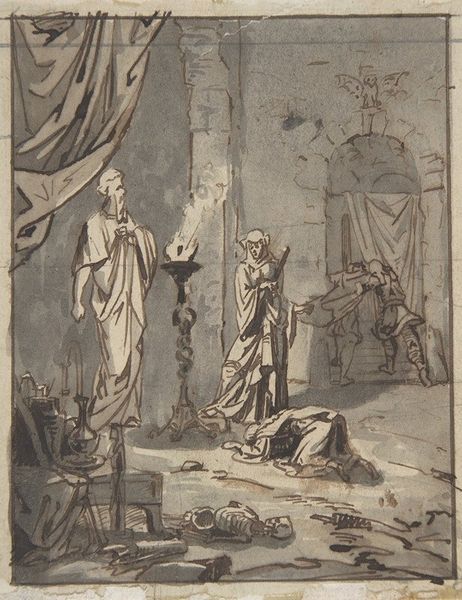
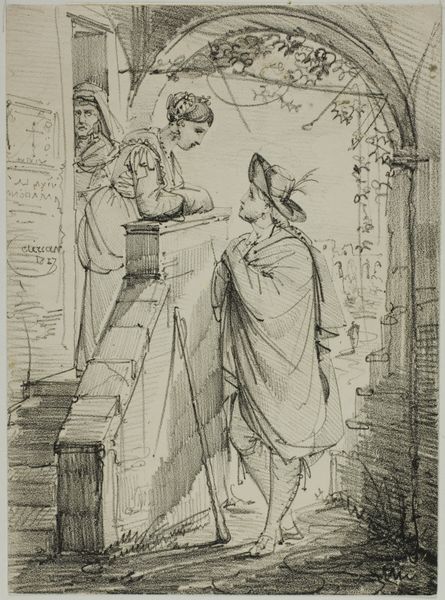
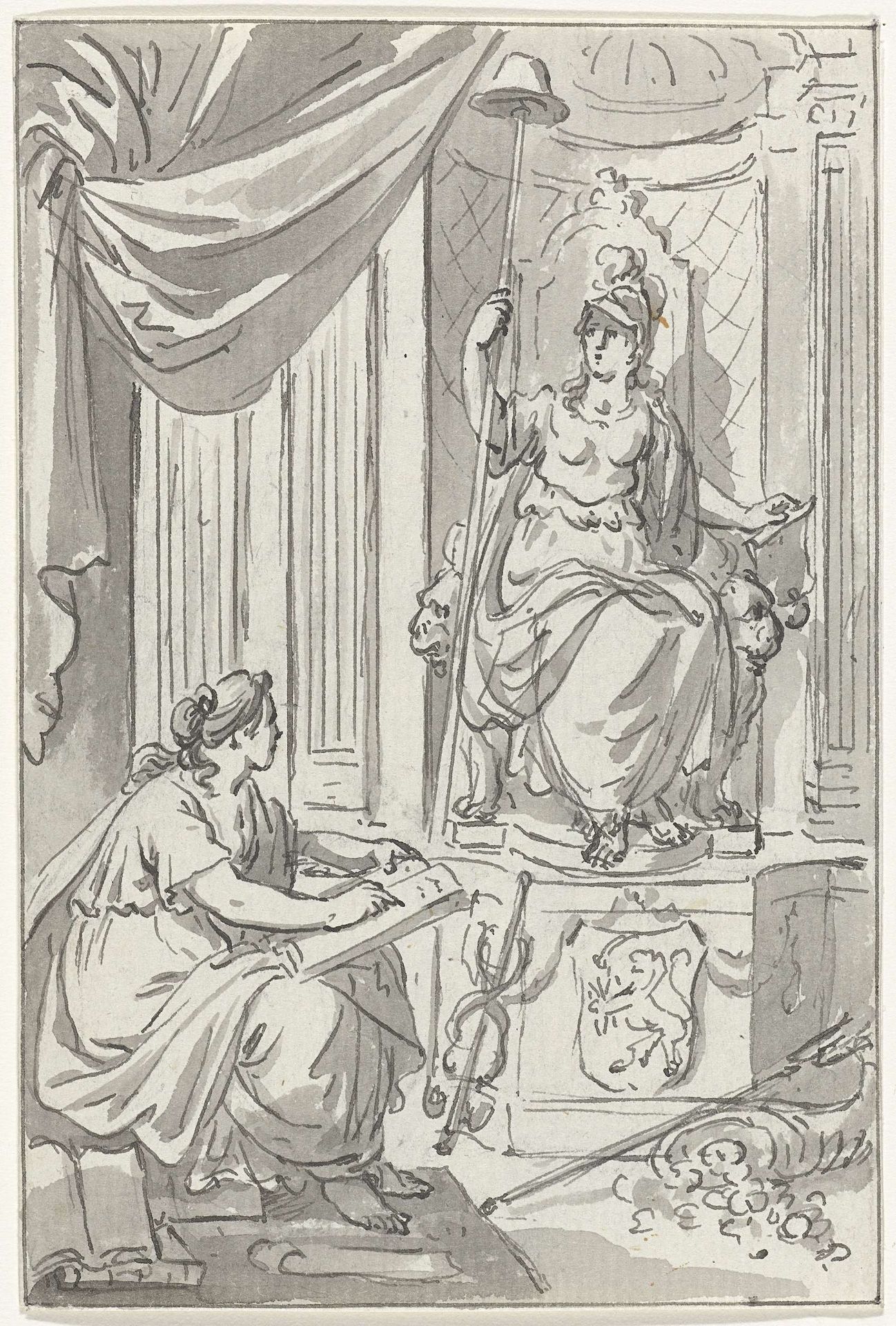
This drawing, made by Jacobus Buys, presents an allegorical scene featuring Freedom and History rendered in subtle washes of gray ink. The composition is structured around a vertical axis, with Freedom enthroned and History seated below, creating a visual hierarchy. The arrangement invites us to consider the relationship between power, knowledge, and representation. Notice how the artist uses the contrast between light and shadow to define form and space. The draped curtain and architectural elements add depth, while the figures are delicately outlined to convey a sense of classical idealism. The inclusion of symbolic objects and a coat of arms serves as a visual language that speaks to the socio-political context of the time. It points to the values and ideals that underpinned the Enlightenment and the Dutch Republic. The drawing invites ongoing interpretation, and encourages viewers to consider how these symbols function within broader cultural narratives of freedom, history, and national identity.
Allegorische voorstelling met de Vrijheid en Historia
1734 - 1801

Jacobus Buys
1724 - 1801Location
RijksmuseumArtwork details
- Medium
- drawing, ink, pen
- Dimensions
- height 137 mm, width 91 mm
- Location
- Rijksmuseum
- Copyright
- Rijks Museum: Open Domain
Tags
Comments
Share your thoughts
About this artwork
This drawing, made by Jacobus Buys, presents an allegorical scene featuring Freedom and History rendered in subtle washes of gray ink. The composition is structured around a vertical axis, with Freedom enthroned and History seated below, creating a visual hierarchy. The arrangement invites us to consider the relationship between power, knowledge, and representation. Notice how the artist uses the contrast between light and shadow to define form and space. The draped curtain and architectural elements add depth, while the figures are delicately outlined to convey a sense of classical idealism. The inclusion of symbolic objects and a coat of arms serves as a visual language that speaks to the socio-political context of the time. It points to the values and ideals that underpinned the Enlightenment and the Dutch Republic. The drawing invites ongoing interpretation, and encourages viewers to consider how these symbols function within broader cultural narratives of freedom, history, and national identity.
Comments
Share your thoughts