print, engraving, architecture
# print
#
landscape
#
engraving
#
architecture
Dimensions: height 312 mm, width 470 mm
Copyright: Rijks Museum: Open Domain
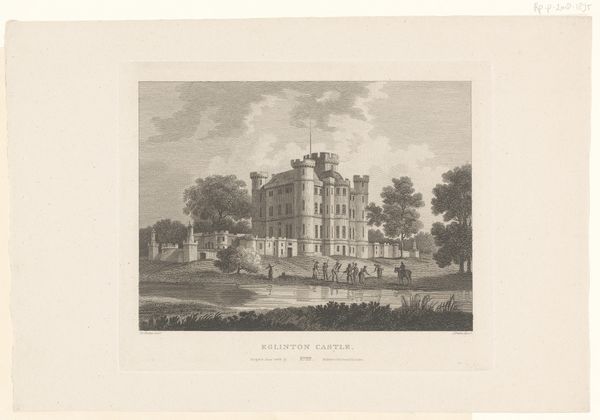
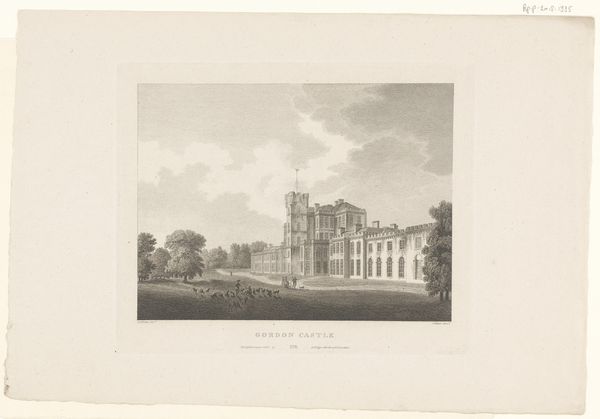
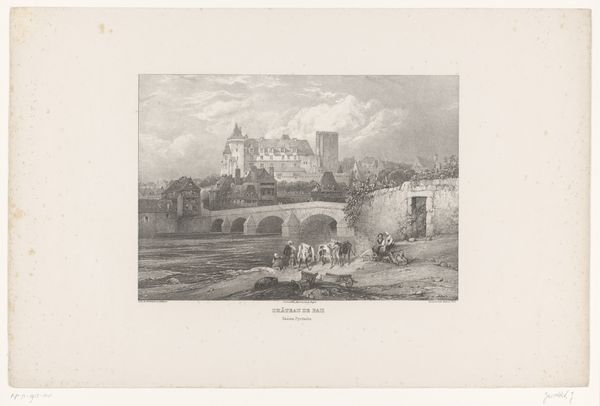
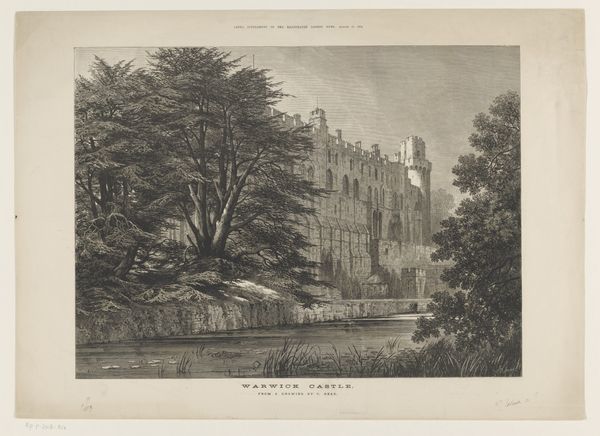
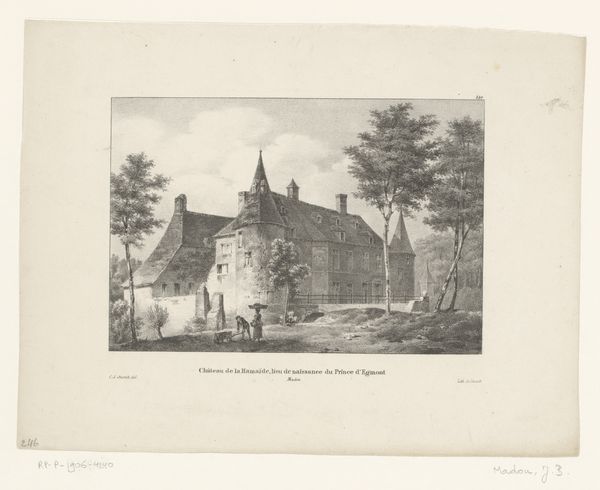
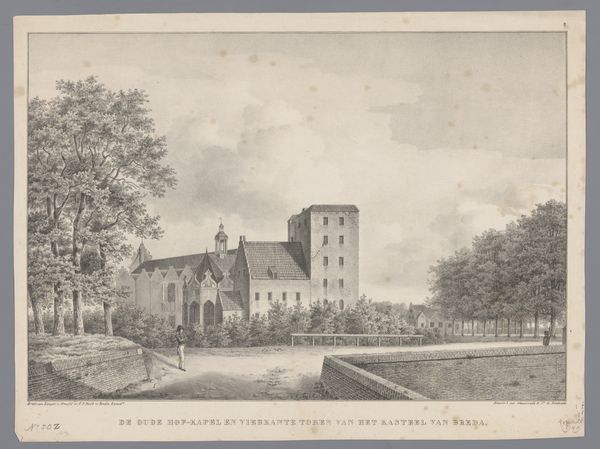
Editor: So, this is "Gezicht op Penshurst Place," an 1888 engraving by Charles Auguste Loye. The building itself is so striking! What immediately catches my attention is the soft light; it creates a serene, almost timeless atmosphere. How do you interpret the symbolism within this scene? Curator: The key lies in recognizing the architectural elements not just as stone and mortar, but as symbols of power, history, and familial continuity. Penshurst Place, even in this subdued rendering, resonates with centuries of memories and associations. Note the figures, carefully placed in the landscape: what meaning can you derive from these placements, both within and outside of the castle walls? Editor: I hadn’t really considered their placement like that, but they do add a human element... almost dwarfed by the architecture itself, which implies permanence. Curator: Exactly. The print offers a commentary on the enduring nature of place and heritage compared to the fleeting existence of individuals. Notice also how the engraving captures the texture of the landscape; that speaks to a romantic sensibility. What does the detailed depiction of nature suggest to you in relation to the man-made structure? Editor: It's almost as though nature is embracing the building. Presenting a harmonious existence and shared history between them... Curator: Precisely. The overall image invites us to reflect on our relationship with the past, on how we construct our identities within and against inherited landscapes, both physical and symbolic. The enduring relevance of iconography relies on the viewers, like yourself, continually uncovering fresh significances. Editor: I learned a lot! The castle seemed like an image but now represents a multitude of ideas! Curator: Agreed. Recognizing this visual language is recognizing culture itself.
Comments
No comments
Be the first to comment and join the conversation on the ultimate creative platform.
 Collect
 React
React Comment
More like this