About this artwork
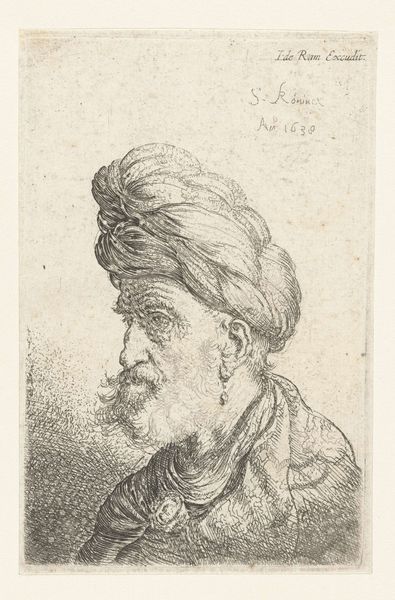
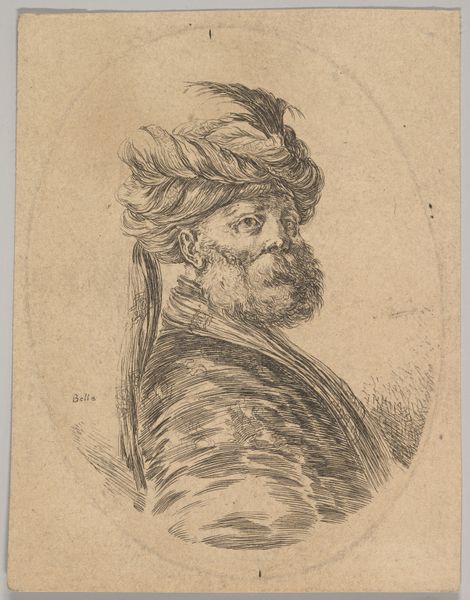
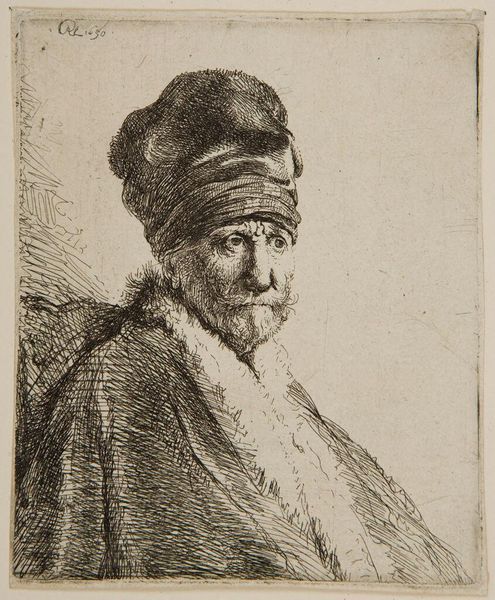
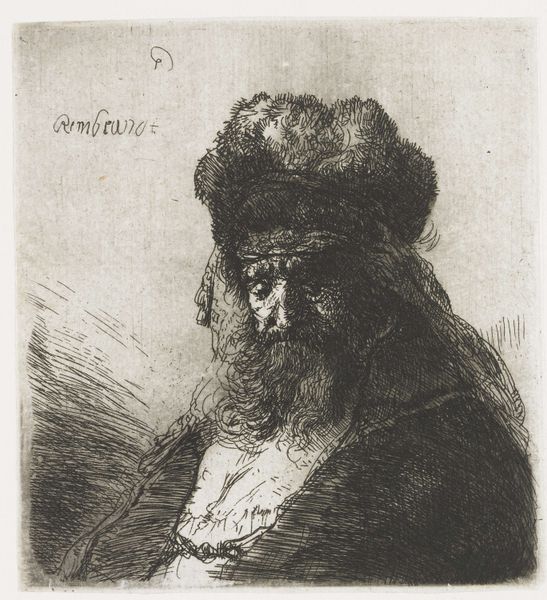
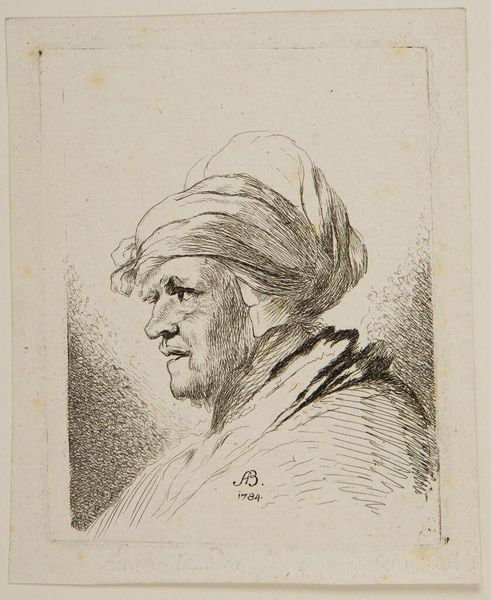
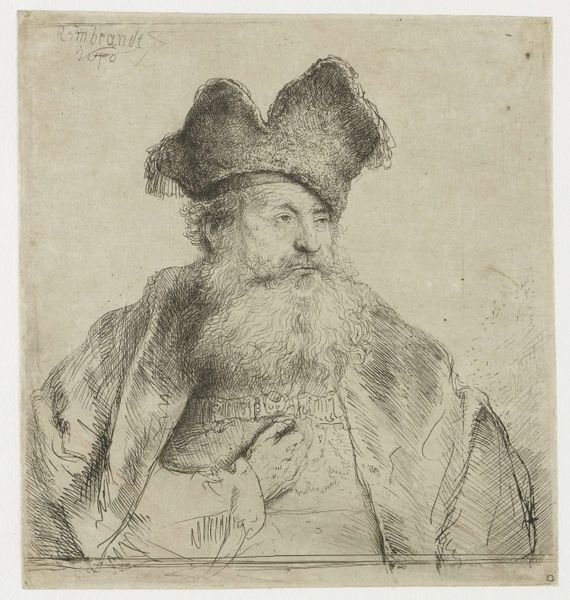
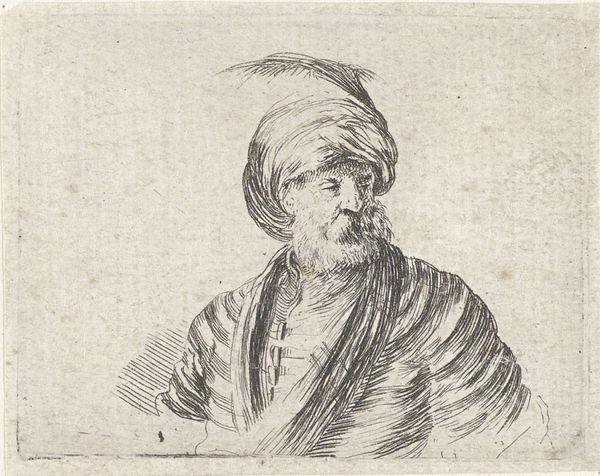
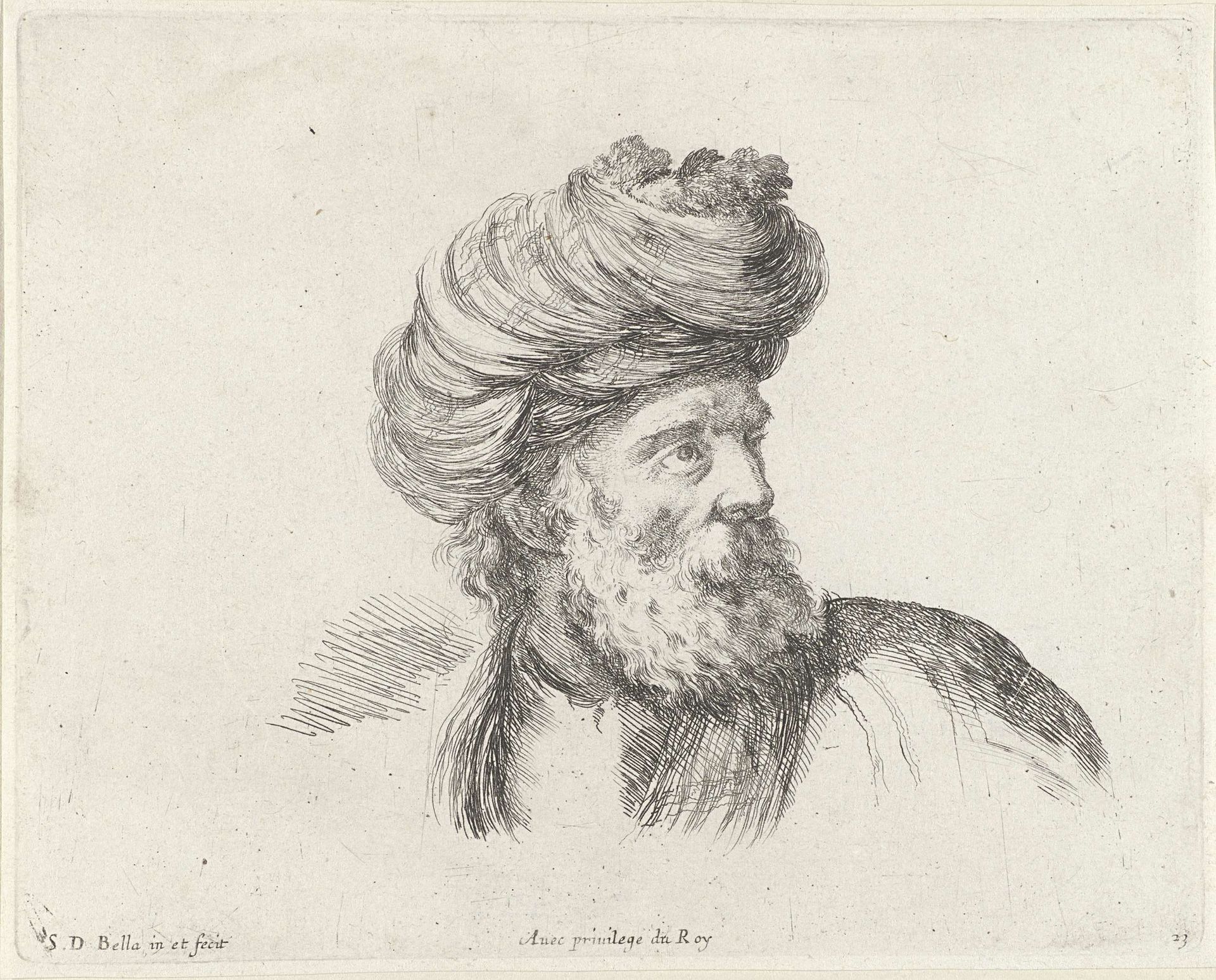
Stefano della Bella made this etching, Head of a Turkish Man with Beard and Turban, sometime in the mid-17th century. It presents a quickly sketched, yet intriguing figure. The image is more than just a portrait. It's a window into the cultural fascinations of 17th-century Europe. As the Ottoman Empire loomed large on Europe's borders, interest in Turkish culture grew, but it was often filtered through a lens of fear and fascination. The turban, prominently featured here, becomes a symbol of the "exotic" and "other." Della Bella probably made this print in Florence or Paris, where he was connected to courtly artistic circles, and where an officially sanctioned orientalism was in vogue. The inscription on the print, "Avec privilege du Roy," indicates that it was produced with royal approval and protection, which shows the institutional context that allowed this image to be made and distributed. To understand this work fully, we must ask: what social function did images like this serve? Research into period travelogues, costume books, and diplomatic records can reveal more about the complex relationship between Europe and the Ottoman world. Art is always contingent on its social and institutional context.
Hoofd van een Turkse man met baard en tulband, naar rechts gewend
1620 - 1664

Stefano della Bella
1610 - 1664Location
RijksmuseumArtwork details
- Medium
- print, etching
- Dimensions
- height 124 mm, width 159 mm
- Location
- Rijksmuseum
- Copyright
- Rijks Museum: Open Domain
Tags
portrait
baroque
etching
figuration
line
history-painting
Comments
Be the first to share your thoughts about this work.
About this artwork
Stefano della Bella made this etching, Head of a Turkish Man with Beard and Turban, sometime in the mid-17th century. It presents a quickly sketched, yet intriguing figure. The image is more than just a portrait. It's a window into the cultural fascinations of 17th-century Europe. As the Ottoman Empire loomed large on Europe's borders, interest in Turkish culture grew, but it was often filtered through a lens of fear and fascination. The turban, prominently featured here, becomes a symbol of the "exotic" and "other." Della Bella probably made this print in Florence or Paris, where he was connected to courtly artistic circles, and where an officially sanctioned orientalism was in vogue. The inscription on the print, "Avec privilege du Roy," indicates that it was produced with royal approval and protection, which shows the institutional context that allowed this image to be made and distributed. To understand this work fully, we must ask: what social function did images like this serve? Research into period travelogues, costume books, and diplomatic records can reveal more about the complex relationship between Europe and the Ottoman world. Art is always contingent on its social and institutional context.
Comments
Be the first to share your thoughts about this work.