Dimensions: height 288 mm, width 200 mm
Copyright: Rijks Museum: Open Domain
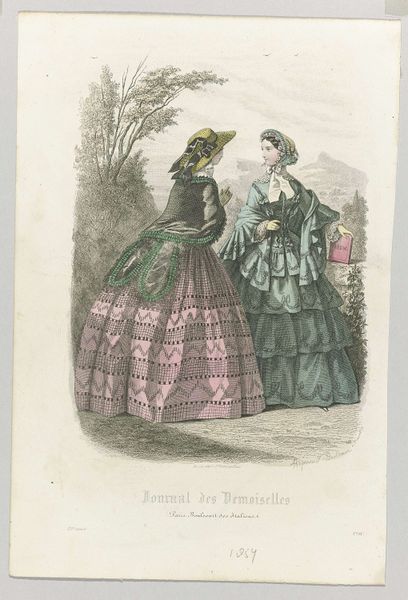
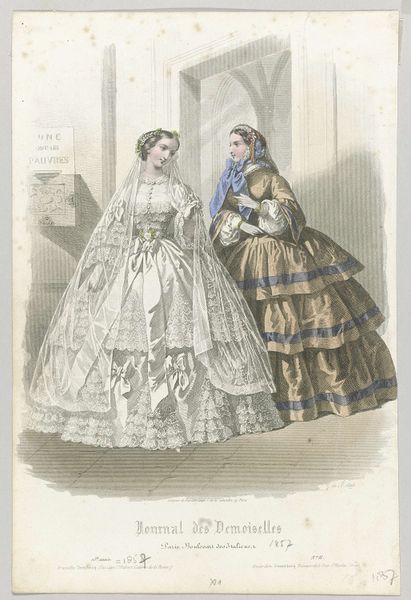
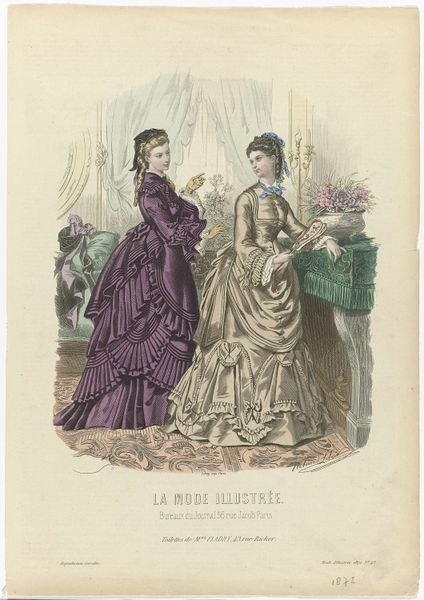
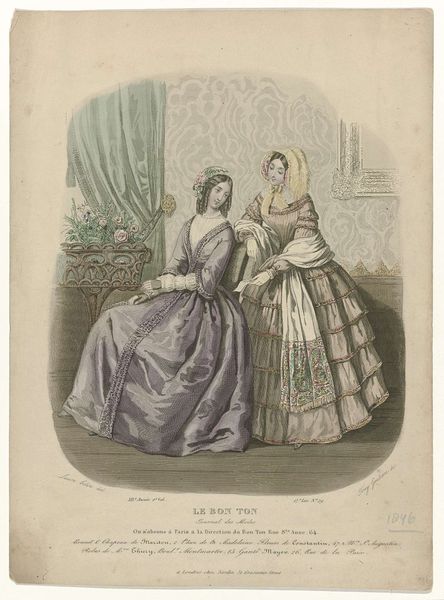
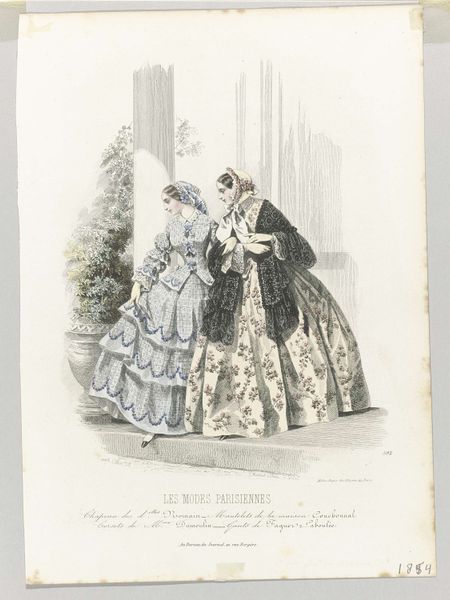
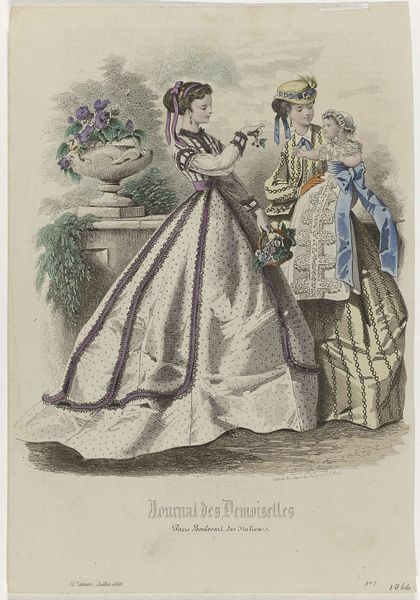
Curator: Here we have an 1856 lithograph titled "Journal des Demoiselles, 1856, 24e ann\u00e9e, No. 12," attributed to Gabriel Xavier Montaut d'Oleron. It presents two women indoors. Editor: The first thing that strikes me is the contrast between the two figures. One is cloaked in darker hues and a bonnet, almost a sense of guarded formality. The other is presented in layered whites and ribbon, exposed. The chromatic divergence in their costumes presents two visual spheres within one space. Curator: Indeed. This print is from a fashion magazine, intended to showcase the latest trends. The detail in rendering fabrics is quite remarkable. Note the varying textures, the play of light on the silk, the delicate lace. Semiotically, these costumes telegraph the social values of the time through meticulous layering. Editor: Considering the context of the mid-19th century, particularly within Parisian society, fashion was a crucial identifier. This was more than just aesthetic choice; it signaled status, allegiance, and even political leanings. Do you think these dresses served also as markers for courtship strategies or social mobility? Curator: That's certainly a compelling angle. There is this implied dialogue here, coded through each dress’ unique articulation of volume, fabric, and ornament. It invites speculation on the figures' roles—perhaps a seasoned woman advising a younger one about navigating social waters. The mirror in the background could reinforce a reflective space, alluding to societal introspection or self-assessment, don't you think? Editor: The placement of the mirror, almost acting as another observer within the scene, is uncanny. How women perceived and portrayed themselves through clothing—especially within visual texts like these—demonstrates agency but also submission, at times, within patriarchal structures. This visual object becomes another player in social negotiations. Curator: Absolutely. I appreciate how you bring historical context into the analysis, particularly the social constraints shaping these representations. Observing and interpreting these complex visual cues provides critical insight. Editor: Thank you, understanding how the formal techniques translate to communicating social power, and how clothing, through fashion periodicals such as "Journal des Demoiselles," facilitated or constrained social interactions adds layers to what might appear simply ornamental. Curator: It has truly shown me fresh perspective on its cultural depth.
Comments
No comments
Be the first to comment and join the conversation on the ultimate creative platform.
 Collect
 React
React Comment
More like this