drawing, print, etching, paper, pencil
#
drawing
# print
#
etching
#
caricature
#
paper
#
personal sketchbook
#
romanticism
#
pencil
#
15_18th-century
#
genre-painting
Dimensions: 212 × 322 mm (image); 245 × 350 mm (plate); 260 × 372 mm (sheet)
Copyright: Public Domain
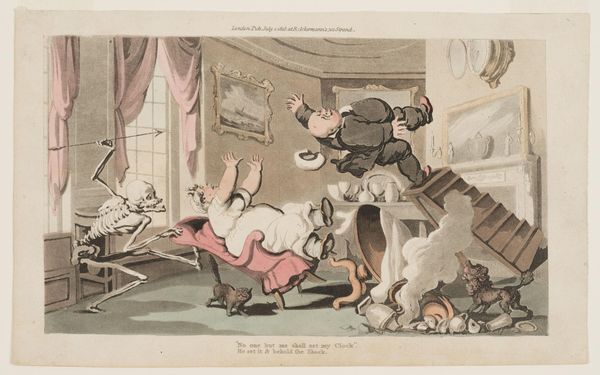
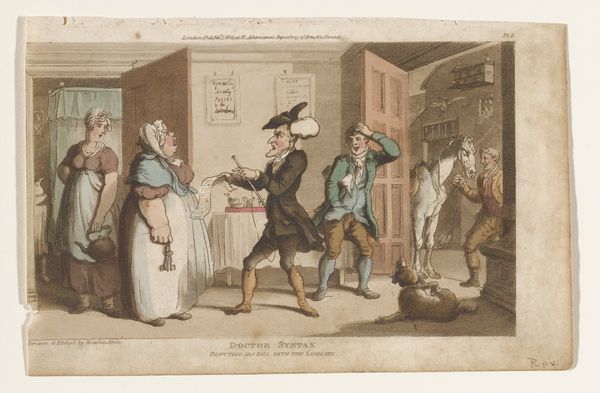
Curator: Right, let’s dive into this intriguing print called "I Smell a Rat or a Rogue in Grain," likely from 1807, by Thomas Rowlandson. It’s currently residing here at the Art Institute of Chicago. Editor: Immediately, I'm struck by the sheer chaos! The composition is bursting with frenetic energy and those grotesque caricatures, especially those bulging eyes and mouths! It gives off this feeling of a theatrical uproar—a play gone hilariously wrong. Curator: Indeed! Rowlandson was a master of social satire, you know, skewering the follies and hypocrisies of his time with a good dose of humor. This particular piece seems to be poking fun at corruption, perhaps within the grain trade. The exaggerated characters are wrestling and brawling amidst sacks of grain, which are humorously labeled "Mustard Seed," "Rape Seed," and "Turnip Seed," for example. The labels are clearly satirical jabs, implying something rotten is lurking beneath the surface. Editor: Absolutely! And look at how Rowlandson depicts these figures— they're grotesque caricatures, yes, but they're also very deliberately gendered and classed. You've got these stout, almost piggish merchants literally fighting amongst themselves. Their struggle visually embodies how material greed contorts the very bodies and souls of these economic elite. It is an etching, aquatint, and hand-colored after all, thus offering immense artistic value. Curator: True, there is definitely some biting commentary about social inequalities. Even the small details, like the text on the wall and the lurking figure in the corner, add layers to the story. And do not get me started with the meaning behind the presence of the flying owl; this could symbolize bad luck as this piece alludes to possible dark secrets coming to light in their dealings. Editor: I think, too, Rowlandson really understood how to make a political point without being overly didactic. It’s subtle, like when his contemporary James Gillray does the same! This artwork is like a snippet from a scandalous performance. Curator: And this speaks volumes about the late 18th and early 19th centuries and how such subject matters and characters had cultural meaning, particularly for British society. Overall, I'd say this piece encapsulates the Romantic era's fascination with satire, genre-painting, and the critical role artists like Rowlandson played in holding society accountable. Editor: It’s also a potent reminder that socio-political issues—be they corruption or inequity—don't exist in the abstract. Instead, these manifest into a really embodied messiness where characters engage in struggle and where chaos then reigns.
Comments
No comments
Be the first to comment and join the conversation on the ultimate creative platform.
 Collect
 React
React Comment
More like this