

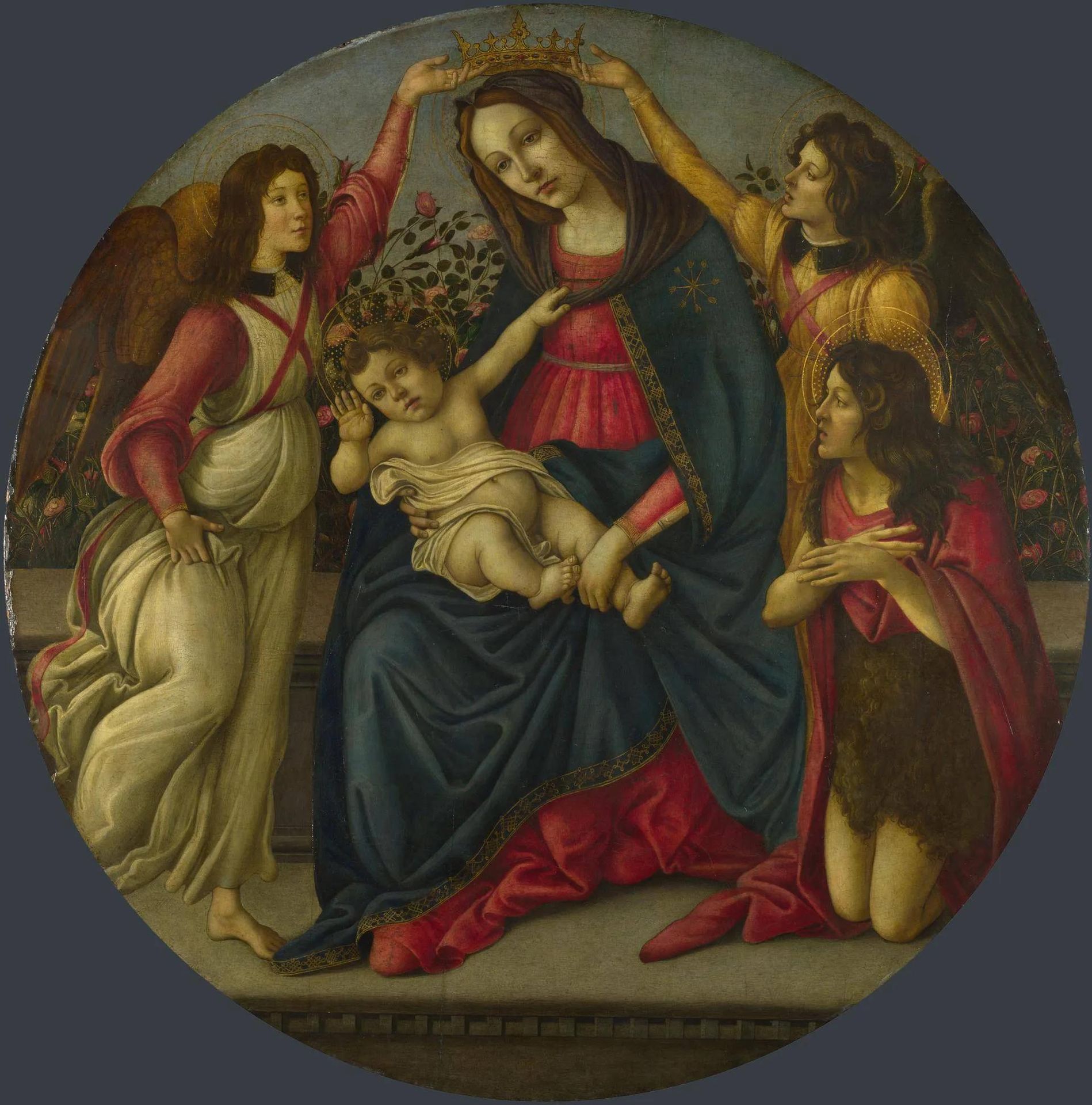
The Virgin and Child with Saint John and Two Angels


Listen to curator's interpretation
Curatorial notes
Sandro Botticelli painted “The Virgin and Child with Saint John and Two Angels” during the early Renaissance in Florence, a period marked by a renewed interest in classical antiquity and humanism. At first glance it’s a tender depiction of motherhood. But look again; the power dynamics at play reflect the era's gendered expectations and social hierarchies. Mary is both mother and Queen of Heaven, as she is crowned by angels. Meanwhile, John the Baptist kneels in deference. Botticelli’s use of soft colors and graceful lines creates a sense of harmony, yet the weight of their roles rests heavily on these figures, particularly the Virgin, who embodies both earthly and divine responsibilities. Mary’s gaze is cast downwards, melancholic, as she stares into the future and understands her child's fate. The painting serves as a reminder of the complex negotiations of identity, duty, and faith, and the emotional weight carried by individuals within these structures.