About this artwork
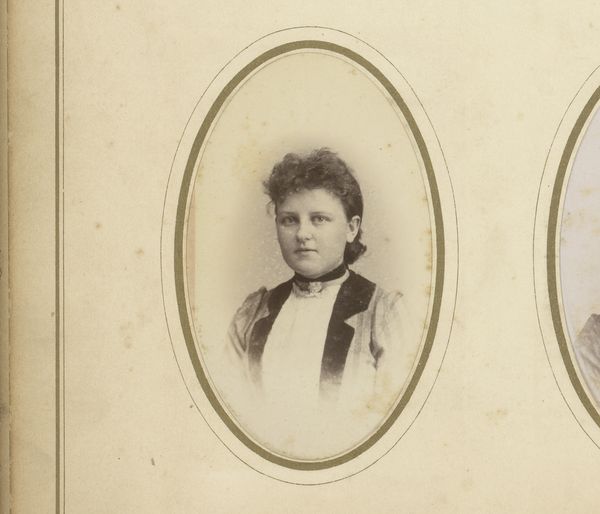
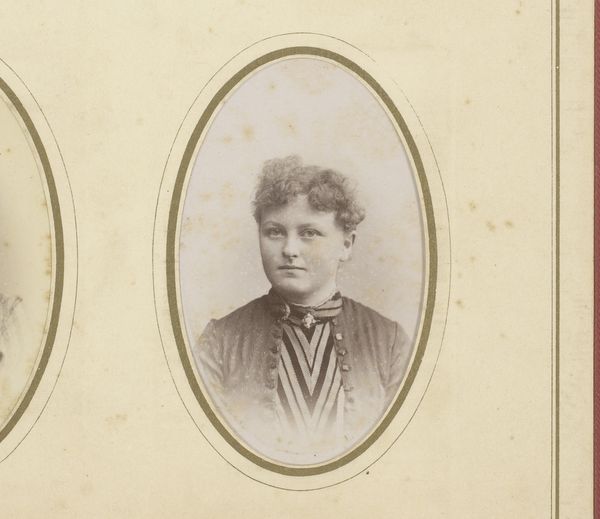
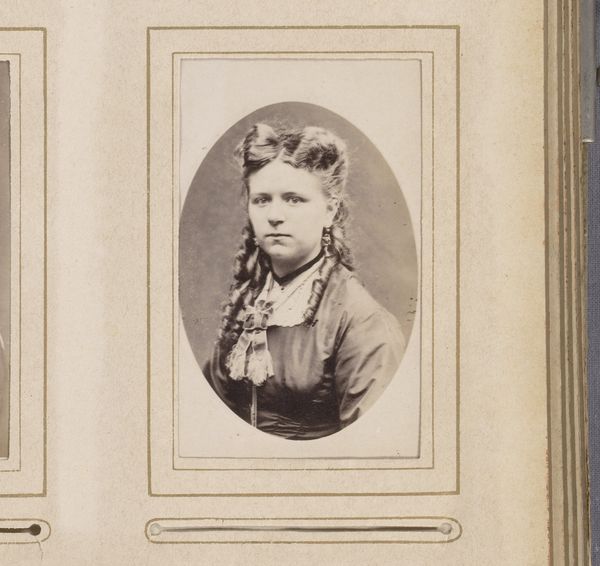
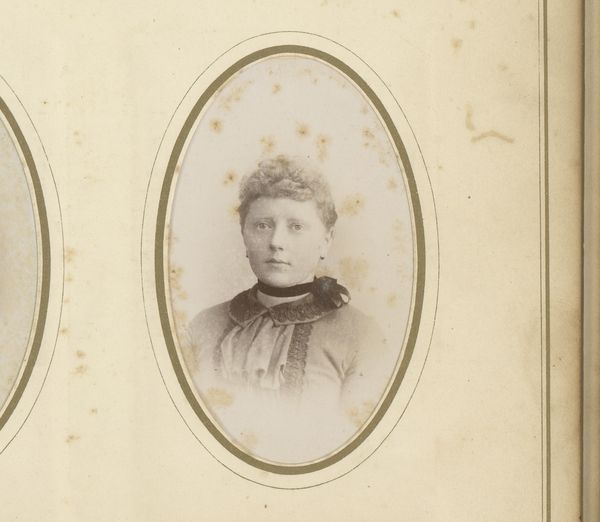
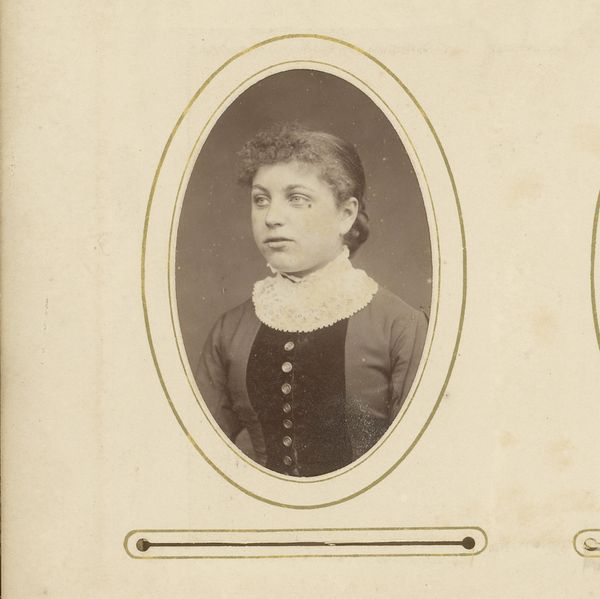
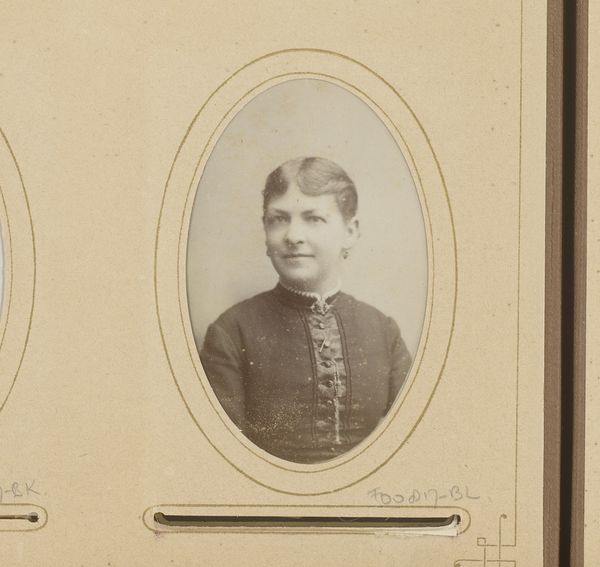
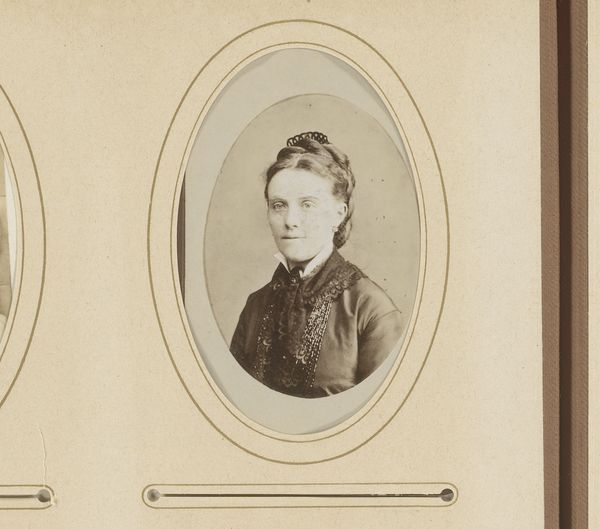
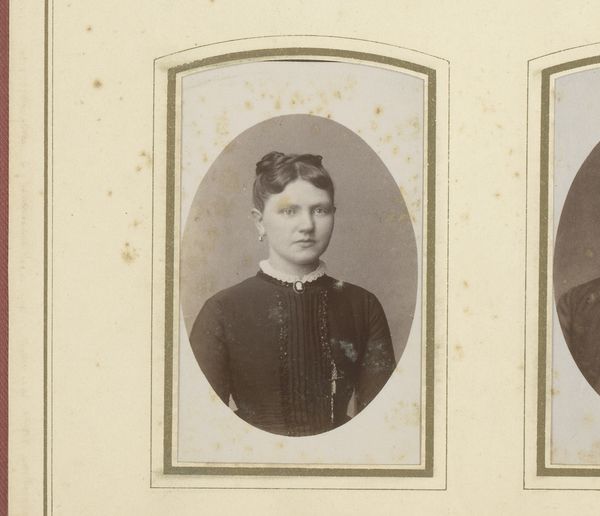
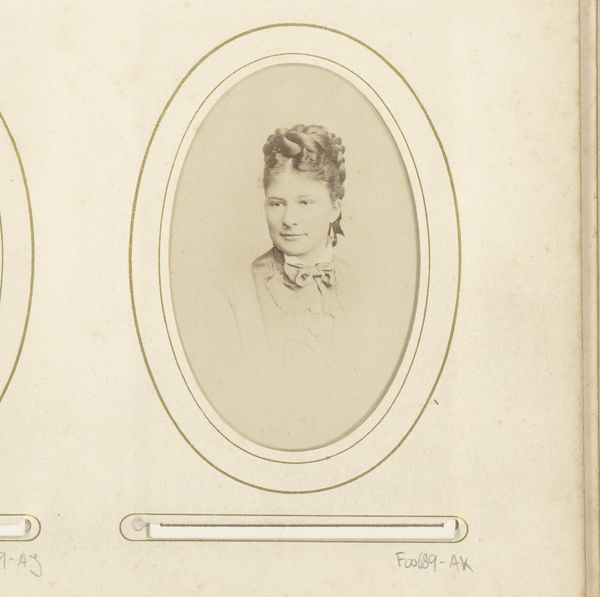
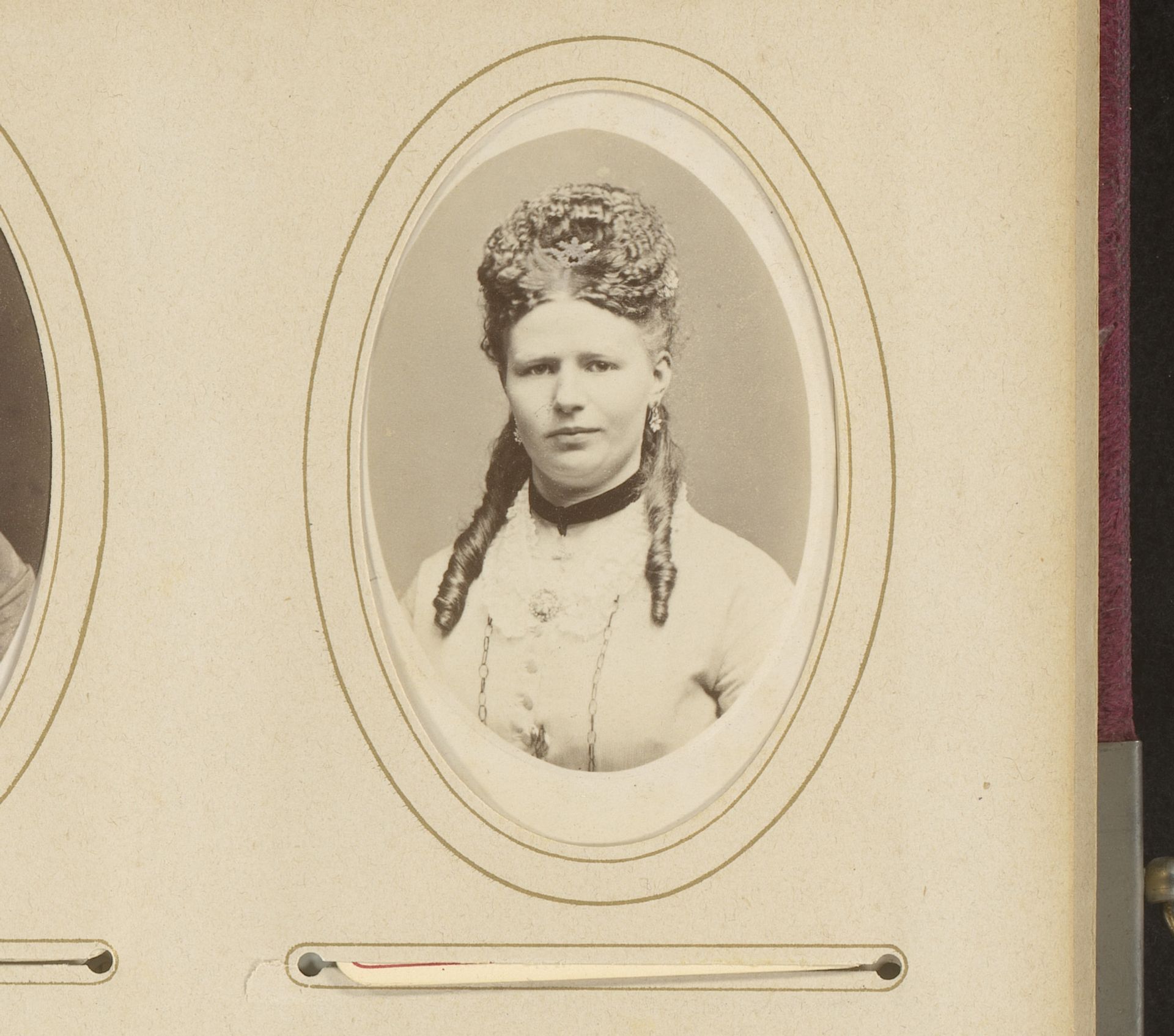
This portrait of a young woman with curled hair was made by Friedrich Julius von Kolkow, and is a testament to the power of photography during its rise in popularity. The photograph itself, while seemingly simple, represents a shift in how images were created and consumed. Unlike painting, photography offered a relatively quick and inexpensive method for capturing likenesses. This accessibility democratized portraiture, making it available to a wider segment of society beyond the wealthy elite. Consider the labor involved: from the photographer setting up the shot, to the sitter posing patiently, every element contributed to the final product. The rise of photography studios created new jobs, reflecting broader changes in labor practices and consumer culture. By considering photography as both a technical process and a social practice, we gain a richer understanding of its impact on society. It challenges the traditional art-historical hierarchy.
Portret van een jonge vrouw met pijpenkrullen
1880 - 1900

Friedrich Julius von Kolkow
1839 - 1914Location
RijksmuseumArtwork details
- Medium
- photography, gelatin-silver-print
- Dimensions
- height 81 mm, width 52 mm
- Location
- Rijksmuseum
- Copyright
- Rijks Museum: Open Domain
Tags
Comments
Share your thoughts
About this artwork
This portrait of a young woman with curled hair was made by Friedrich Julius von Kolkow, and is a testament to the power of photography during its rise in popularity. The photograph itself, while seemingly simple, represents a shift in how images were created and consumed. Unlike painting, photography offered a relatively quick and inexpensive method for capturing likenesses. This accessibility democratized portraiture, making it available to a wider segment of society beyond the wealthy elite. Consider the labor involved: from the photographer setting up the shot, to the sitter posing patiently, every element contributed to the final product. The rise of photography studios created new jobs, reflecting broader changes in labor practices and consumer culture. By considering photography as both a technical process and a social practice, we gain a richer understanding of its impact on society. It challenges the traditional art-historical hierarchy.
Comments
Share your thoughts