About this artwork
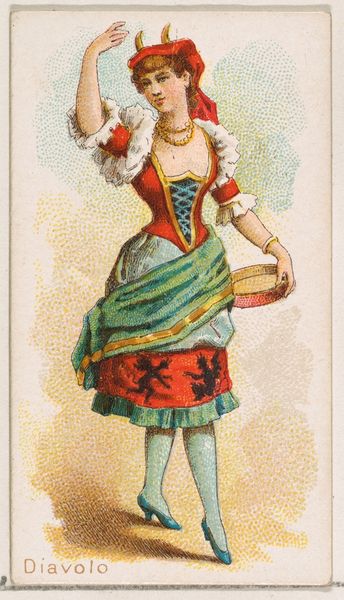
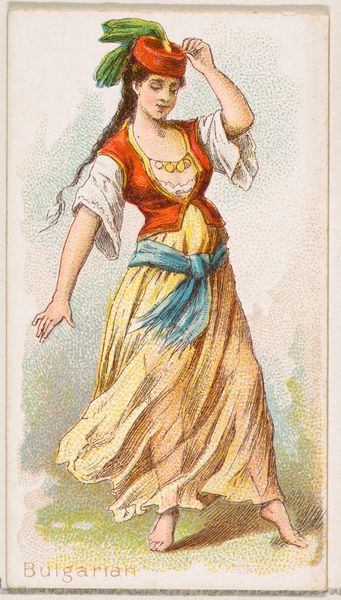
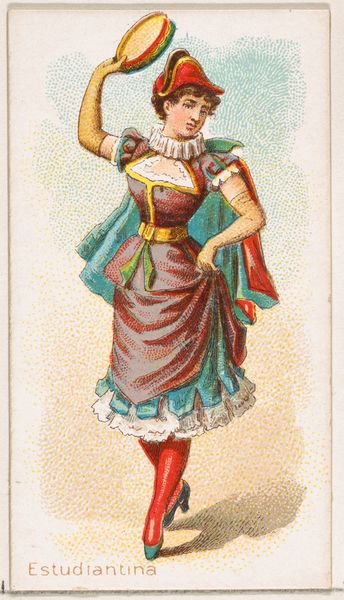
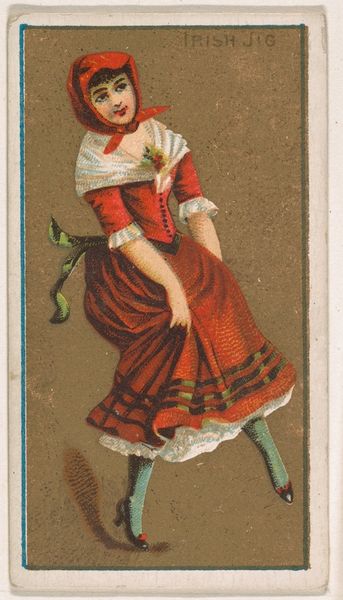
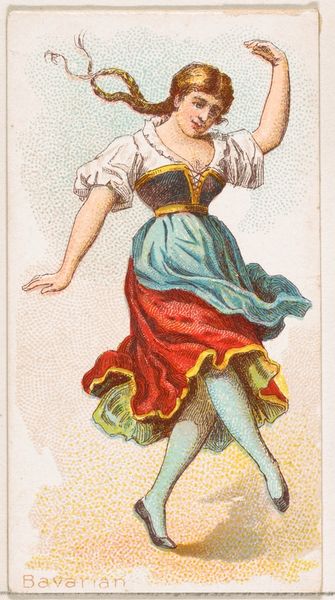
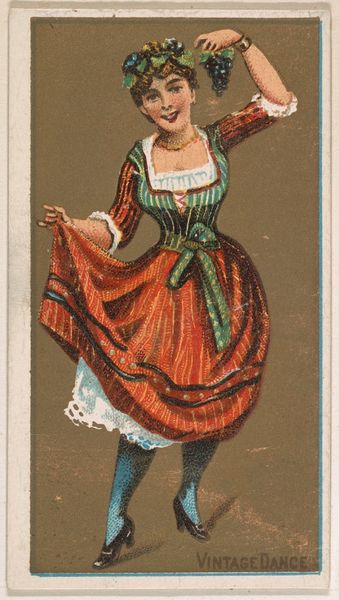
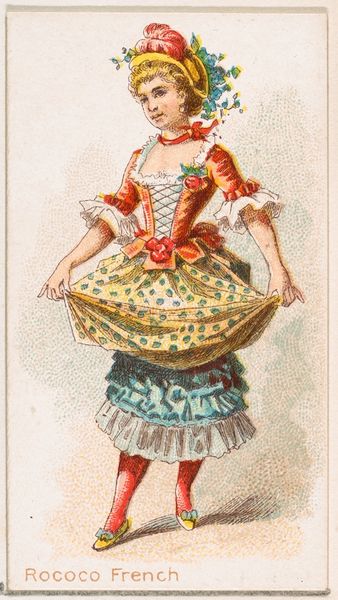
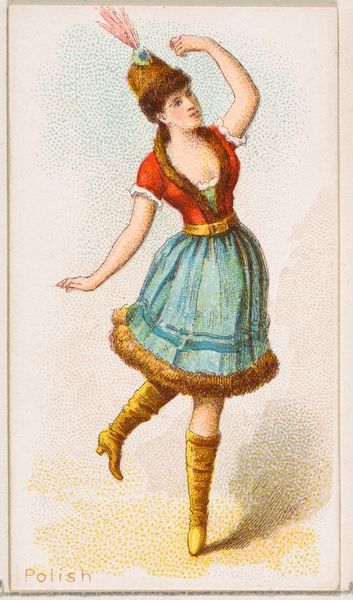
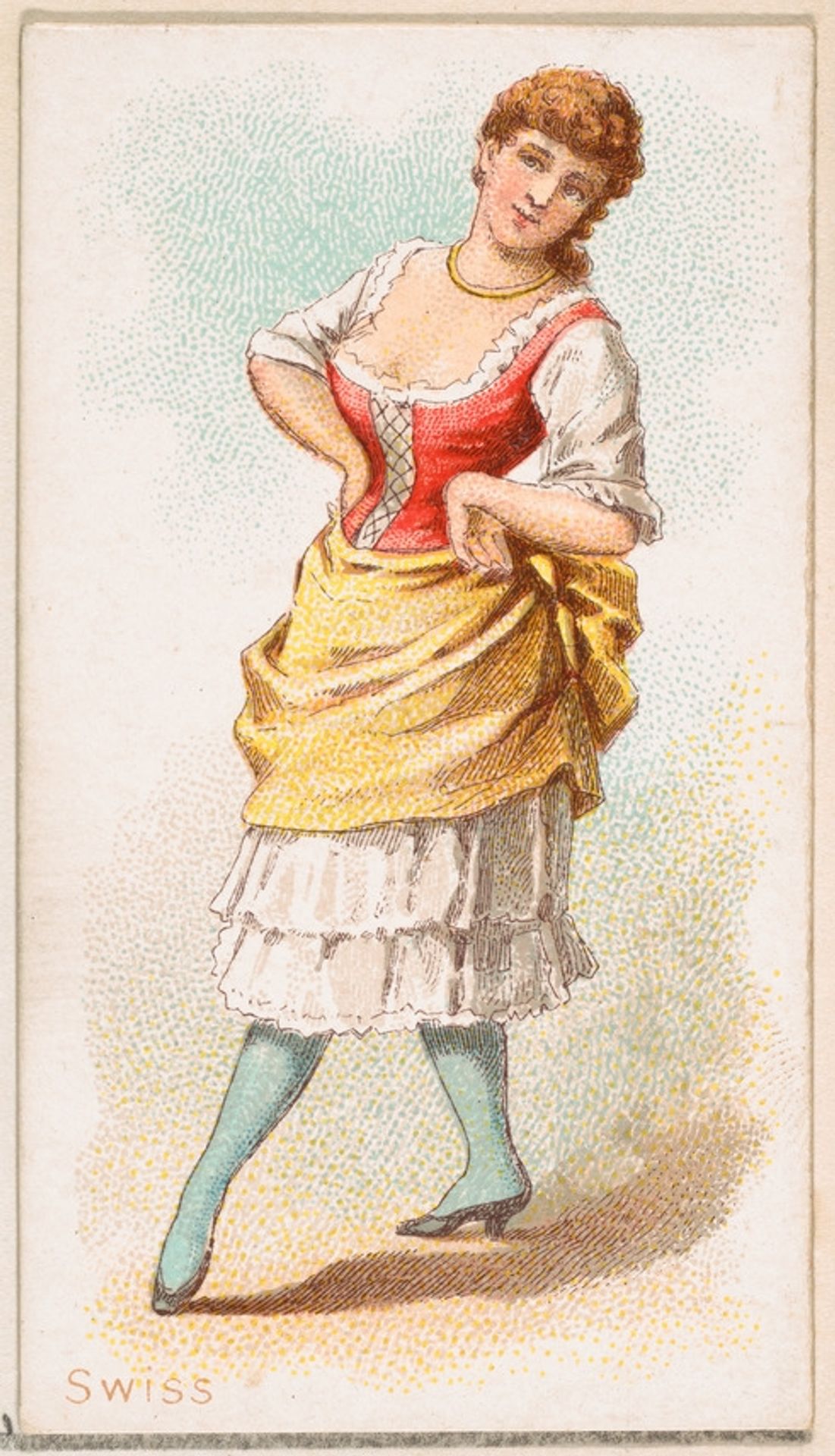
This small print, Swiss Dancer, comes from the Dancing Women series by Wm. S. Kimball & Co. Notice the dancer's pose: the tilt of her head, hands on her hips, and one leg extended suggest movement. This liveliness is cleverly captured through a network of graphic lines and a strategic use of color. The red bodice and golden apron create a central focus, while the frilled petticoat and light blue stockings add layers of detail that lead the eye downward. The background is subtly mottled with pale green and gray, suggesting atmosphere without defining space. The print's formal structure provides a window into understanding the cultural codes of the time. Here, the dancer is rendered as both an individual and an archetype, embodying notions of femininity and cultural identity. This reflects the evolving meanings ascribed to women's bodies and their representation in popular culture. Consider how the arrangement of lines and colors serves not merely as decoration, but as a symbolic language reflecting broader cultural narratives and inviting varied interpretations.
Swiss Dancer, from the Dancing Women series (N186) issued by Wm. S. Kimball & Co.
1889

William S. Kimball & Company
@williamskimballcompany
The Metropolitan Museum of Art
Metropolitan Museum of Art, New York, NYArtwork details
- Medium
- drawing, coloured-pencil, print
- Dimensions
- Sheet: 2 11/16 × 1 7/16 in. (6.9 × 3.7 cm)
- Location
- Metropolitan Museum of Art, New York, NY
- Copyright
- Public Domain
Tags
Comments
Share your thoughts
About this artwork
This small print, Swiss Dancer, comes from the Dancing Women series by Wm. S. Kimball & Co. Notice the dancer's pose: the tilt of her head, hands on her hips, and one leg extended suggest movement. This liveliness is cleverly captured through a network of graphic lines and a strategic use of color. The red bodice and golden apron create a central focus, while the frilled petticoat and light blue stockings add layers of detail that lead the eye downward. The background is subtly mottled with pale green and gray, suggesting atmosphere without defining space. The print's formal structure provides a window into understanding the cultural codes of the time. Here, the dancer is rendered as both an individual and an archetype, embodying notions of femininity and cultural identity. This reflects the evolving meanings ascribed to women's bodies and their representation in popular culture. Consider how the arrangement of lines and colors serves not merely as decoration, but as a symbolic language reflecting broader cultural narratives and inviting varied interpretations.
Comments
Share your thoughts