About this artwork
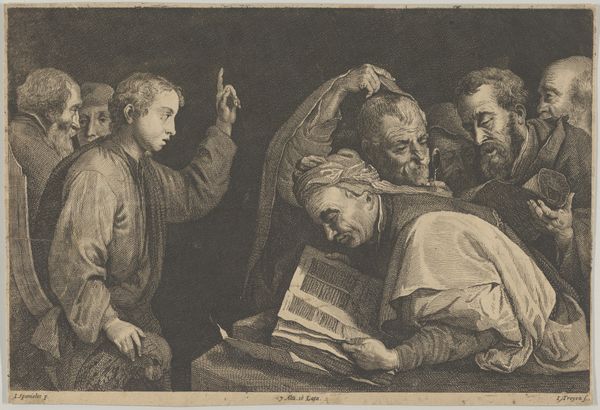
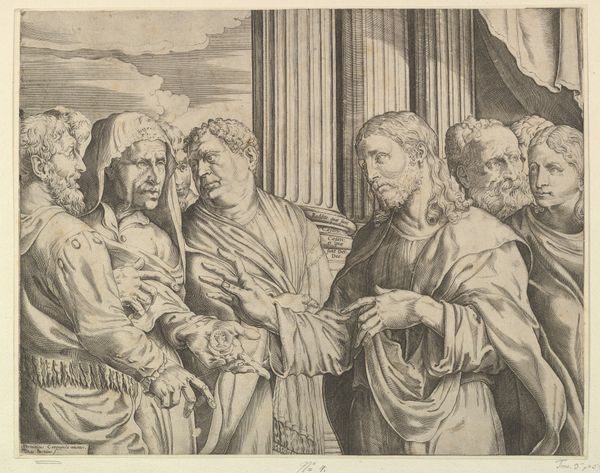
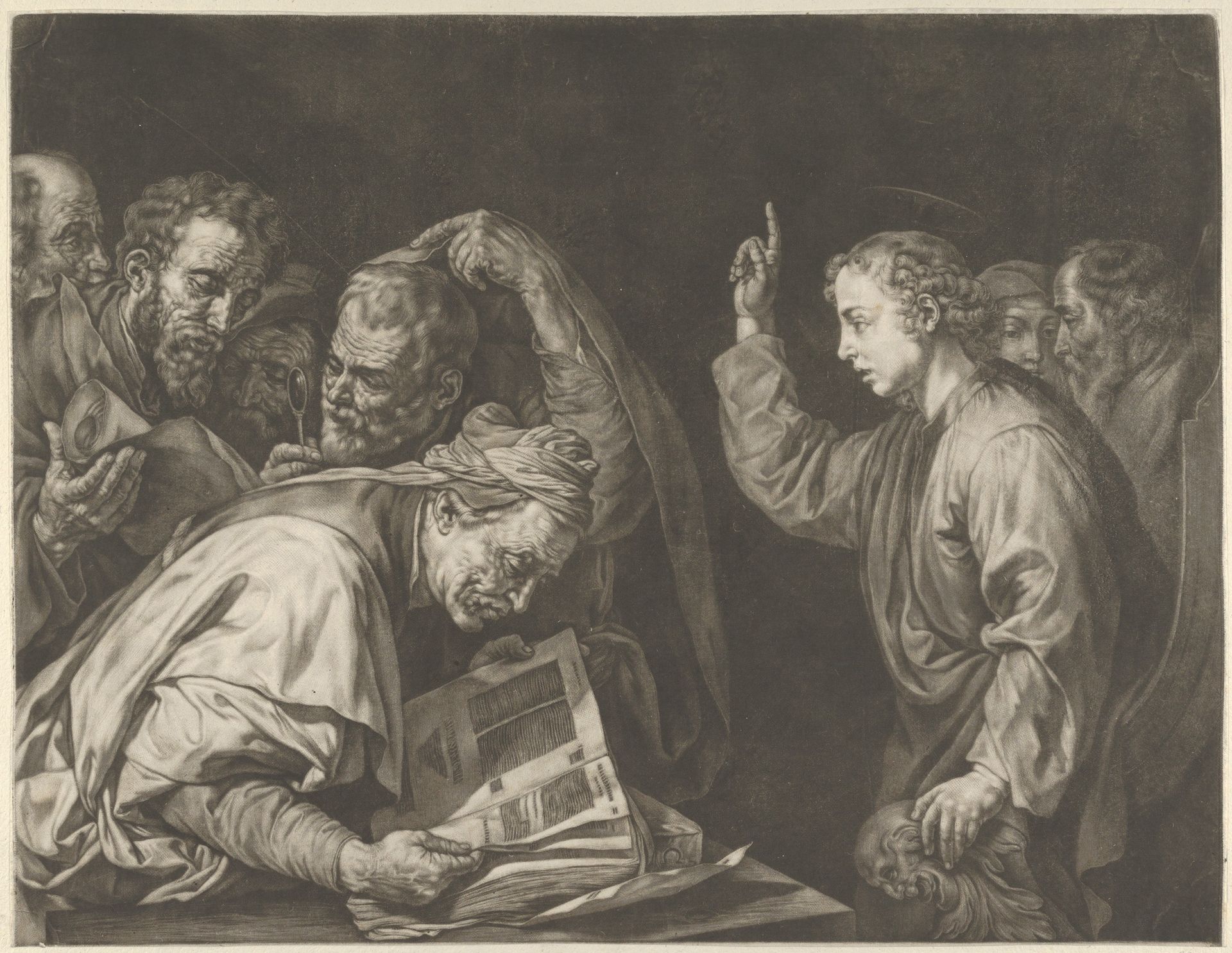
Jacob Männl created this print, Young Christ among the Doctors, sometime around the turn of the 18th century. It depicts a scene from the Gospel of Luke, where the young Jesus engages in theological debate with learned doctors in the Temple of Jerusalem. The image resonates with the historical context of the late 17th and early 18th centuries, a time when religious and intellectual authority was often challenged by emerging scientific and philosophical ideas. Männl, working in Germany, would have been deeply familiar with the social and religious structures of the Holy Roman Empire. The print presents Jesus not just as a divine figure but as an intellectual force, questioning established norms and beliefs, which would have mirrored the period's own questioning of tradition. To fully grasp this work, we can research the theological debates of the time, and the institutional role of religious art. In doing so, we can more fully appreciate how Männl’s print reflects and engages with the intellectual currents of his time.
Young Christ among the Doctors
1685 - 1695


Artwork details
- Medium
- print, engraving
- Dimensions
- Sheet: 12 1/2 × 16 1/4 in. (31.7 × 41.2 cm)
- Location
- Metropolitan Museum of Art, New York, NY
- Copyright
- Public Domain
Tags
Comments
Share your thoughts
About this artwork
Jacob Männl created this print, Young Christ among the Doctors, sometime around the turn of the 18th century. It depicts a scene from the Gospel of Luke, where the young Jesus engages in theological debate with learned doctors in the Temple of Jerusalem. The image resonates with the historical context of the late 17th and early 18th centuries, a time when religious and intellectual authority was often challenged by emerging scientific and philosophical ideas. Männl, working in Germany, would have been deeply familiar with the social and religious structures of the Holy Roman Empire. The print presents Jesus not just as a divine figure but as an intellectual force, questioning established norms and beliefs, which would have mirrored the period's own questioning of tradition. To fully grasp this work, we can research the theological debates of the time, and the institutional role of religious art. In doing so, we can more fully appreciate how Männl’s print reflects and engages with the intellectual currents of his time.
Comments
Share your thoughts