About this artwork
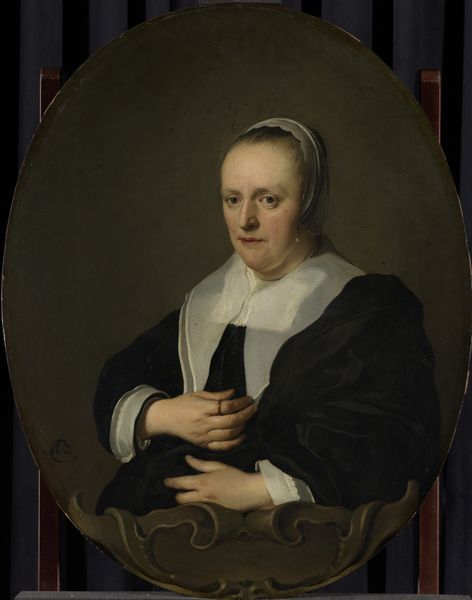
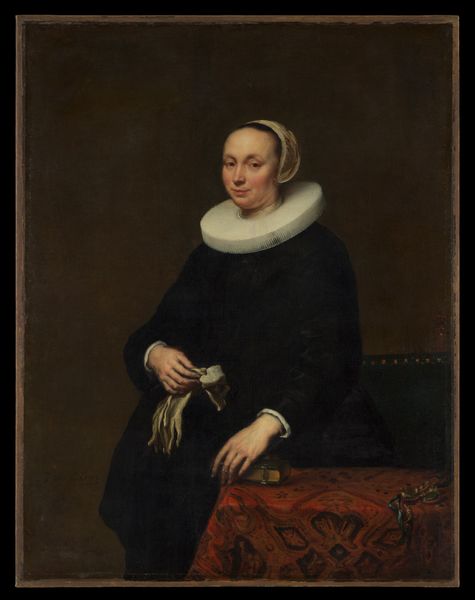
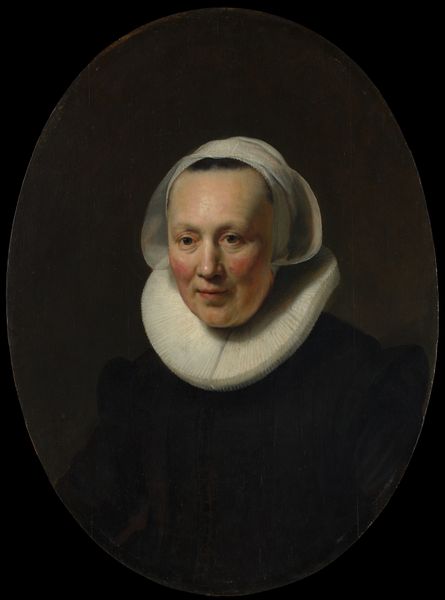
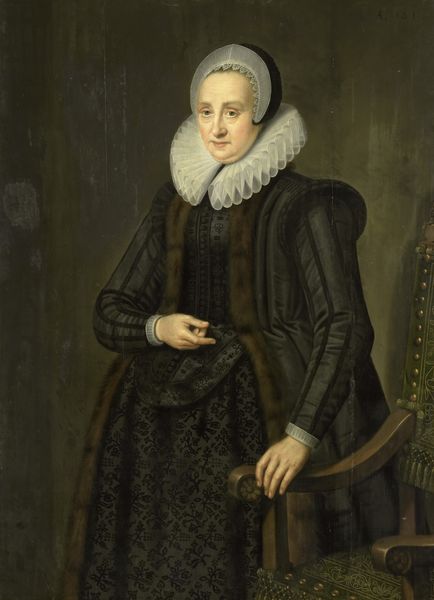
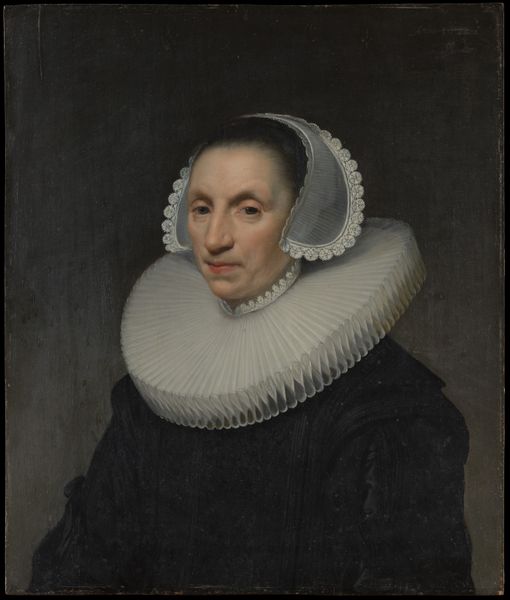
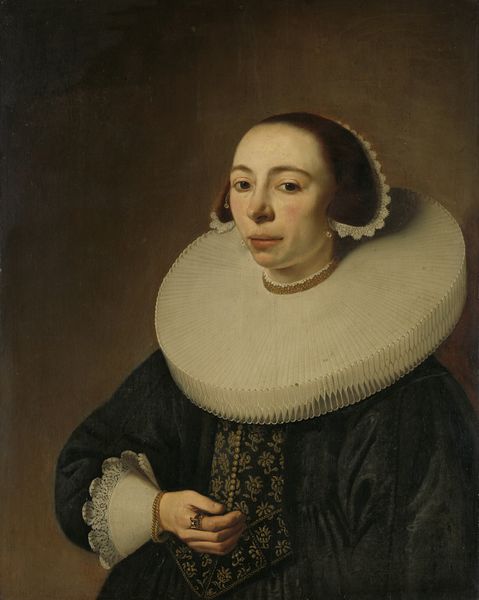
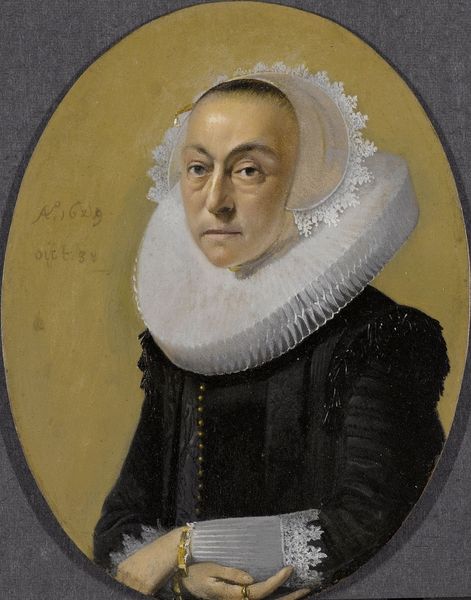
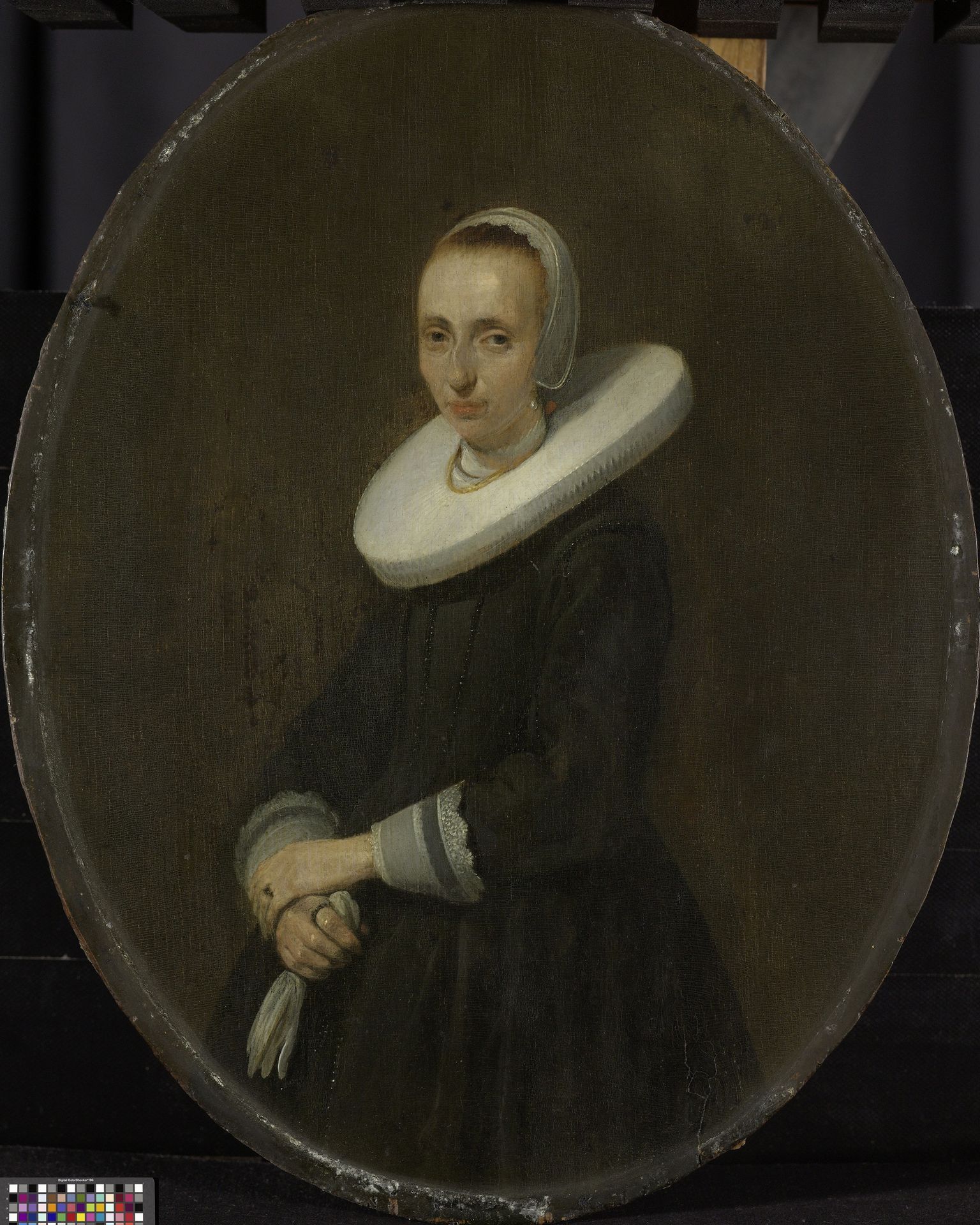
Gerard ter Borch painted this portrait of Johanna Bardoel, wife of Gerard van der Schalcke, using oil on panel. The subdued palette of blacks and whites, set against a muted brown backdrop, draws the eye to the stark contrast of Johanna’s crisp, white ruff. The oval format focuses our attention, creating an intimate yet formal encounter. Ter Borch masterfully plays with textures, from the smoothness of her skin to the detailed folds of fabric. The work exists within a cultural matrix that emphasizes restraint and decorum. The composition, carefully balanced, presents a semiotic language of status and morality. It begs questions such as: how do the formal qualities of portraiture reinforce societal norms, and how does ter Borch negotiate representation, power, and perception within the pictorial space? The formal constraints of the painting invite ongoing interpretation and reflect the complex interplay between artistic expression and cultural values.
Johanna Bardoel (d after 1667). Wife of Gerard van der Schalcke
1644

Gerard ter (II) Borch
1617 - 1681Location
RijksmuseumArtwork details
- Dimensions
- height 29.5 cm, width 23.5 cm
- Location
- Rijksmuseum
- Copyright
- Rijks Museum: Open Domain
Tags
pasteup
character portrait
sculpture
sculptural image
unrealistic statue
spray can art
underpainting
painting painterly
watercolor
statue
Comments
Be the first to share your thoughts about this work.
About this artwork
Gerard ter Borch painted this portrait of Johanna Bardoel, wife of Gerard van der Schalcke, using oil on panel. The subdued palette of blacks and whites, set against a muted brown backdrop, draws the eye to the stark contrast of Johanna’s crisp, white ruff. The oval format focuses our attention, creating an intimate yet formal encounter. Ter Borch masterfully plays with textures, from the smoothness of her skin to the detailed folds of fabric. The work exists within a cultural matrix that emphasizes restraint and decorum. The composition, carefully balanced, presents a semiotic language of status and morality. It begs questions such as: how do the formal qualities of portraiture reinforce societal norms, and how does ter Borch negotiate representation, power, and perception within the pictorial space? The formal constraints of the painting invite ongoing interpretation and reflect the complex interplay between artistic expression and cultural values.
Comments
Be the first to share your thoughts about this work.