About this artwork
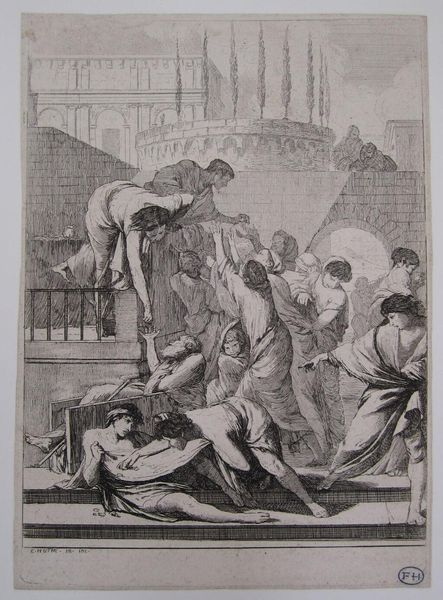
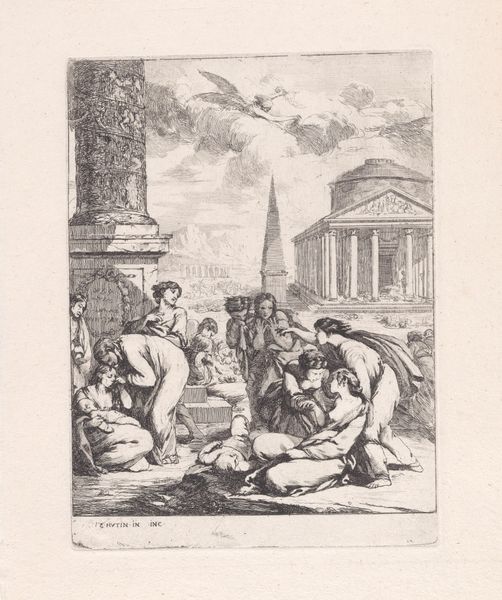
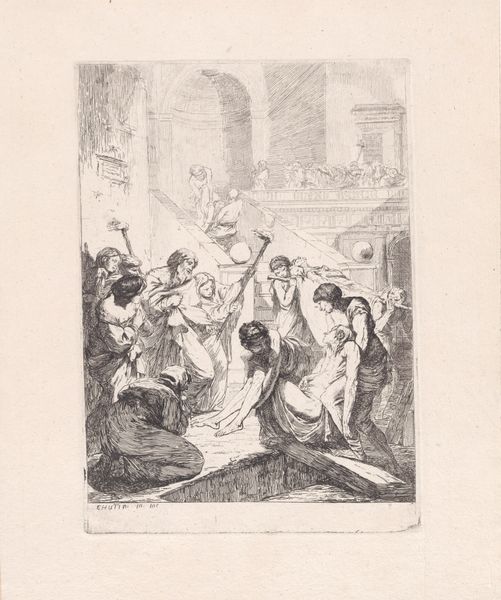
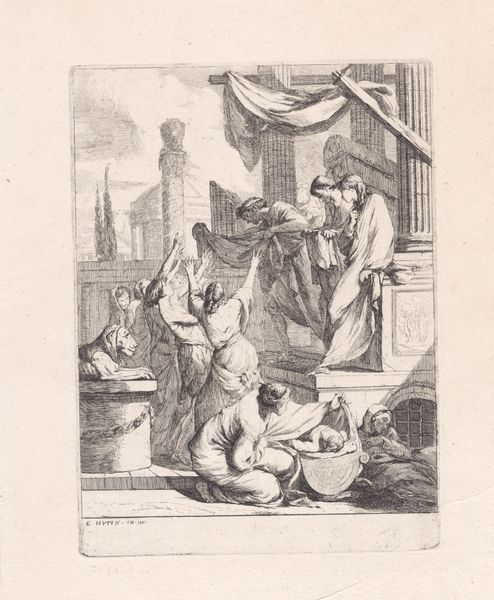
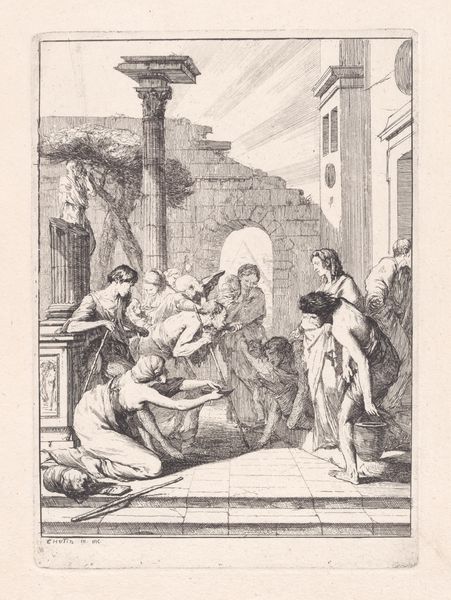
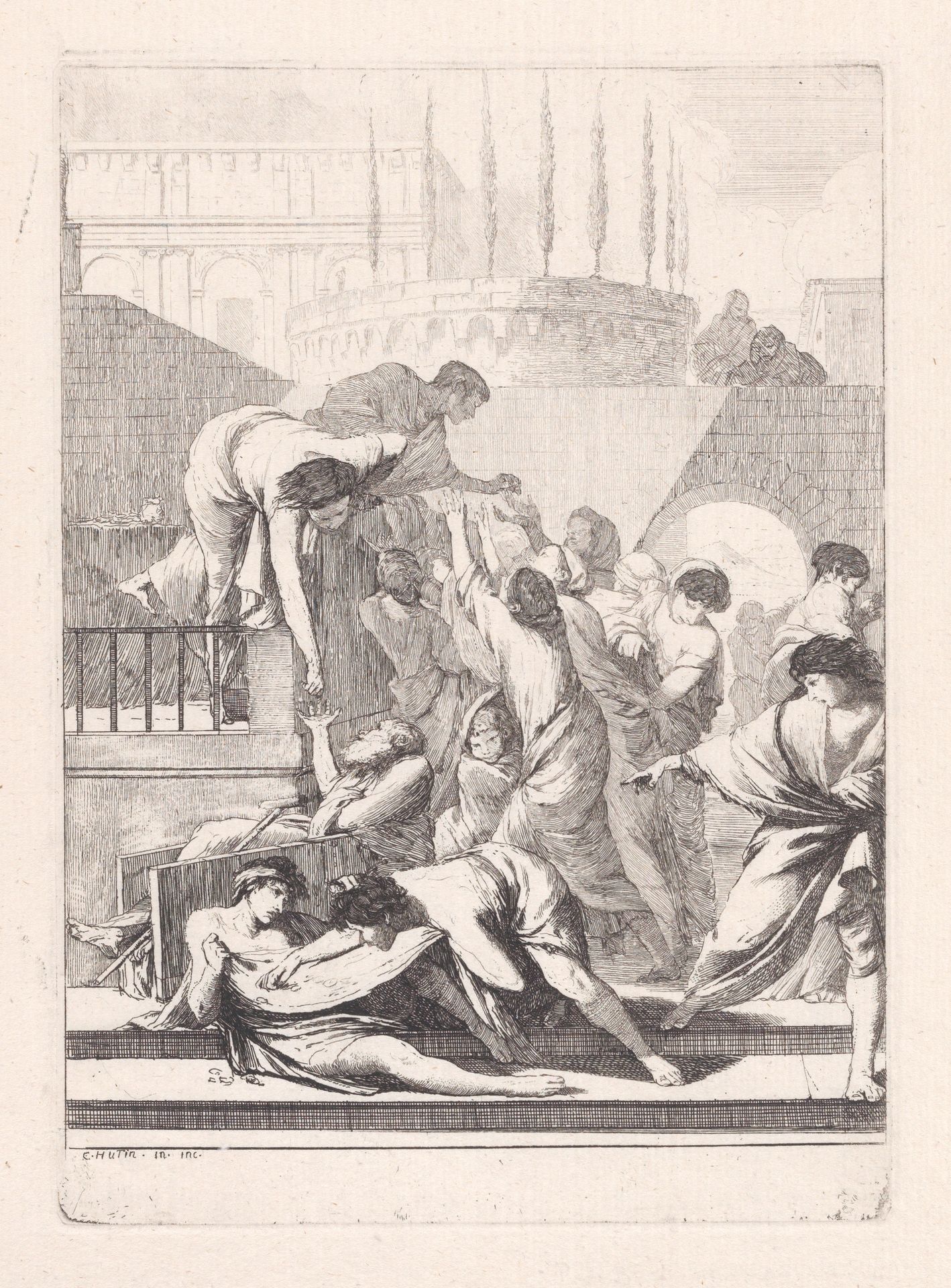
Editor: This is "Feeding the Hungry and Giving Alms" by François Hutin, created sometime between 1732 and 1763. It's an engraving, so it's got that fine, detailed line-work, and the subject matter looks pretty serious and sombre. What strikes you most about it? Curator: The image reverberates with gestures – hands reaching, bodies straining, faces etched with need. It evokes an ancient ritual, doesn't it? Note how Hutin anchors the composition with classical architecture. What historical echoes do you perceive within that choice? Editor: I suppose the architecture gives it a timeless quality, linking it to the idea of charity throughout history? Curator: Precisely. But observe further; isn't it more than that? Consider how the act of charity and giving connects not just to a tradition, but also to fundamental ideas. Does this portrayal suggest, perhaps, something about shared humanity, collective responsibility and societal cohesion? It carries strong religious undertones to be sure, linking back to biblical parables about charitable acts and societal expectations. What impact did this fusion of the ancient world and modern sensibilities had? Editor: It kind of layers meanings on top of each other, doesn't it? Curator: It does. Now, examine the faces – despair, hope, resignation. Each carefully etched line carries emotional and symbolic weight. Hutin is doing more than illustrating a scene, don’t you think? How does he utilize archetypes and enduring themes that tap into the wellspring of cultural memory? Editor: He's using visual shorthand to communicate complex ideas… sort of making them instantly readable. It makes you wonder, does this symbolic language of charity evolve, or stay the same over time? Curator: Indeed. Food for thought. These images work, perhaps, by reactivating a cultural understanding. Editor: It definitely changes how I see engravings; they can be more than just pictures.
Feeding the Hungry and Giving Alms
1732 - 1763


Artwork details
- Medium
- drawing, print, engraving
- Dimensions
- Sheet (Each): 11 11/16 × 9 7/16 in. (29.7 × 24 cm) Plate: 8 15/16 × 6 3/8 in. (22.7 × 16.2 cm)
- Location
- Metropolitan Museum of Art, New York, NY
- Copyright
- Public Domain
Tags
Comments
Share your thoughts
About this artwork
Editor: This is "Feeding the Hungry and Giving Alms" by François Hutin, created sometime between 1732 and 1763. It's an engraving, so it's got that fine, detailed line-work, and the subject matter looks pretty serious and sombre. What strikes you most about it? Curator: The image reverberates with gestures – hands reaching, bodies straining, faces etched with need. It evokes an ancient ritual, doesn't it? Note how Hutin anchors the composition with classical architecture. What historical echoes do you perceive within that choice? Editor: I suppose the architecture gives it a timeless quality, linking it to the idea of charity throughout history? Curator: Precisely. But observe further; isn't it more than that? Consider how the act of charity and giving connects not just to a tradition, but also to fundamental ideas. Does this portrayal suggest, perhaps, something about shared humanity, collective responsibility and societal cohesion? It carries strong religious undertones to be sure, linking back to biblical parables about charitable acts and societal expectations. What impact did this fusion of the ancient world and modern sensibilities had? Editor: It kind of layers meanings on top of each other, doesn't it? Curator: It does. Now, examine the faces – despair, hope, resignation. Each carefully etched line carries emotional and symbolic weight. Hutin is doing more than illustrating a scene, don’t you think? How does he utilize archetypes and enduring themes that tap into the wellspring of cultural memory? Editor: He's using visual shorthand to communicate complex ideas… sort of making them instantly readable. It makes you wonder, does this symbolic language of charity evolve, or stay the same over time? Curator: Indeed. Food for thought. These images work, perhaps, by reactivating a cultural understanding. Editor: It definitely changes how I see engravings; they can be more than just pictures.
Comments
Share your thoughts