About this artwork
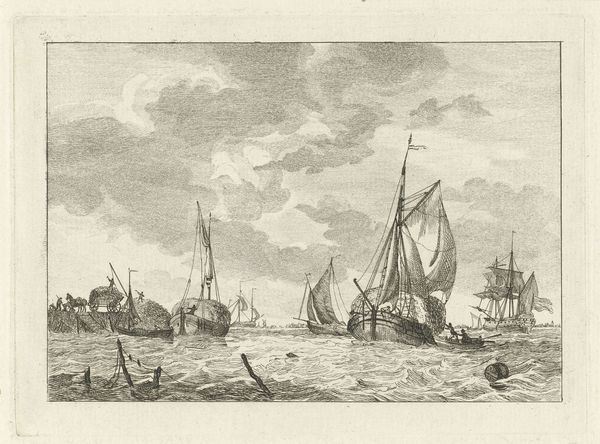
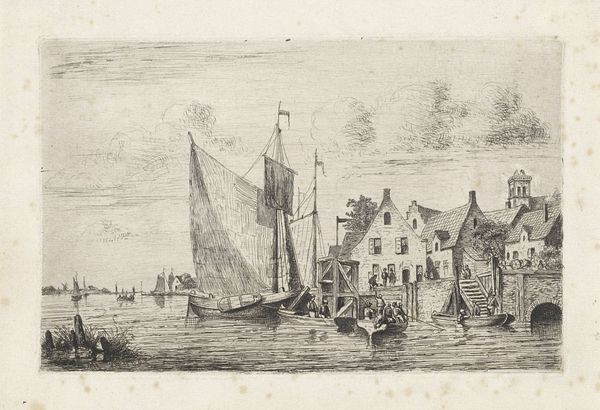
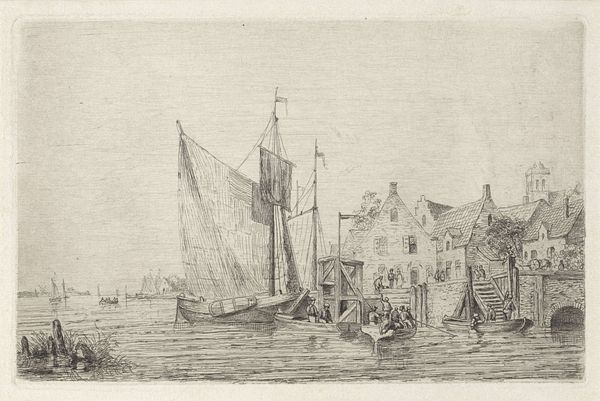
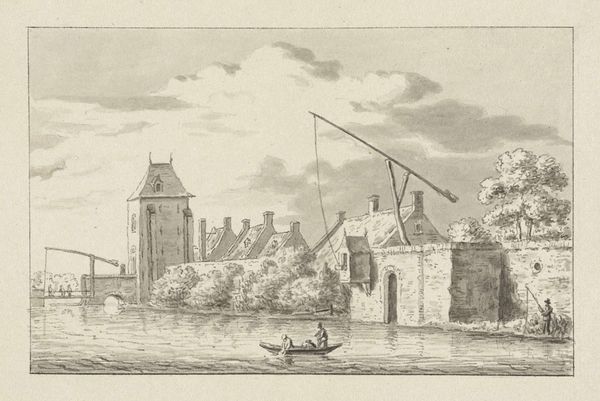
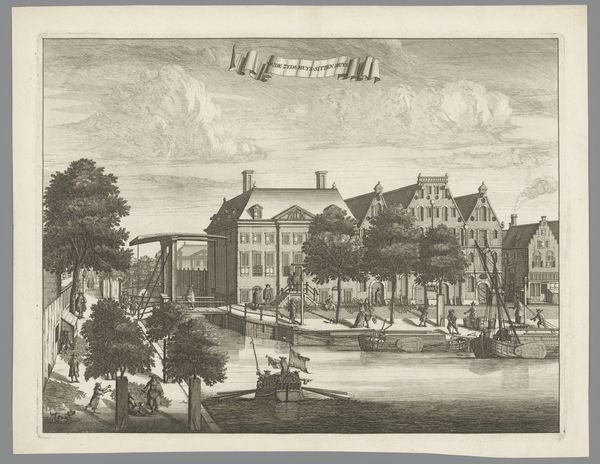
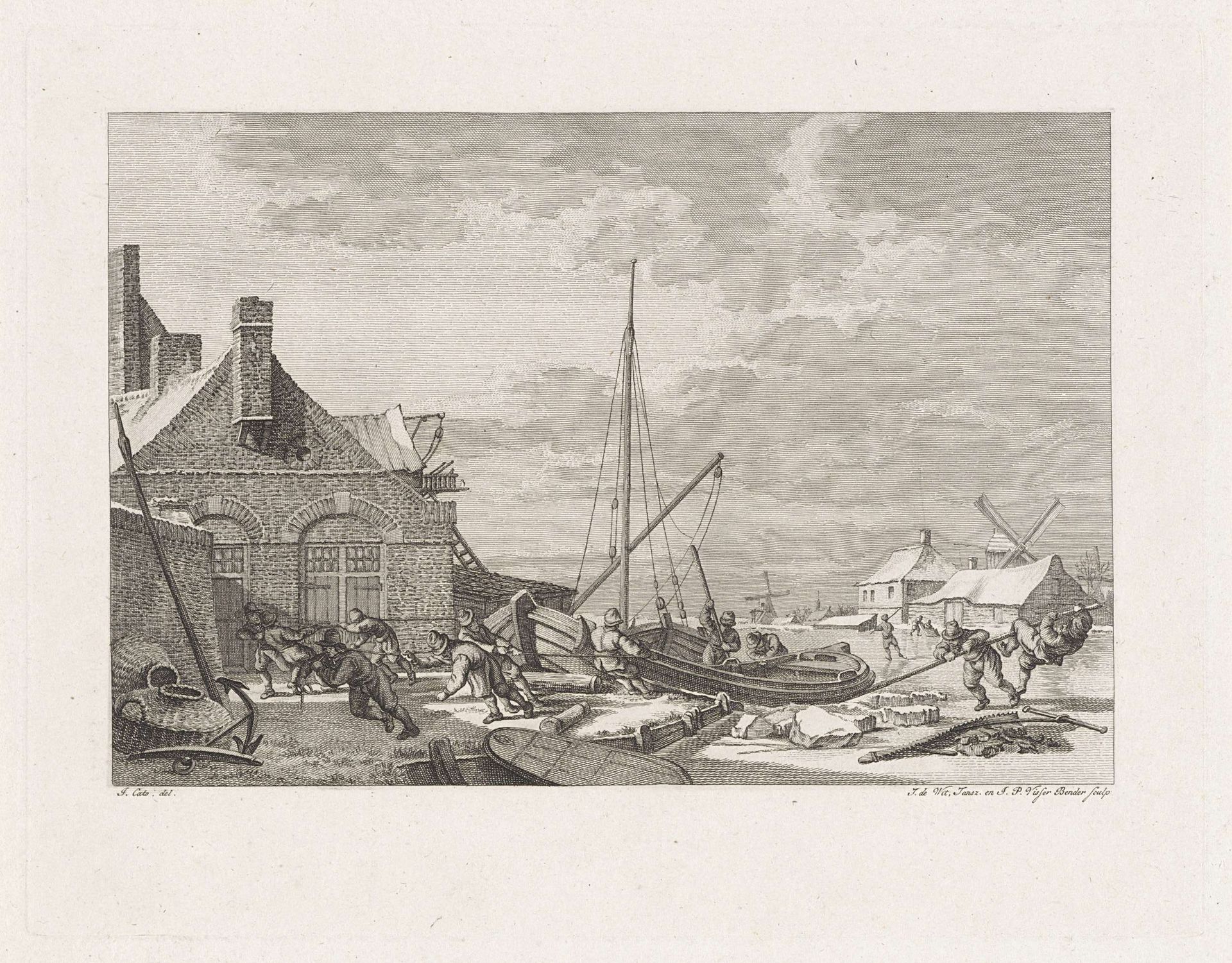
This print, made by Izaak Jansz. de Wit, captures a scene of men pulling a boat from the ice onto the shore. At first glance, the combined effort of the men may simply seem to portray hard work; however, this communal labor carries deeper cultural implications. Consider similar depictions in antiquity of groups working together to move large stones or erect monuments. Here, the act of pulling the boat together is a fundamental expression of social cohesion, a symbol of shared effort. In ancient Egyptian art, for example, we see similar scenes of collective labor during the construction of pyramids, reflecting a society bound together by shared goals. This motif has resurfaced, evolved, and taken on new meanings in different historical contexts, emphasizing its non-linear and cyclical progression throughout art history.
Mannen trekken een schuit uit het ijs op de wal 1795 - 1809

Izaak Jansz. de Wit
1744 - 1809Location
RijksmuseumArtwork details
- Medium
- drawing, engraving
- Dimensions
- height 197 mm, width 256 mm
- Location
- Rijksmuseum
- Copyright
- Rijks Museum: Open Domain
Tags
drawing
dutch-golden-age
old engraving style
landscape
genre-painting
engraving
Comments
No comments
About this artwork
This print, made by Izaak Jansz. de Wit, captures a scene of men pulling a boat from the ice onto the shore. At first glance, the combined effort of the men may simply seem to portray hard work; however, this communal labor carries deeper cultural implications. Consider similar depictions in antiquity of groups working together to move large stones or erect monuments. Here, the act of pulling the boat together is a fundamental expression of social cohesion, a symbol of shared effort. In ancient Egyptian art, for example, we see similar scenes of collective labor during the construction of pyramids, reflecting a society bound together by shared goals. This motif has resurfaced, evolved, and taken on new meanings in different historical contexts, emphasizing its non-linear and cyclical progression throughout art history.
Comments
No comments