About this artwork
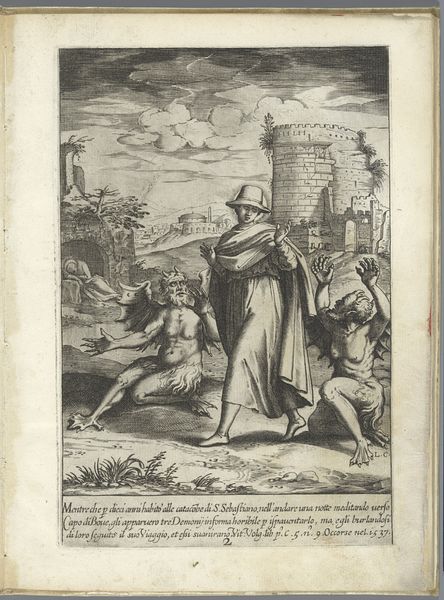
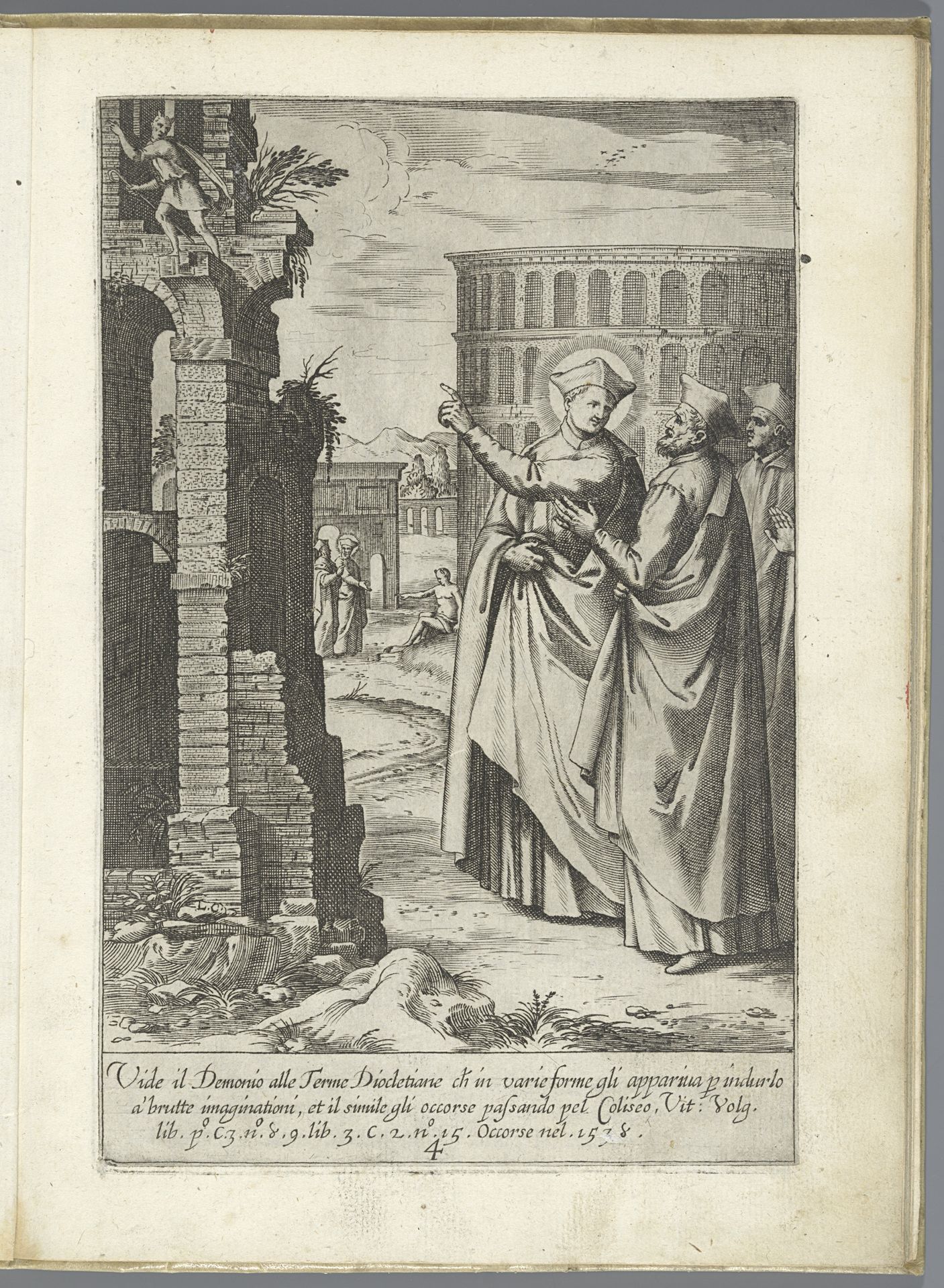
Luca Ciamberlano etched this print, "Verzoeking bij de thermen van Diocletianus," sometime between 1599 and 1641. The scene is dominated by a cardinal pointing towards a devilish figure atop the ruins of Diocletian's baths. The presence of devils lurking in classical ruins speaks to a deeper, ongoing cultural tension. Consider the "Uomo Selvatico," or wild man motif. This figure appears throughout European art, embodying untamed nature and primal instincts. Here, the devil mirrors that ancient symbol, resurfacing in a Christian context to represent temptation and moral decay. These motifs aren't linear; they're cyclical. The wild man becomes the devil, Rome's ruins become a playground for demons. It’s a potent reminder of how deeply rooted symbols can be, morphing through centuries, their primal energy finding new forms to haunt our collective imagination.
Verzoeking bij de thermen van Diocletianus
1630 - 1641
Luca Ciamberlano
1599 - 1641Location
RijksmuseumArtwork details
- Medium
- drawing, print, paper, engraving
- Dimensions
- height 228 mm, width 150 mm
- Location
- Rijksmuseum
- Copyright
- Rijks Museum: Open Domain
Tags
Comments
Share your thoughts
About this artwork
Luca Ciamberlano etched this print, "Verzoeking bij de thermen van Diocletianus," sometime between 1599 and 1641. The scene is dominated by a cardinal pointing towards a devilish figure atop the ruins of Diocletian's baths. The presence of devils lurking in classical ruins speaks to a deeper, ongoing cultural tension. Consider the "Uomo Selvatico," or wild man motif. This figure appears throughout European art, embodying untamed nature and primal instincts. Here, the devil mirrors that ancient symbol, resurfacing in a Christian context to represent temptation and moral decay. These motifs aren't linear; they're cyclical. The wild man becomes the devil, Rome's ruins become a playground for demons. It’s a potent reminder of how deeply rooted symbols can be, morphing through centuries, their primal energy finding new forms to haunt our collective imagination.
Comments
Share your thoughts