

1645 - 1661
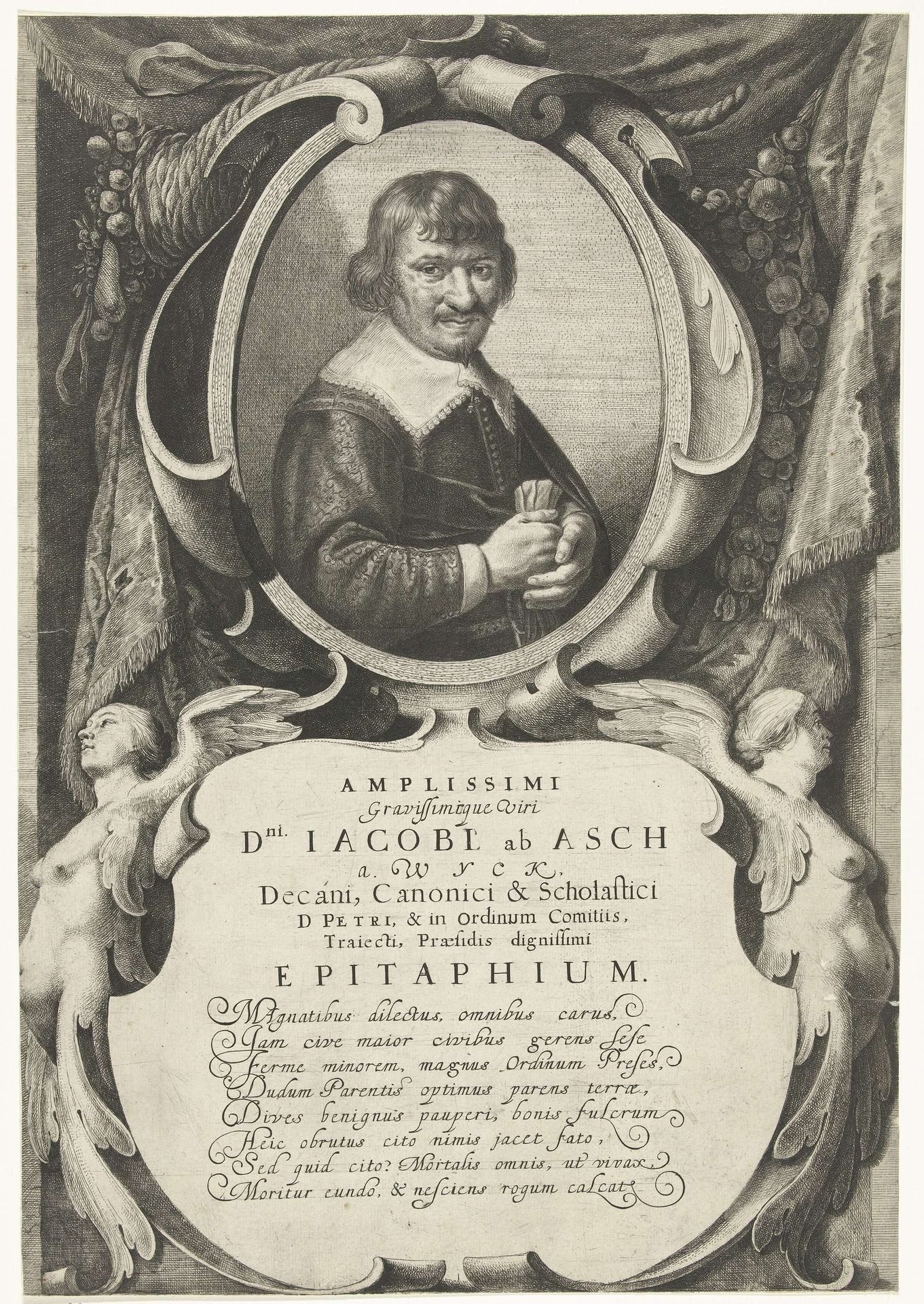
Epitaaf met portret van Jacob van Asch van Wijck

Jan Gerritsz van Bronckhorst
1603 - 1661Location
RijksmuseumListen to curator's interpretation
Curatorial notes
Editor: This engraving, "Epitaaf met portret van Jacob van Asch van Wijck," by Jan Gerritsz van Bronckhorst, was created sometime between 1645 and 1661. It’s quite ornate, and almost unsettling, like peering into a very specific moment of 17th-century Dutch society. What stands out to you as you look at it? Curator: The 'Ornate' is definitely Baroque, right? But that epitaph is an intersection of personal commemoration and social positioning, quite typical of its time, though. I see this as more than just a portrait; it’s a carefully constructed image meant to convey power, piety, and perhaps most interestingly, civic virtue. What does it tell us about the role and the status of Jacob van Asch van Wijck in the context of the Dutch Golden Age, do you think? Editor: So it's less about him as an individual, and more about the role he played? Curator: Precisely. Consider the Latin inscription and the allegorical figures surrounding his likeness. These are visual cues that would have resonated with a specific, educated audience, solidifying his legacy within a particular social and intellectual framework. What impact do you think this work might have had on perceptions of Dutch identity and governance at the time? How did it shape ideas? Editor: I guess I hadn't considered the political message behind what seemed like a memorial. Curator: These images were often used to negotiate social norms, right? Editor: Looking closer, knowing that, I see the power dynamics much clearer now. Thanks for pointing that out! Curator: It’s all about critically assessing how the social and personal intersect. Always!