c. 1868 - 1870
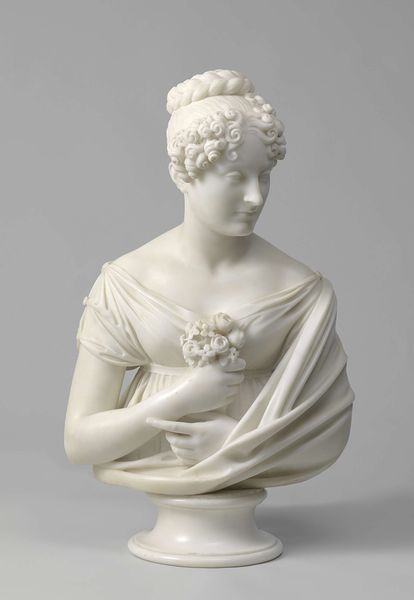
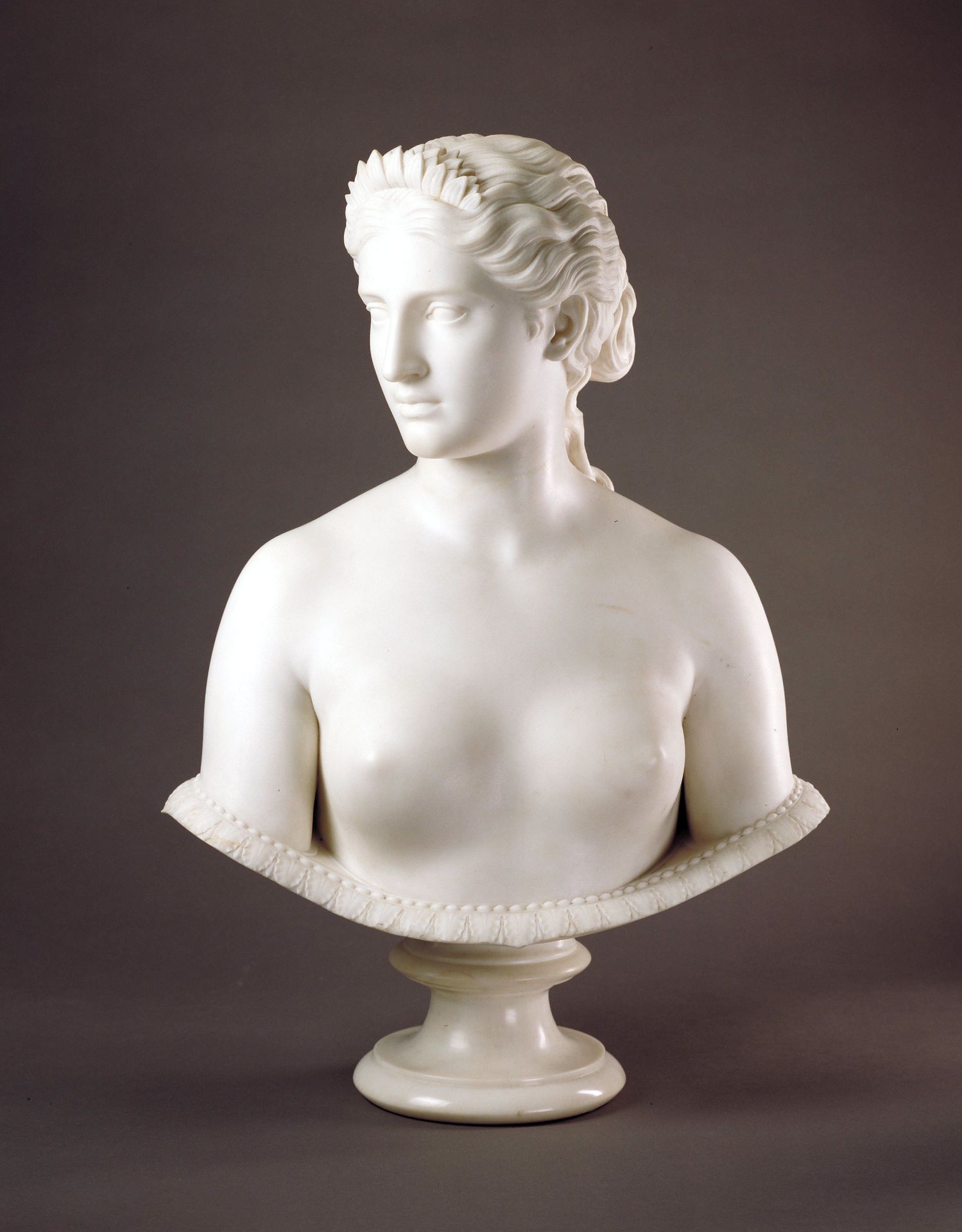
Clytie


Listen to curator's interpretation
Curatorial notes
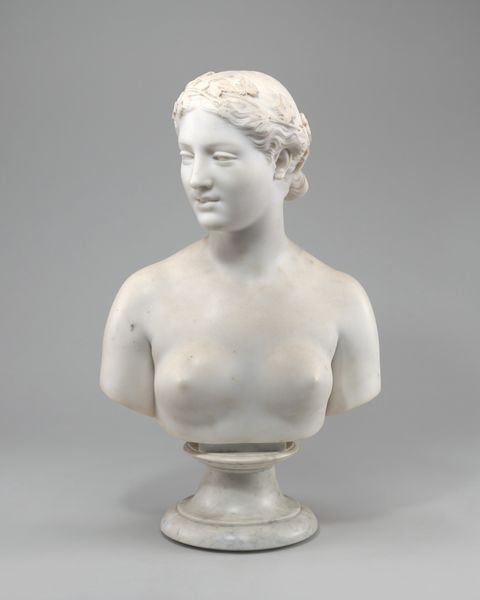
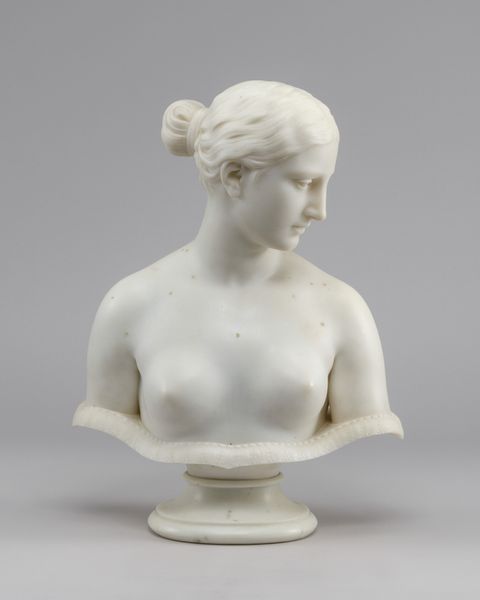
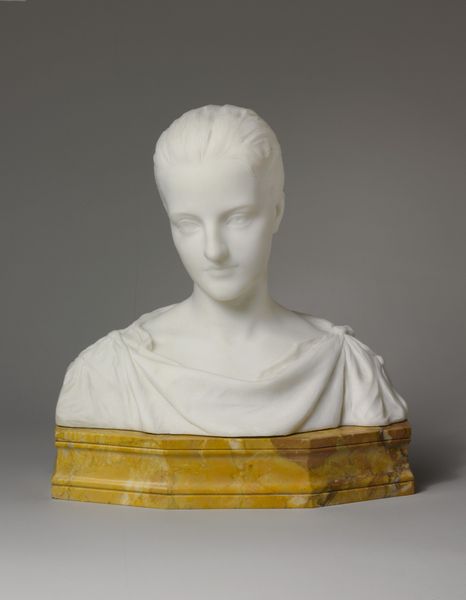
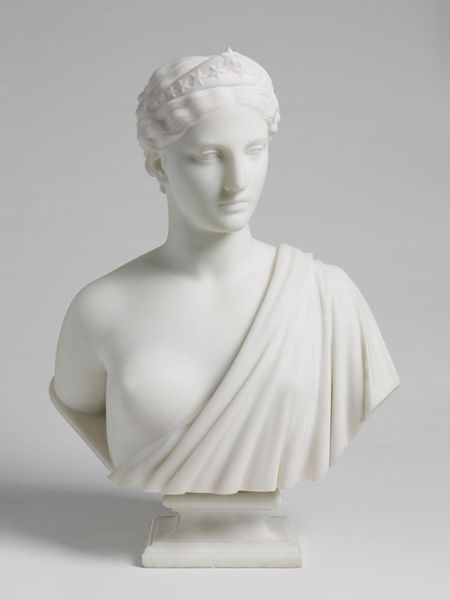
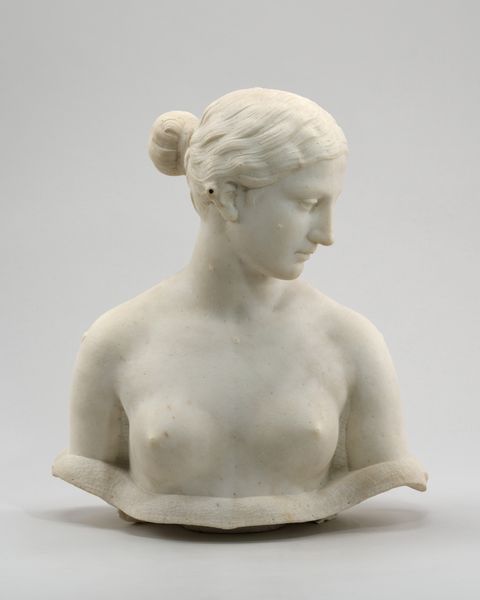
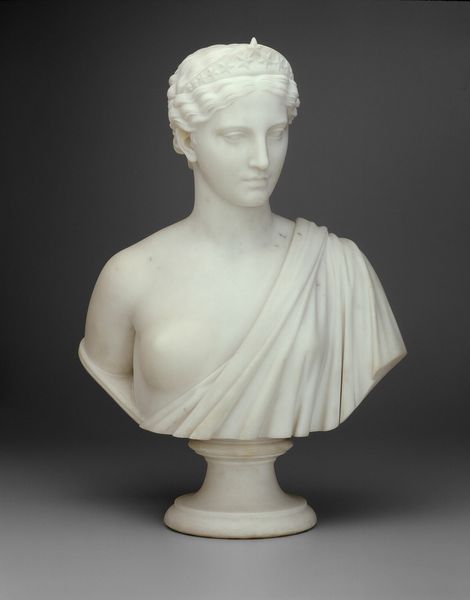
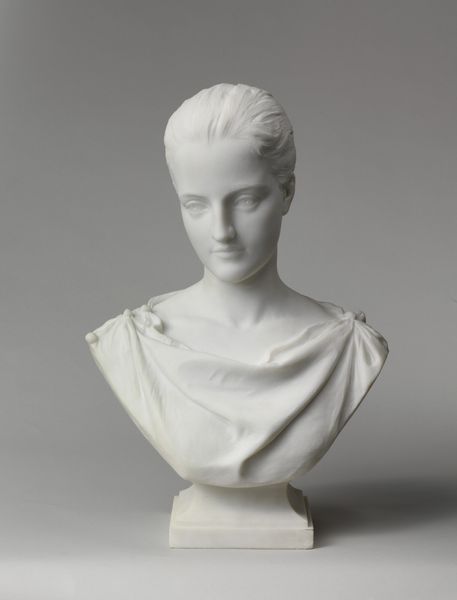
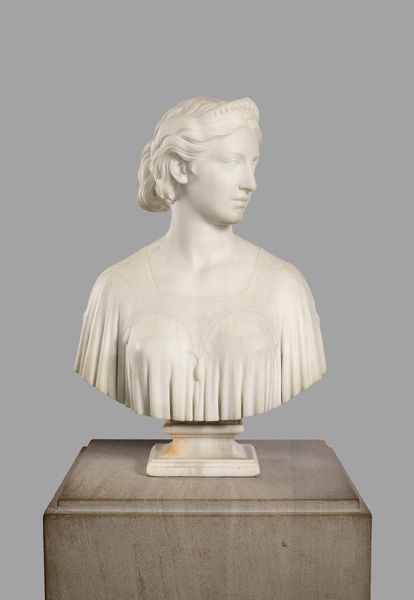
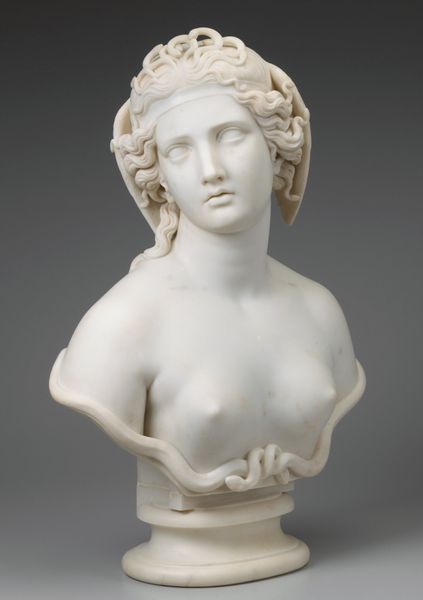
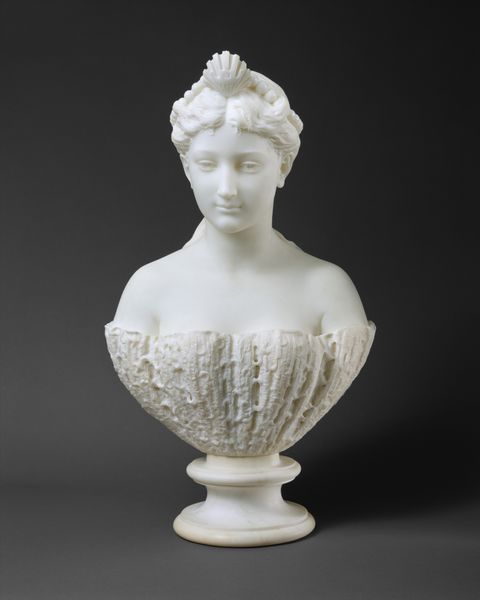
Hiram Powers carved this bust of Clytie in the 19th century using marble, a material prized for its smooth texture and capacity to reflect light. The process of creating this sculpture involved quarrying the stone, roughing out the form with chisels, and then refining the details with finer tools, a labor-intensive process. The whiteness of the marble gives the sculpture a sense of purity and timelessness. The smooth, polished surface invites the viewer to run their hands along the curves of Clytie’s face and shoulders. Powers was part of a Neoclassical movement. While he employed sophisticated techniques, he also engaged with industrial production. Powers made his “Clytie” available in multiple copies, for people who wanted this kind of beauty in their homes. Understanding the material and the making informs our appreciation of Powers's work, showing us how he straddled the line between artisanal craft and industrial production.