About this artwork
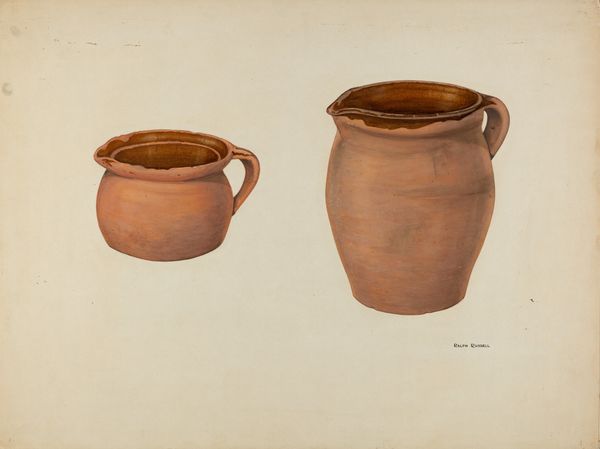
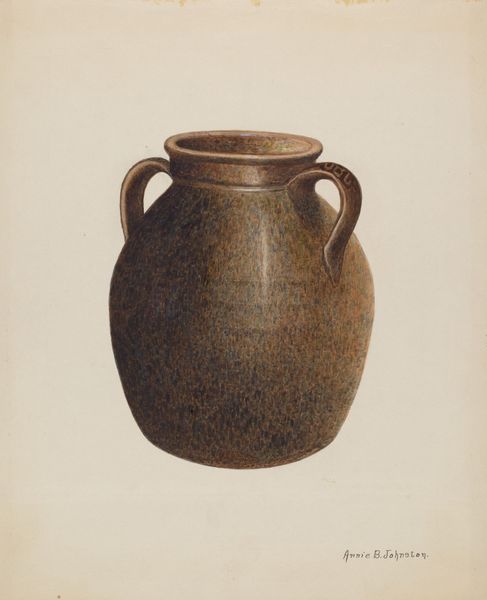
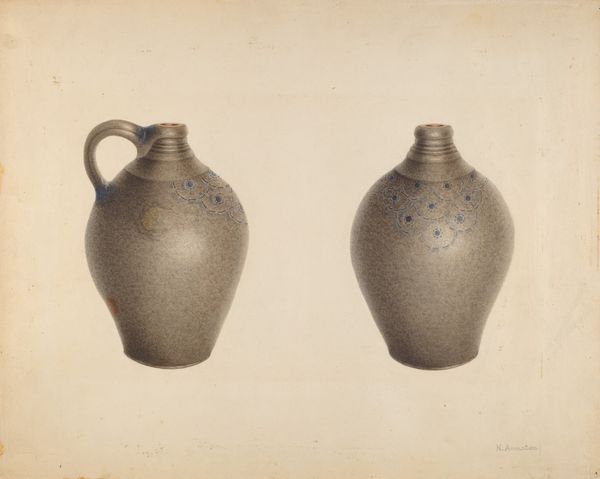
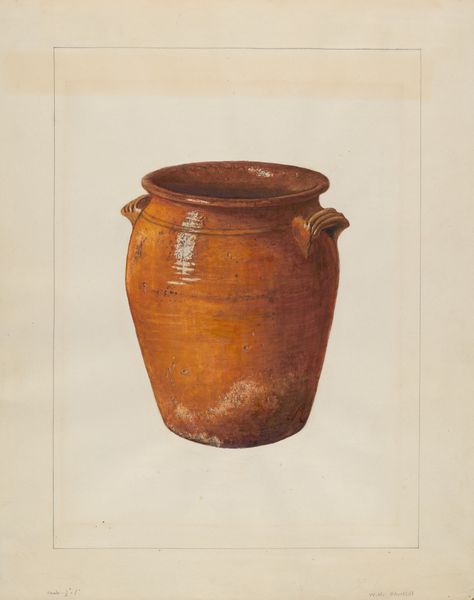
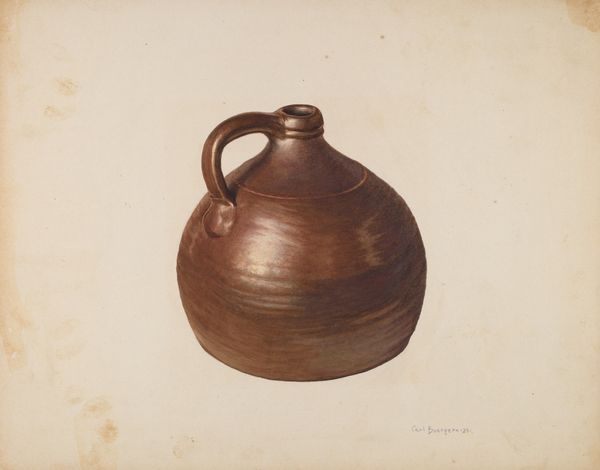
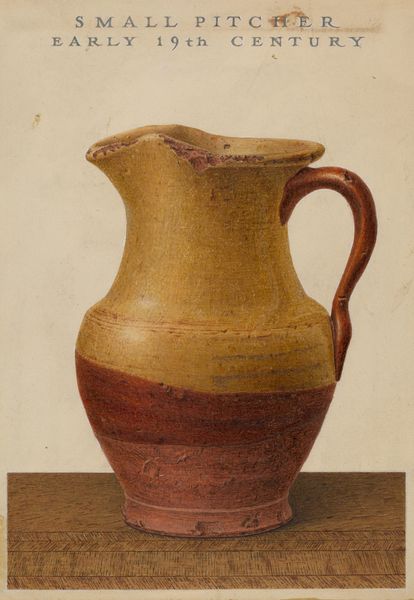
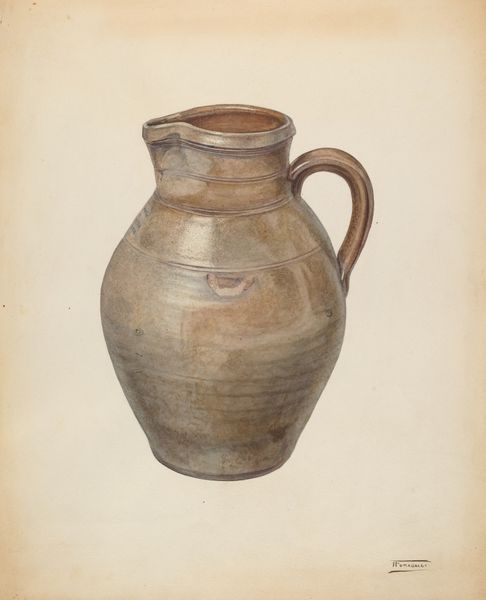
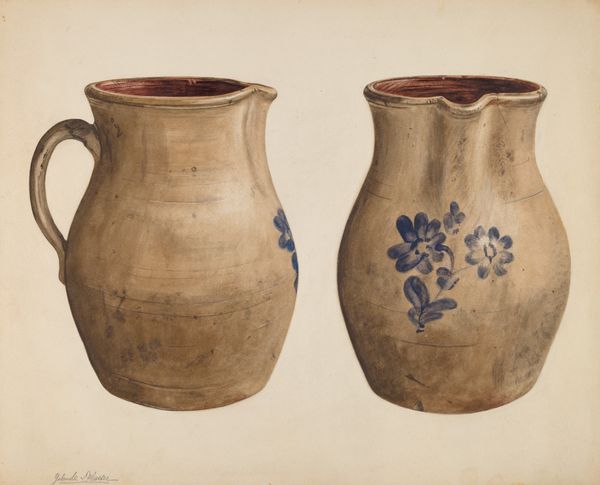
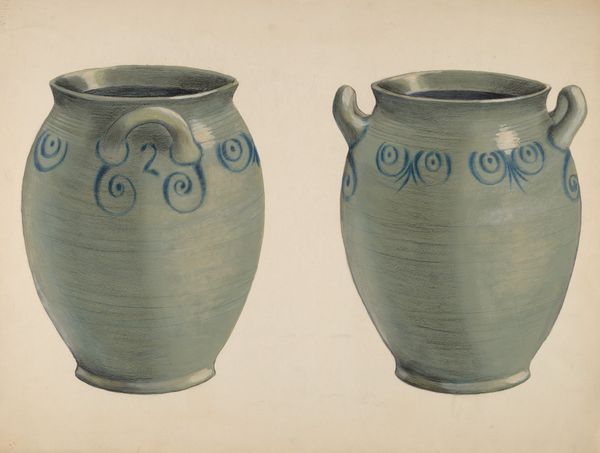
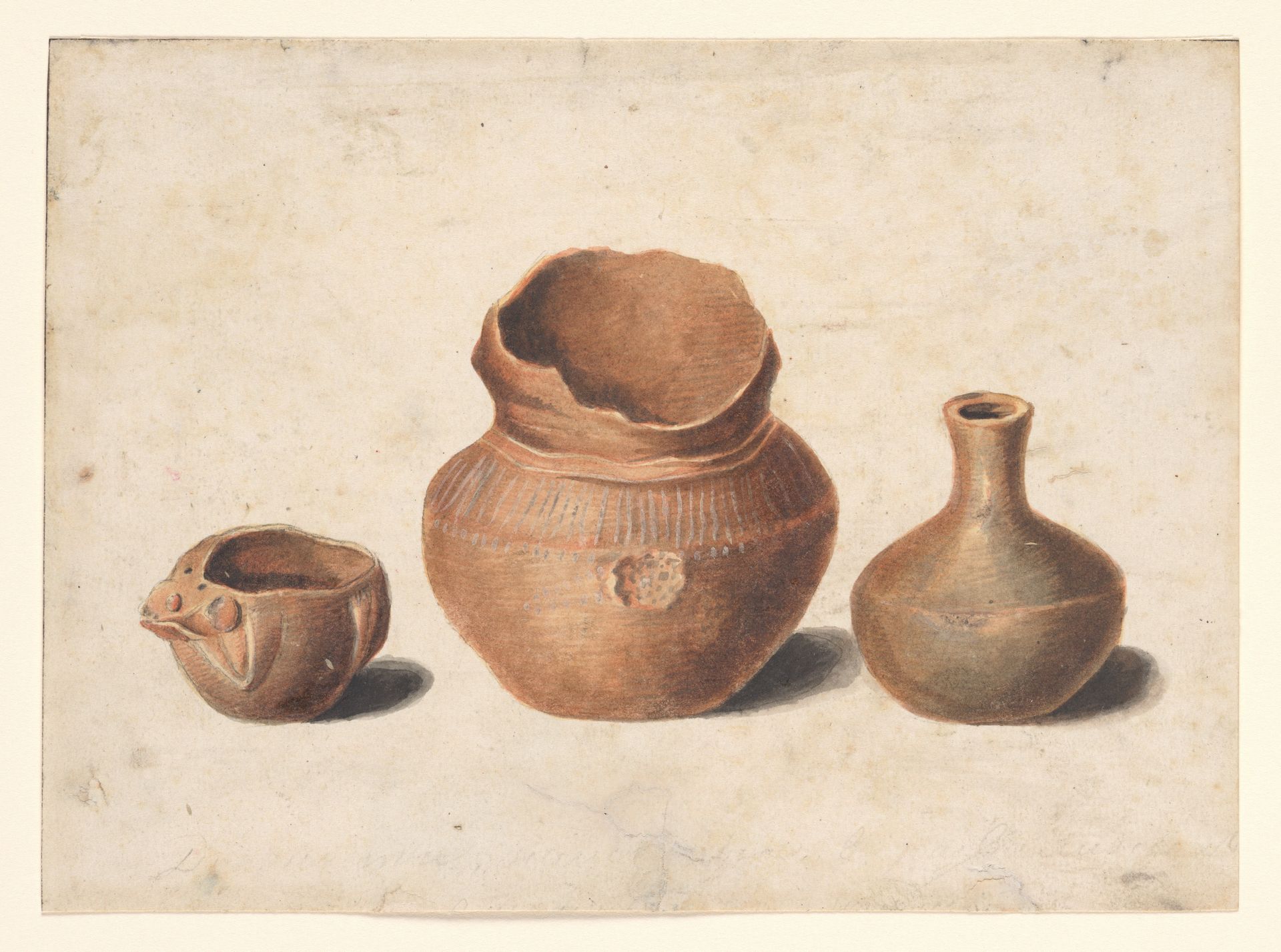
Pavel Petrovich Svinin rendered this watercolor copy of an engraving in 1812. The clay vessels, artifacts of a forgotten people, present themselves as potent symbols. Consider the vessel itself. It is a motif as old as civilization, appearing in ancient Mesopotamia, Egypt, and Greece. It symbolizes not just containment but nourishment, transformation, and even the womb. Think of the amphorae of ancient Greece, vessels that carried wine and oil, the lifeblood of their culture. Here, in this humble watercolor, the vessels are broken, hinting at loss, decay, and the inevitable passage of time. Yet, like the persistent symbols that permeate our collective consciousness, the vessel endures. It resurfaces in countless forms, holding different contents, mirroring our hopes, fears, and our constant striving to fill the void. The enduring appeal of this seemingly simple object speaks to a profound, perhaps subconscious, connection to our past and our shared human experience.
Indian Antiquities (Copy after Engraving in American Medical and Philosophical Register, 1812)
1812 - 1816

Pavel Petrovich Svinin
1787 - 1839
The Metropolitan Museum of Art
Metropolitan Museum of Art, New York, NYArtwork details
- Medium
- drawing, paper
- Dimensions
- 5 7/8 x 8 in. (14.9 x 20.3 cm)
- Location
- Metropolitan Museum of Art, New York, NY
- Copyright
- Public Domain
Tags
Comments
Share your thoughts
About this artwork
Pavel Petrovich Svinin rendered this watercolor copy of an engraving in 1812. The clay vessels, artifacts of a forgotten people, present themselves as potent symbols. Consider the vessel itself. It is a motif as old as civilization, appearing in ancient Mesopotamia, Egypt, and Greece. It symbolizes not just containment but nourishment, transformation, and even the womb. Think of the amphorae of ancient Greece, vessels that carried wine and oil, the lifeblood of their culture. Here, in this humble watercolor, the vessels are broken, hinting at loss, decay, and the inevitable passage of time. Yet, like the persistent symbols that permeate our collective consciousness, the vessel endures. It resurfaces in countless forms, holding different contents, mirroring our hopes, fears, and our constant striving to fill the void. The enduring appeal of this seemingly simple object speaks to a profound, perhaps subconscious, connection to our past and our shared human experience.
Comments
Share your thoughts