1930
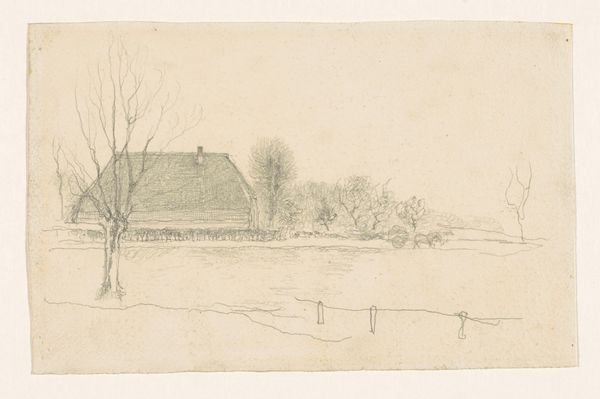
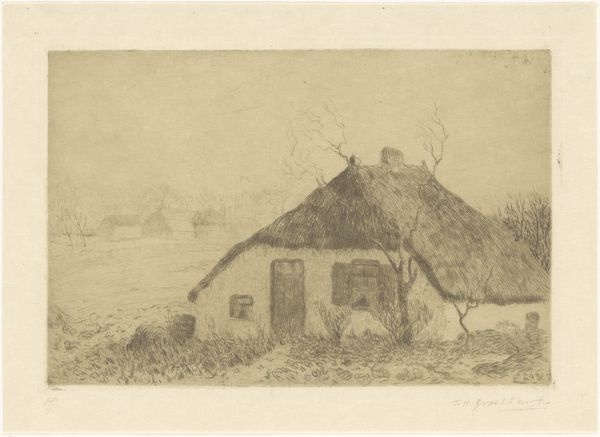
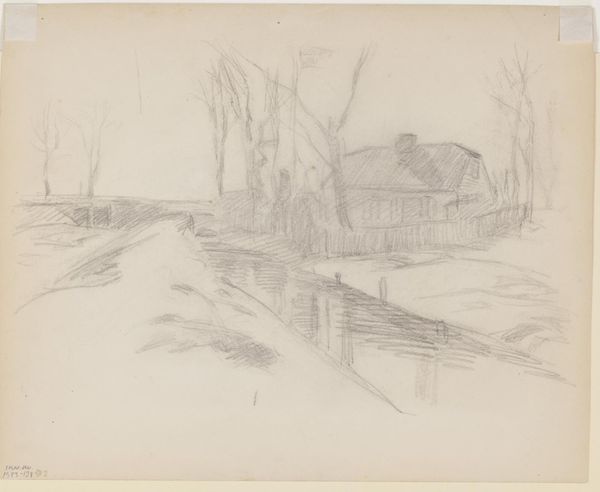
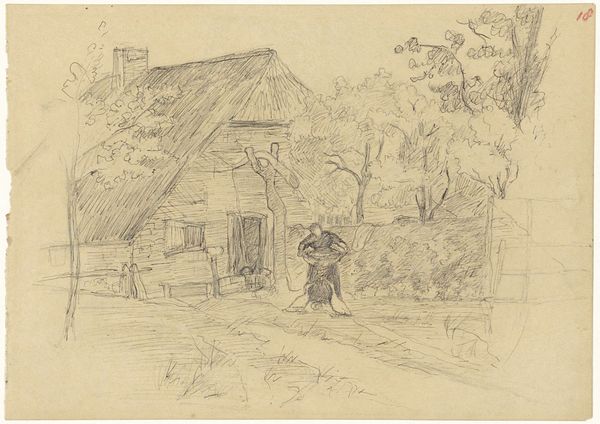
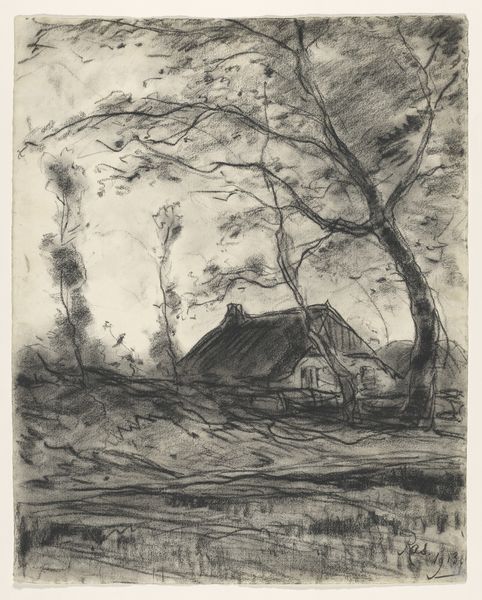
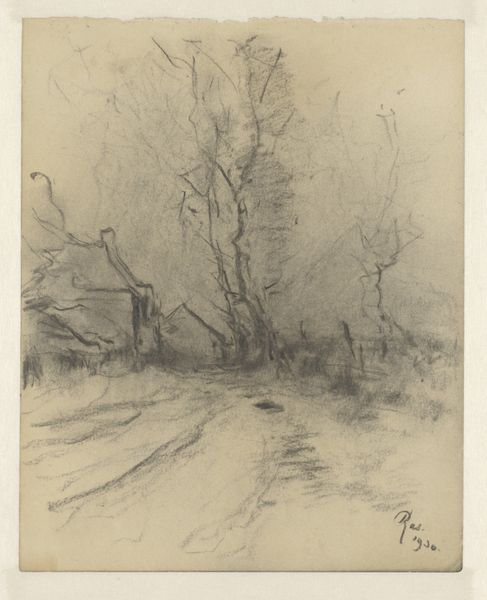
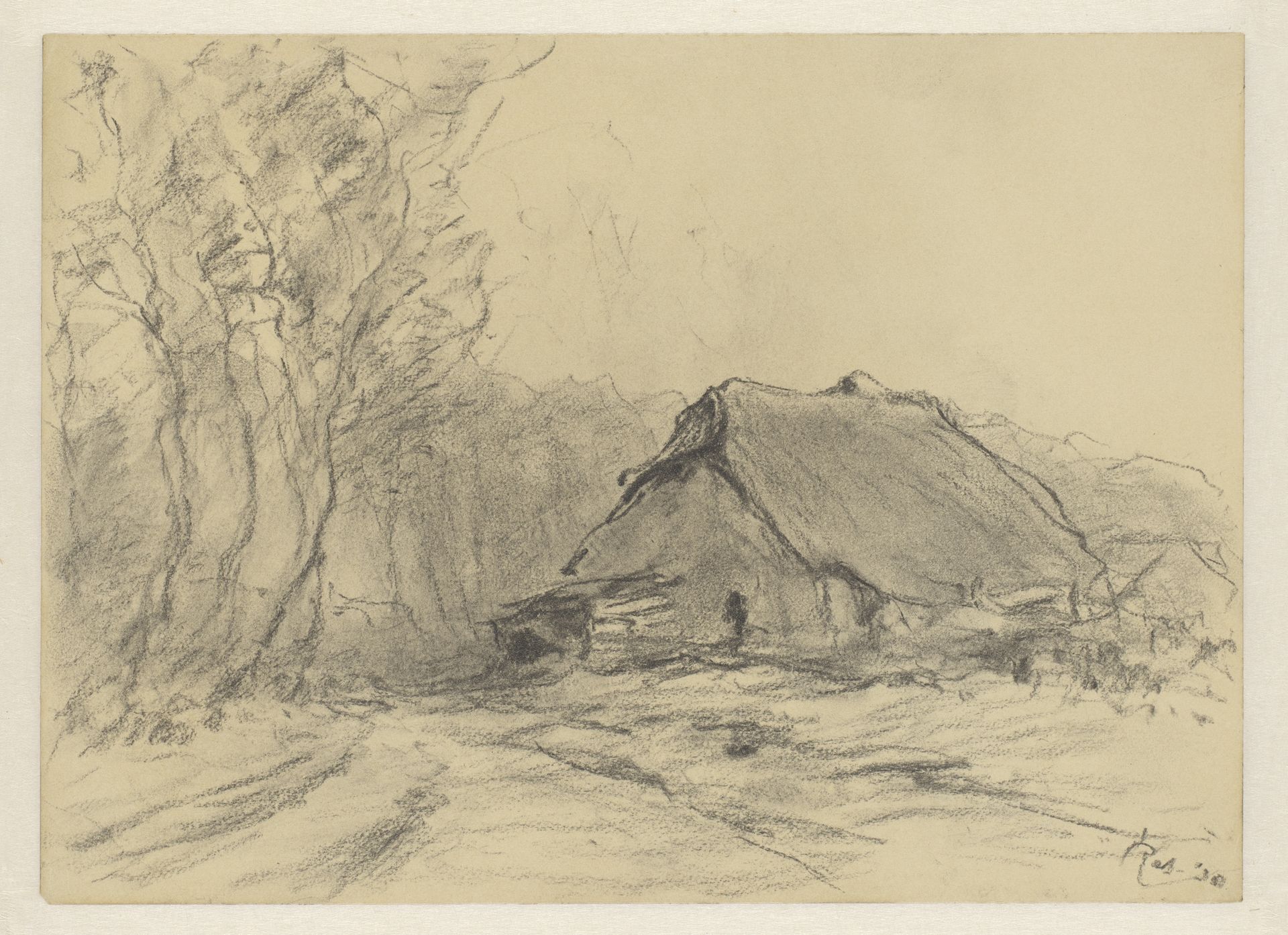
Woning bij bosrand

Pieter H.J.J. Ras
1857 - 1941Location
RijksmuseumListen to curator's interpretation
Curatorial notes
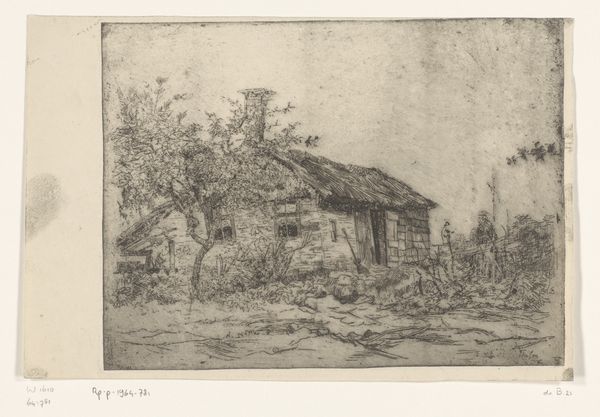
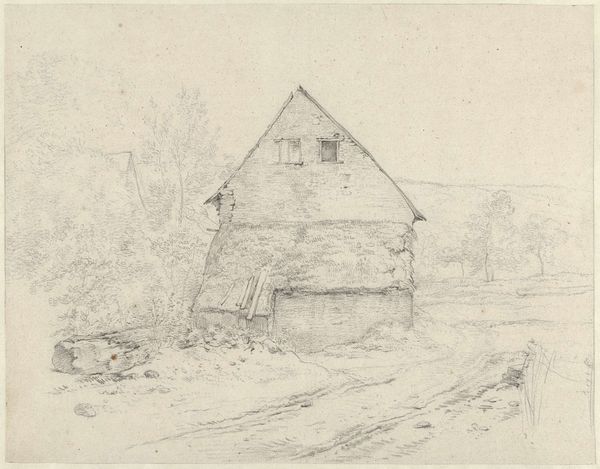
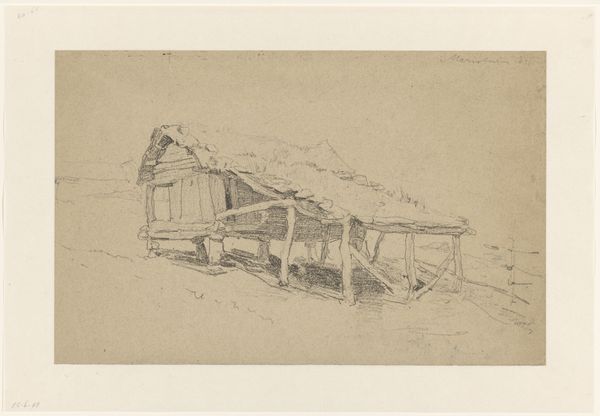
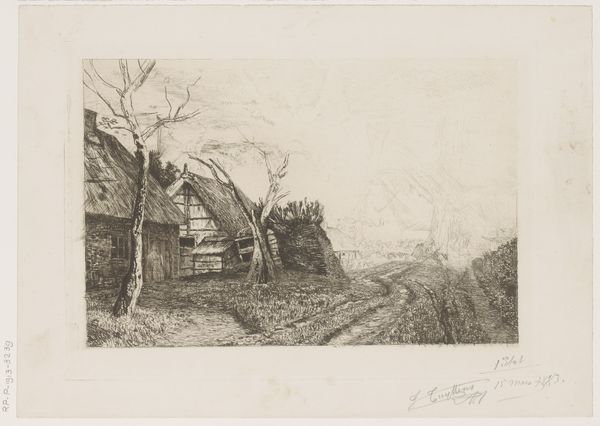
Editor: So, this is "Woning bij bosrand," or "House by the edge of the forest," by Pieter Ras, from 1930. It's a pencil drawing, and there's a melancholy feel to it, with the starkness of the landscape. What catches your eye in terms of its cultural and historical context? Curator: I'm immediately drawn to the accessibility of the medium. Pencil, paper – these were materials increasingly available, allowing a broader segment of society to engage in artistic production, not just observe it. Consider the shift away from solely commissioned portraits of the wealthy; this sketch suggests a more democratic approach to artmaking. What kind of labor do you think went into the production of these materials? Editor: I hadn’t considered that! Presumably, the labor involved in producing the pencil and paper, making art creation itself more widely accessible… How did this democratization of art materials influence artistic subjects? Curator: Exactly! The choice of subject – a humble dwelling, the edge of a forest – speaks to an interest in the everyday. It moves away from idealized landscapes to a grittier reality. What about the material application - does the artist call attention to craft? Editor: I guess it does. The lines are rough and the textures coarse, but it could also be a quick sketch, prioritizing capturing the scene efficiently rather than creating a highly polished drawing. It is impressionistic. Curator: Precisely, and that sketch-like quality highlights the act of observation and production. Think of the time spent creating this: from material production to its artful manipulation in recording everyday spaces. And how does the accessibility of materials interact with the final work presented to the art viewer? Editor: This has made me reconsider how everyday materials shaped not just art *making* but also its subjects and potential audiences, beyond purely aesthetic considerations. Curator: Me too. Looking beyond the landscape we must recognize it as another product consumed by contemporary viewers like you and me, which invites more people into the conversation!