print, engraving
#
baroque
# print
#
pen sketch
#
geometric
#
decorative-art
#
engraving
Dimensions: height 37 mm, width 59 mm
Copyright: Rijks Museum: Open Domain
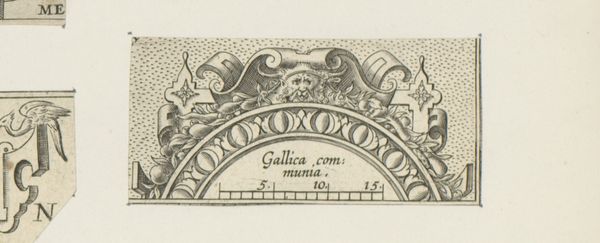
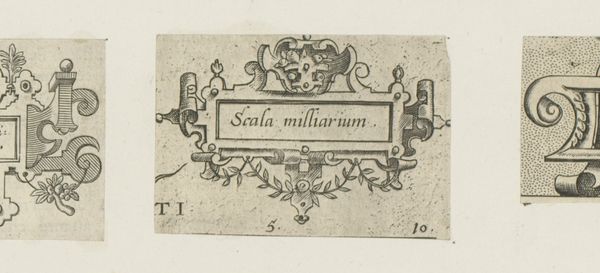
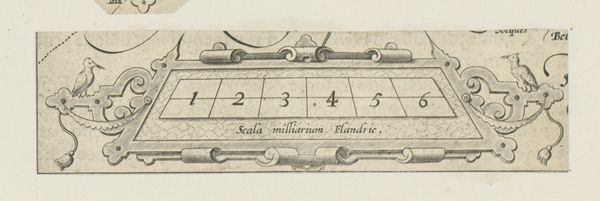
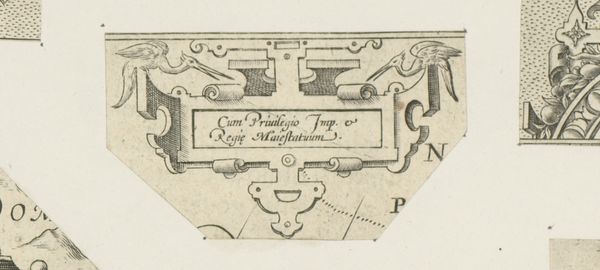
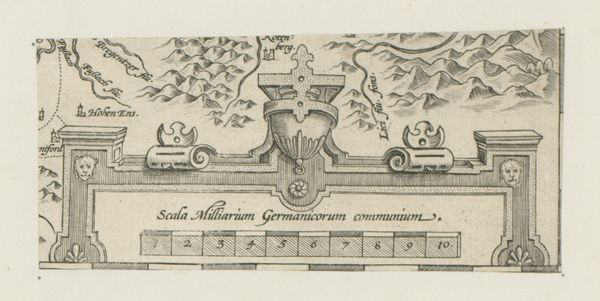
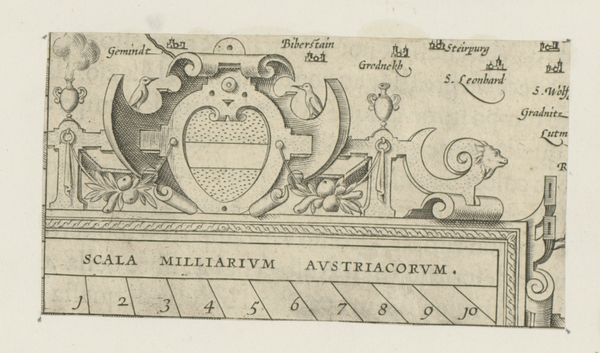
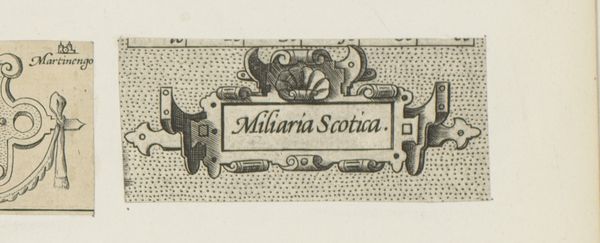
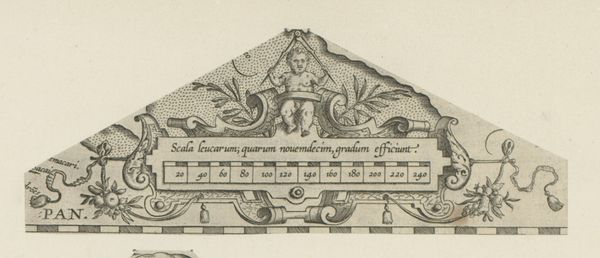
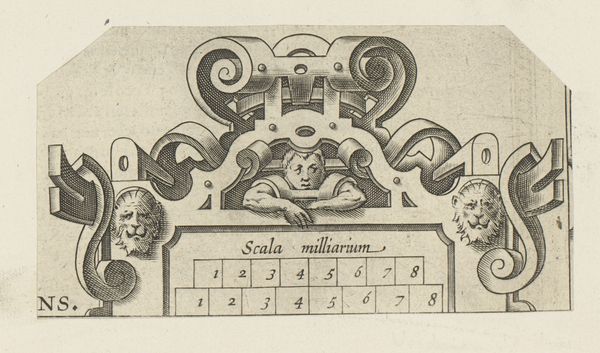
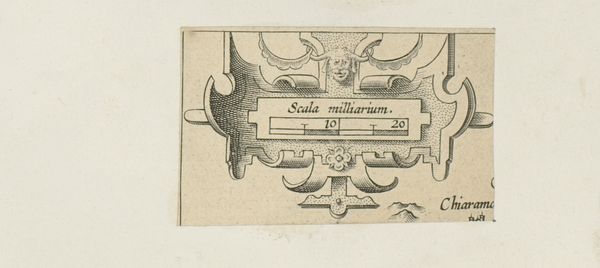
Curator: At first glance, this little engraving strikes me as being so orderly, so contained. It’s like a perfectly appointed measuring device from a bygone era, sitting there quietly, its purpose almost…secret. Editor: We're looking at a print called "Kleine cartouche met schaalstok en slingers," which roughly translates to "Small Cartouche with Scale Stick and Garlands.” It was created in 1595 by an anonymous artist. The primary medium used here is engraving. Curator: It’s more than just a measuring tool, isn't it? The cartouche itself—that decorative frame—it gives the object such presence. The meticulous rendering and formal framing elevate the practical into the symbolic. What’s fascinating for me is how this little box immediately tells us something important. It indicates there’s an impulse behind measuring and recording reality that borders on artistic, a deeper order reflected in the frame itself. Editor: The “Milliaria Germanica” inscription refers to a German mile scale. It highlights a historical context, reminding us of standardization and measurement during this period. The scales facilitated trade, mapping, and the projection of power, which all disproportionately affected communities depending on their geographical location. The scale almost turns into a sign of control. Curator: Yes, but there’s an elegance, and it seems as if these prints served some sort of architectural purpose. To my mind it’s hard not to consider this print as symbolic, an example of proportion, harmony, or classical values, almost abstracted from a building or set of them. There is that feeling that everything depicted on the plane corresponds. I also feel a slight dissonance due to the frame which gives off strong baroque impressions while the 'numbers' sit still in what appears to be a neo-classic box with straight edges and clean geometry. It could mean several different things about its context. Editor: It raises an important point. What is considered harmony in architecture or art isn’t universal; it reflects the perspectives and interests of those in power, both then and now. Understanding the socioeconomic context unveils some of these issues when we see this 'harmony' represented materially. The garlands themselves might have symbolized plenty for those not directly involved in those transactions. Curator: Thinking about the purpose this design was created to serve definitely brings fresh interpretations of even its visual form, how an age thinks about beauty is embedded, perhaps hidden, in design decisions made by a team or an individual, and can reveal just how a worldview becomes calcified into material culture. Editor: And by analyzing these tiny things we find grander implications and insights. The aesthetic can be reinterpreted in how social power is asserted, negotiated, and maintained.
Comments
No comments
Be the first to comment and join the conversation on the ultimate creative platform.
 Collect
 React
React Comment
More like this