


Curatorial notes
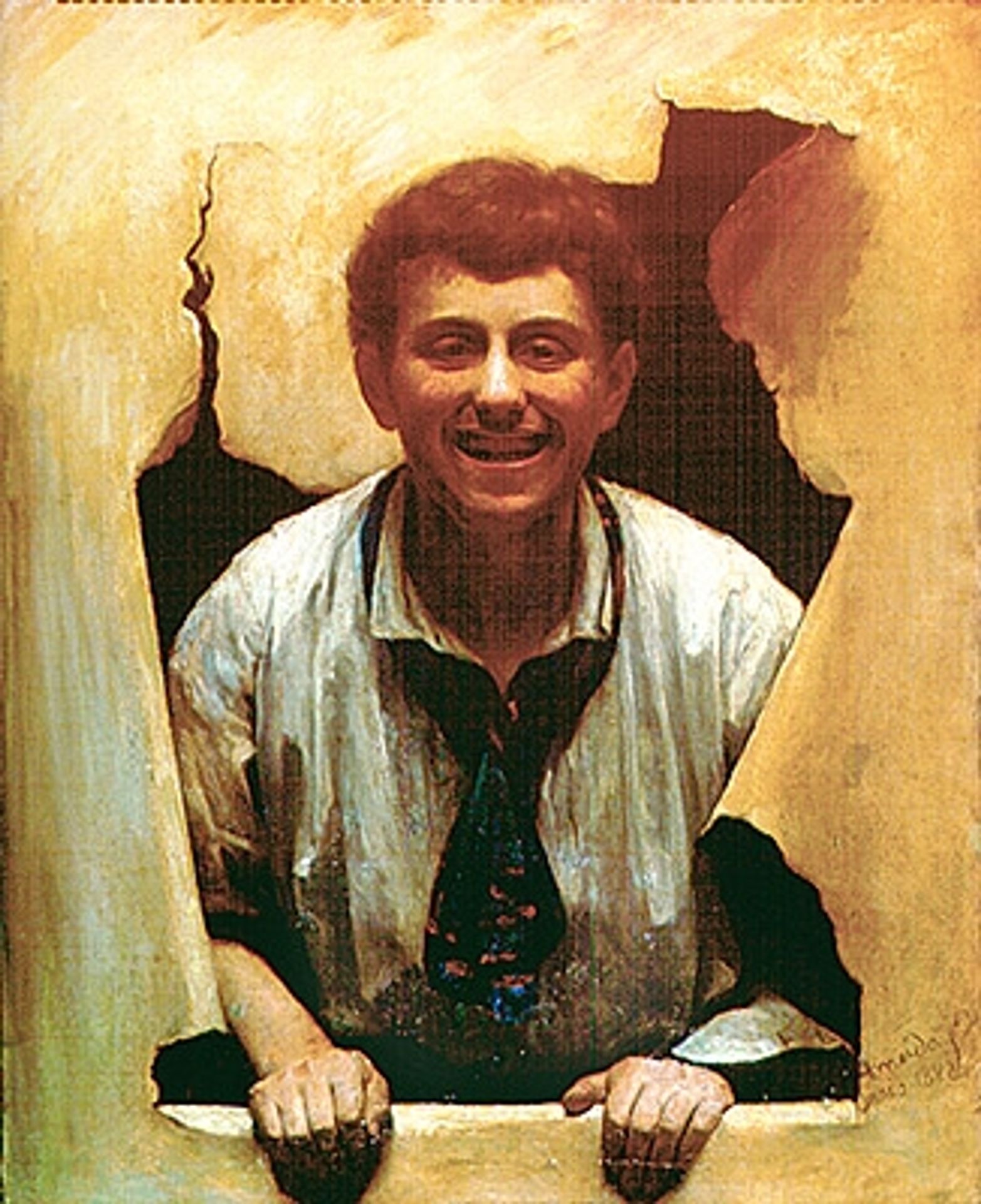
Curator: This is "Boy," painted in 1882 by José Ferraz de Almeida Júnior. It's an oil painting and instantly brings a youthful energy. Editor: Absolutely! My immediate reaction is the rawness of the material. You can see the texture of the paint, the weave of the canvas—almost like observing labor itself. Curator: He definitely captures a realism that's captivating. There's a sense of seeing beyond the surface—as if he knew something we don’t, a sly joy perhaps. Look at how the figure bursts through that seemingly damaged, peeling frame. Editor: Exactly! The supposed "damage" could represent the economic context of its creation. Art wasn’t separate from everyday life. The material conditions—the availability and affordability of the paint, the canvas—informed what got produced. The frame looks as if it was patched with scraps. Curator: Almeida Júnior has a masterful way of creating shadow. See how the boy is almost sculpted by light emerging from the darkness! The tattered "frame" serves as a revealing device. A metaphor to how joy bursts through the mundane aspects of working-class life. What stories lie behind that smile? Editor: The brushstrokes denote so much about how quickly and possibly cheaply it was put together! What quality of pigment and the type of brush! Not to discredit the artist, but instead of trying to read his subject's emotion, how about questioning his means of getting his job done? Curator: I agree we are only looking at the surface, but aren’t we also capturing a fleeting glimpse of life. Is the imperfect frame itself part of the meaning, telling the viewer to see past superficiality to find the boy's humanity? Editor: The layering of the material and labor—all so intrinsically woven together, that "art" cannot escape "labor," isn’t it! Thanks for providing fresh eyes on what might be considered just another historical piece.