c. 1700 - 1725
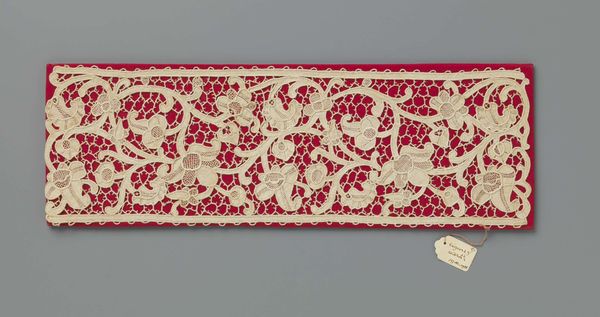
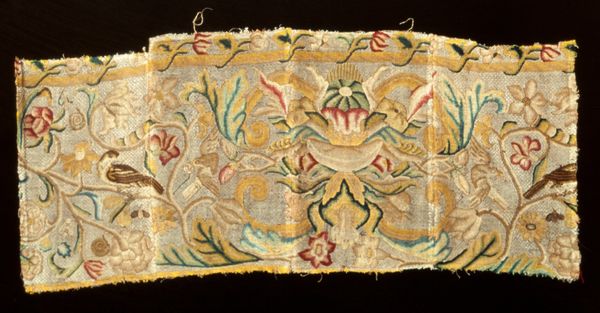
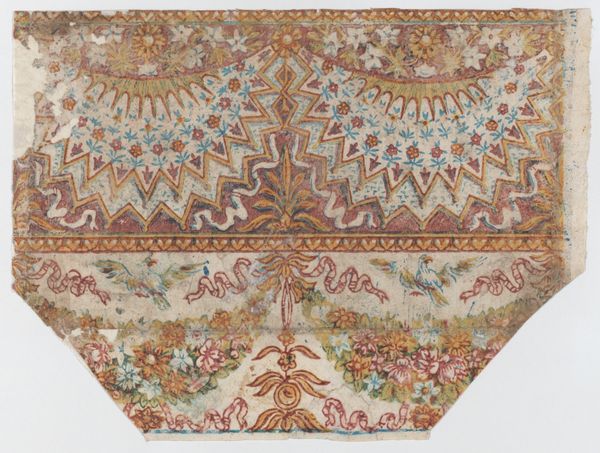
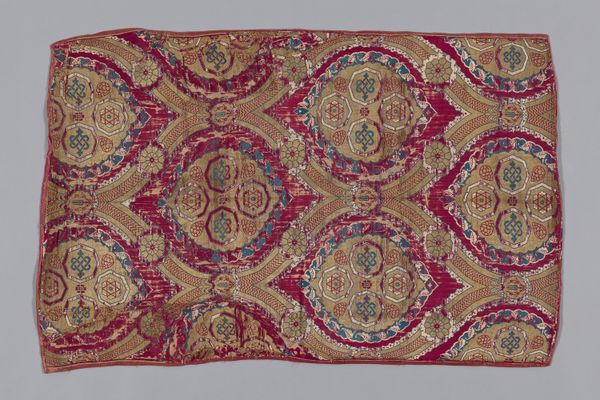
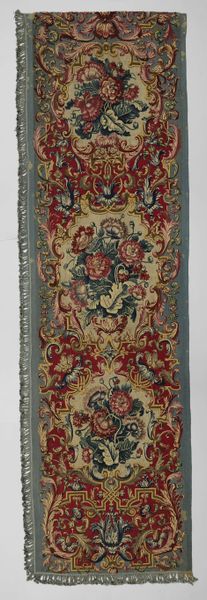
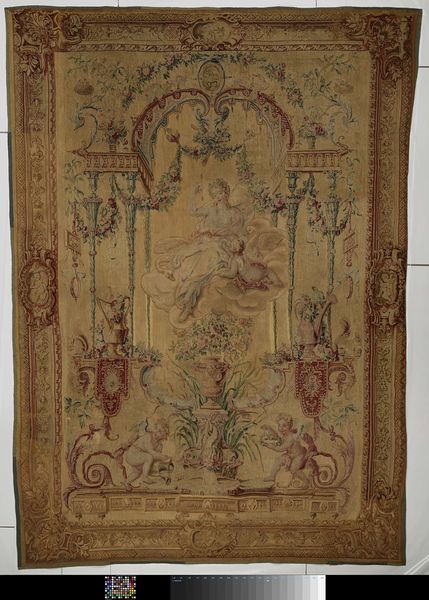
Lambrequin of val voor een bed of raamomlijsting met een bloemenpatroon

Listen to curator's interpretation
Curatorial notes
Editor: Here we have a lambrequin, a decorative border for a bed or window, made of woven textile around the turn of the 18th century by the Manufacture Royale des Gobelins. It’s overwhelmingly ornate – how does this piece speak to you? Curator: Immediately, it reflects the burgeoning culture of display and the performative aspect of the early 1700s. The floral pattern isn't just decorative; it’s a proclamation of wealth and taste, carefully cultivated through patronage of institutions like the Gobelins. Editor: So it's less about the flowers themselves and more about what they represent in society? Curator: Precisely. The piece existed within the highly structured world of the French court. How might this object perform in various social spaces? Can you imagine it framing a royal bed chamber, viewed by carefully selected audiences? Editor: That definitely shifts my perspective. The level of detail now feels less like simple decoration and more like a deliberate statement intended for a very specific group. How did Gobelins factor into the politics of the day? Curator: The Gobelins Manufactory was a tool of state. By producing luxurious goods, Louis XIV sought to control artistic production, project French power, and stimulate the economy. We have to ask: who commissioned it? And for what explicit purpose? Was this perhaps used to woo foreign dignitaries? Editor: It’s fascinating to consider the implications beyond its aesthetic value. Now the textile really represents a larger, intricate web of power and display. Curator: Exactly! It is amazing how decorative arts illuminate not only artistic tastes but the very structures of power of the time.