1887
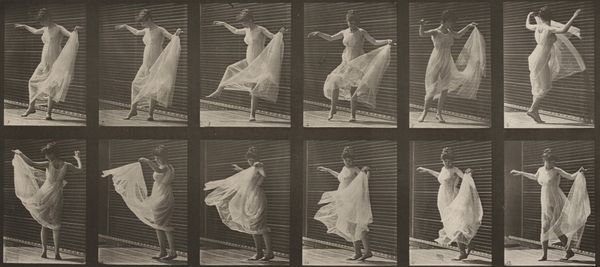
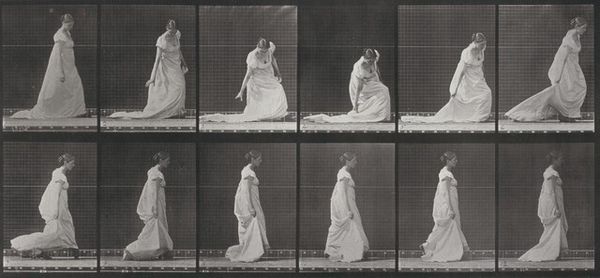
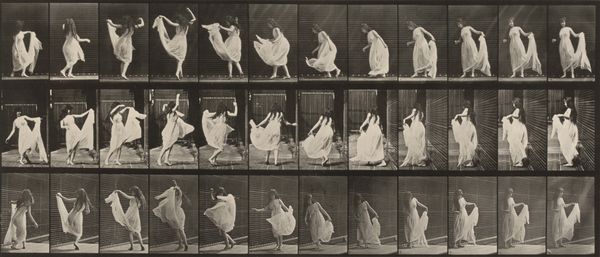
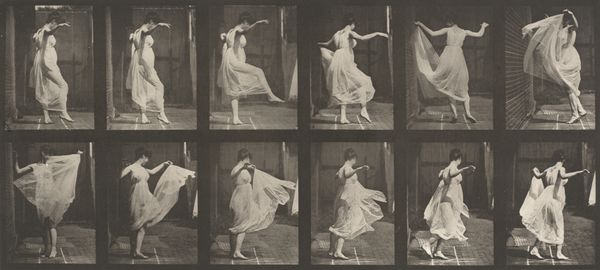
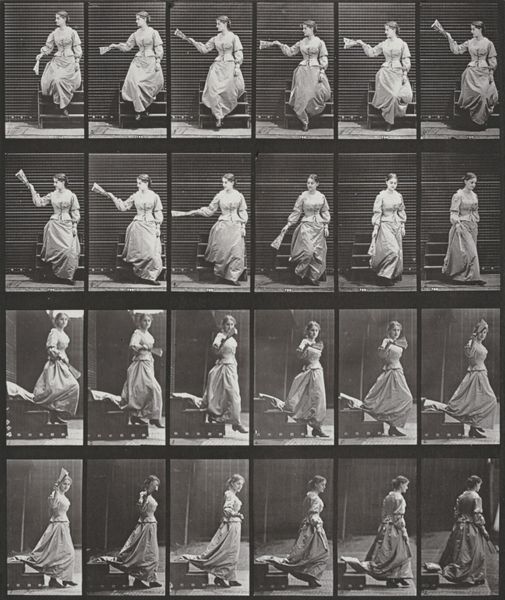
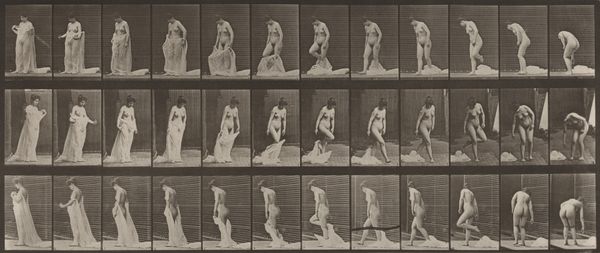
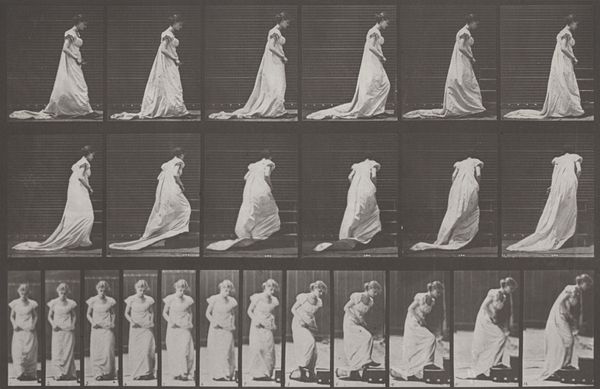
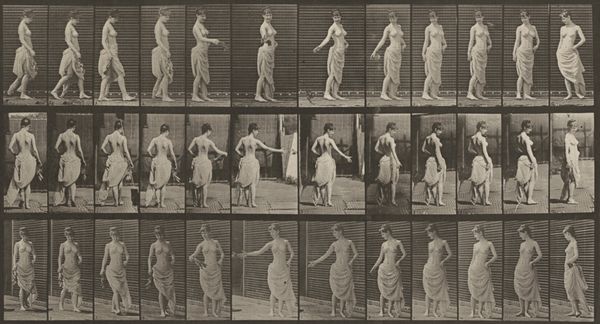
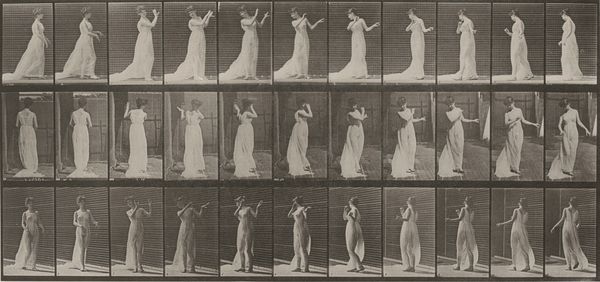
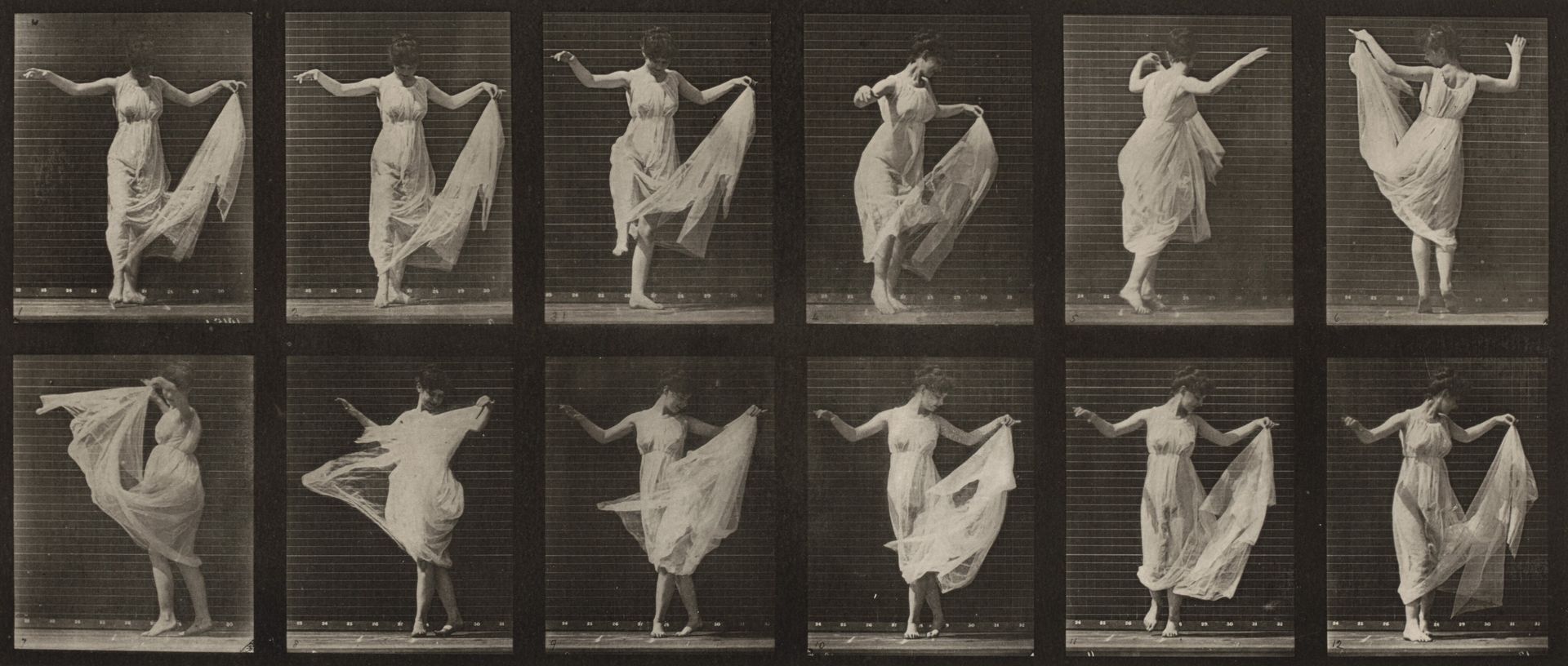
Plate Number 187. Dancing (fancy)


Listen to curator's interpretation
Curatorial notes
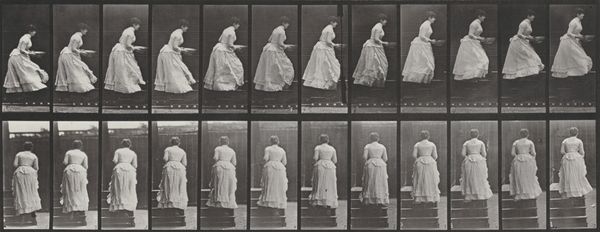
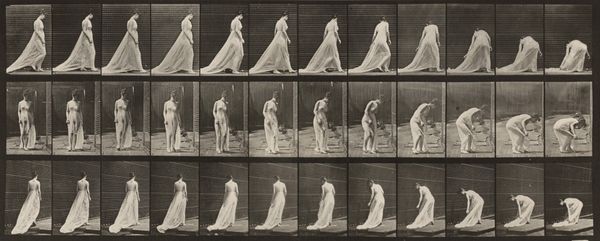
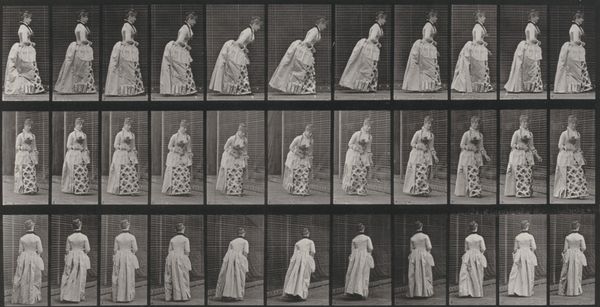
Curator: Muybridge's "Plate Number 187. Dancing (fancy)", captured in 1887 using the gelatin-silver print method, is a captivating exploration of motion. Editor: It does have a ghostlike, ethereal feel to it, doesn't it? The sequence almost seems to flicker, like a memory struggling to fully form. Curator: Absolutely. Consider that this pre-cinematic study deconstructs a dancer's movements into discrete photographic moments. It’s more than just documentation, though. The grid layout itself mirrors the rigid social constraints often placed upon women's bodies at the time. Editor: Yes, and there's something both liberating and clinical about it. The semi-nude figure dancing seems to subvert conventional Victorian mores, yet the stark scientific approach, almost like a specimen under examination, holds her captive. Curator: The dancer’s pose, with its hints of classical gestures, is quite suggestive. Muybridge is invoking art-historical precedent, echoing poses from antiquity in ways that both celebrate and dissect them. The flowing fabric further complicates the symbol of the body. Editor: That drapery also serves to both reveal and conceal, a tension that certainly would have been palpable in its original context. The figure herself isn't named. I'm curious how the popular perception and accessibility of dance have shifted from a rather sensational art to an Olympic competition. Curator: Exactly. "Dancing (fancy)" straddles a line between scientific investigation, artistic study, and even performance. The layering of all these modes continues to ignite new appreciation. Editor: What stays with me most, looking at Muybridge's plate today, is its continued power to challenge us – how do we truly see, understand, and represent movement? Curator: And further, it questions the artistic potential inherent in documenting seemingly mundane action and activity, expanding our expectations around performance and the social body.