Dimensions: height 89 mm, width 154 mm, height 108 mm, width 160 mm
Copyright: Rijks Museum: Open Domain
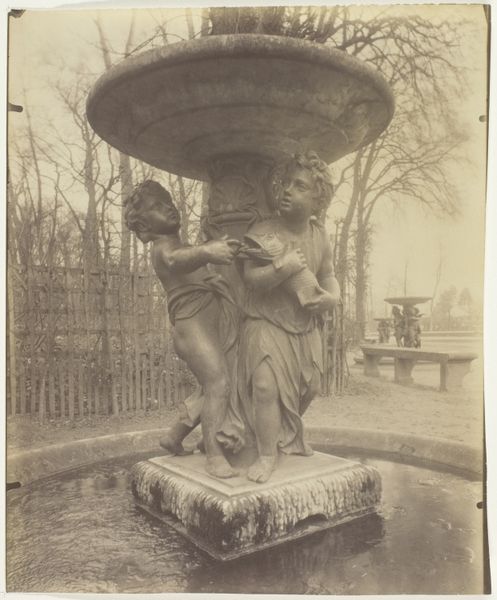
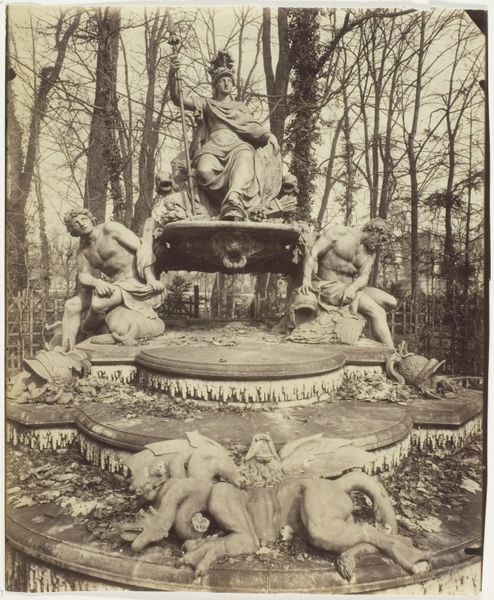
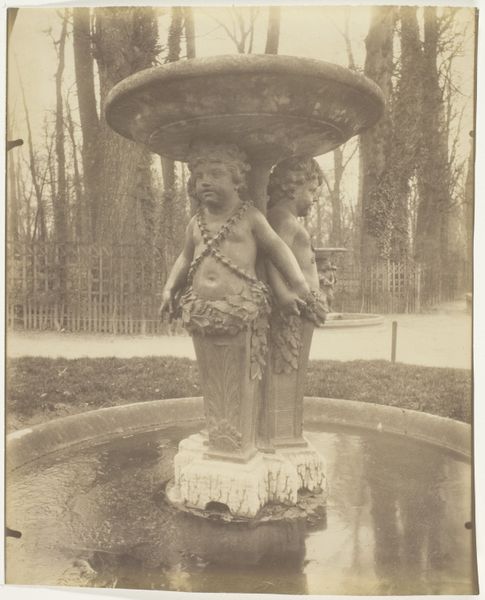
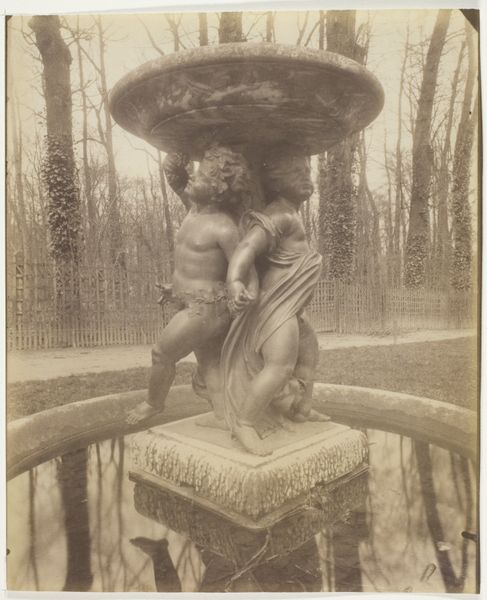
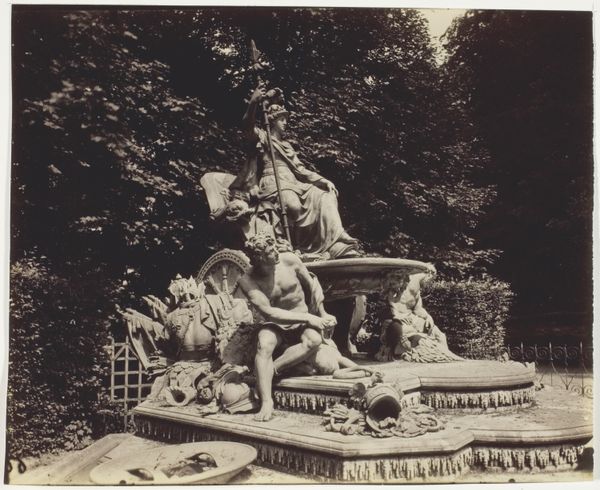
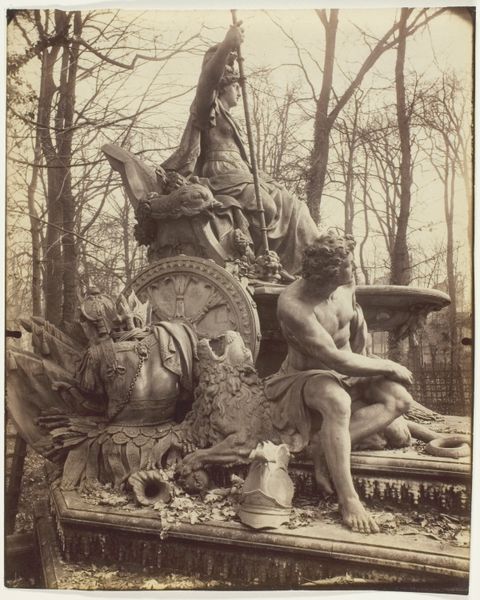
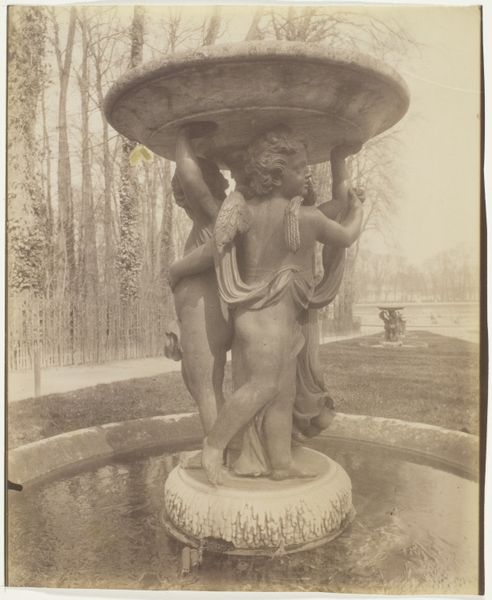
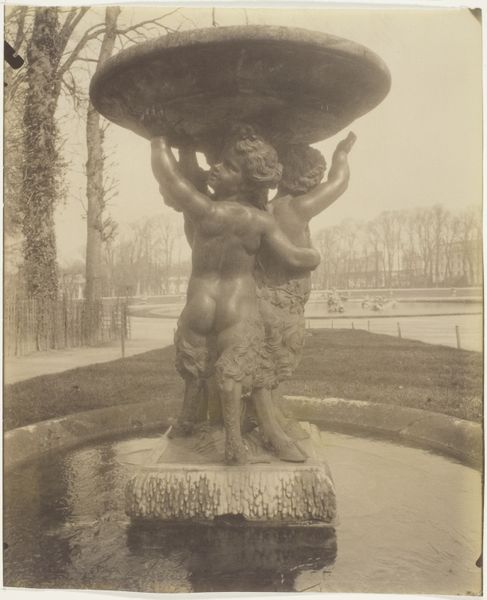
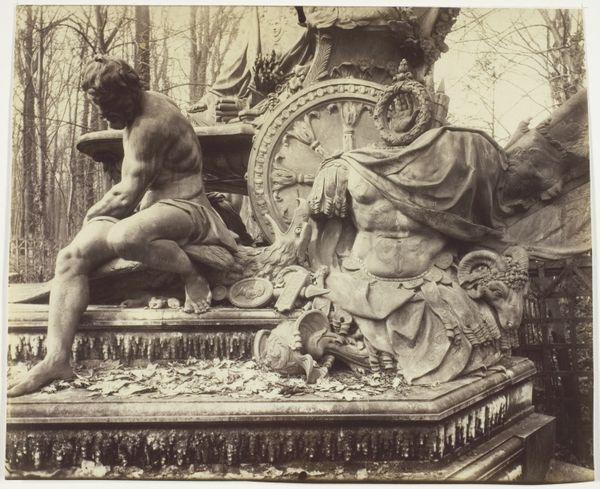
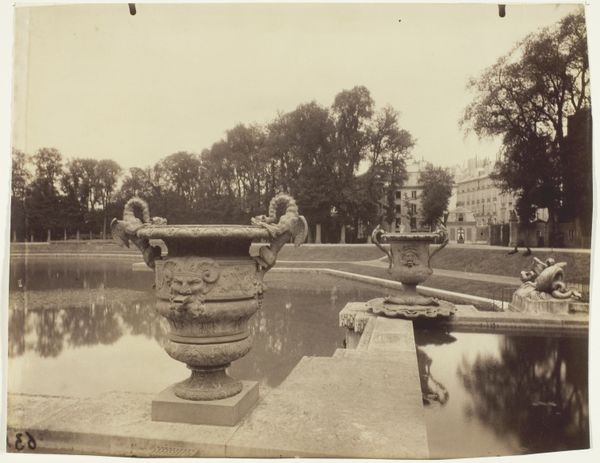
Curator: Looking at this historical photograph, I feel an immediate sense of melancholy. The monochromatic tones, combined with the aging of the albumen print, give the scene a faded, dreamlike quality. Editor: It’s an image entitled "Beeld van Saturnus in een fontein in de tuin van Versailles" taken sometime between 1870 and 1900. This particular photograph, held in the Rijksmuseum collection, offers us a glimpse into 19th-century perspectives on power, mythology, and landscape. Curator: Absolutely, Saturn, the Roman god of time, generation, dissolution, abundance, wealth, agriculture, periodic renewal and liberation, sits somewhat dejectedly amongst cherubic figures, within an obviously sculpted landscape of opulence. The fountain and garden design at Versailles speak to an era of royal control and cultivated artifice. Do you see how Saturn's melancholic repose can be read as a critique of absolute power, perhaps alluding to its eventual decay? Editor: The very choice of Saturn is intriguing. He isn't your typical benevolent god; the Greeks had myths of Kronos consuming his children to avoid being overthrown. Curator: Precisely. Here we have the ultimate patriarchal figure, representing cyclical time, power, but also anxiety about lineage and succession. That’s interesting when we consider the political context of late 19th-century France—the transition to the Third Republic, anxieties surrounding shifting power dynamics and, if you read his body language, perhaps a fear of losing control. Editor: Visually, I'm struck by how the circular form of the fountain echoes the cyclical nature of time associated with Saturn. Water, often seen as a symbol of purification and renewal, is integral. Curator: Yet, stagnant perhaps? Is this water circulating or has the photograph captured the image of it reflecting stillness. The composition’s formalism and idealized classicism clash subtly with that underlying sense of impending change. The statue's symbolism suggests not triumph, but perhaps the beginning of the end. Editor: A brilliant piece that urges us to think about the transient nature of power. The image speaks to the layers of meaning encoded within art and its enduring power to echo across different historical and social moments. Curator: Agreed, it makes us question the seemingly timeless themes of power, time, and what is built to endure versus what inevitably fades away.
Comments
No comments
Be the first to comment and join the conversation on the ultimate creative platform.
 Collect
 React
React Comment
More like this