c. 1800
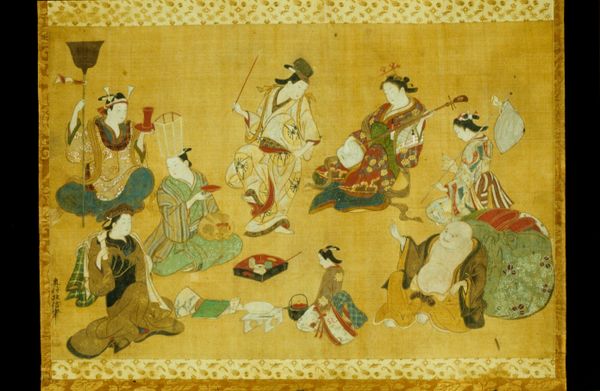
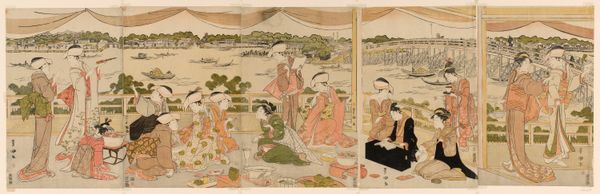
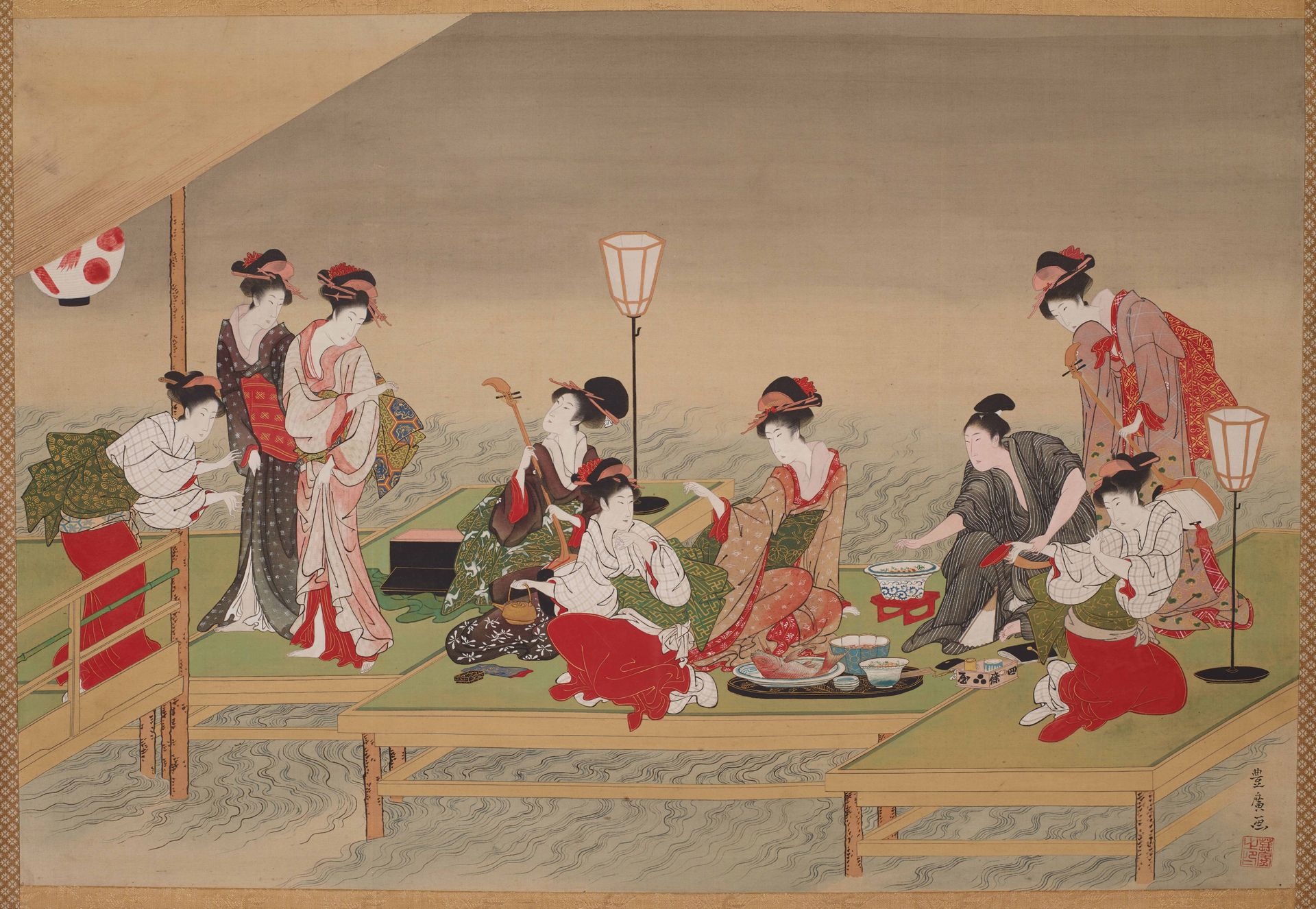
Summer Party on the Bank of the Kamo River


Listen to curator's interpretation
Curatorial notes
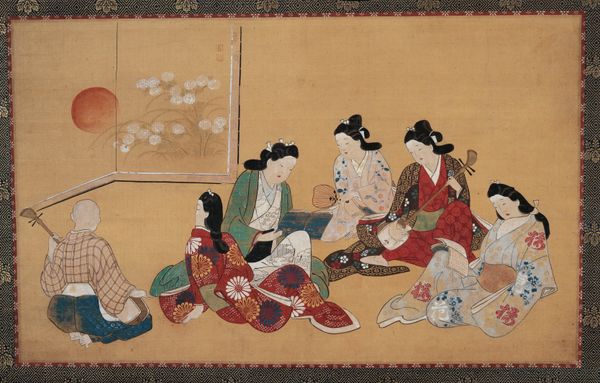
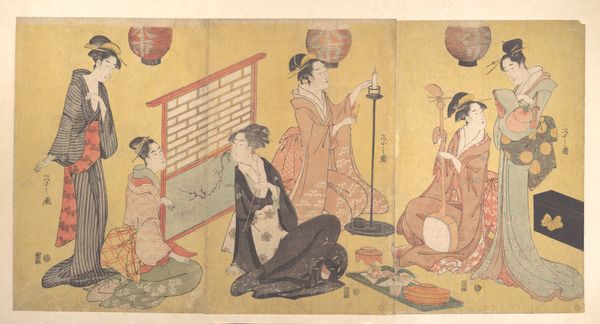
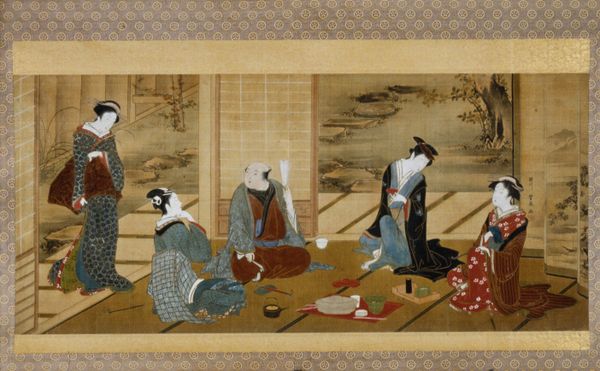
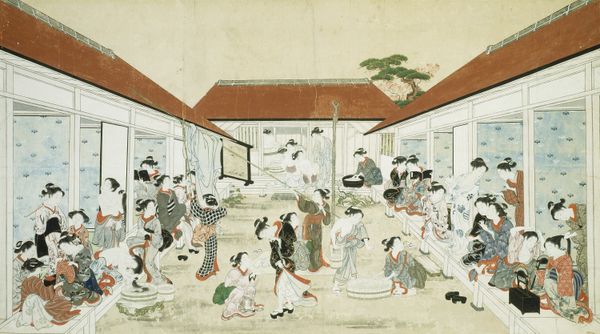
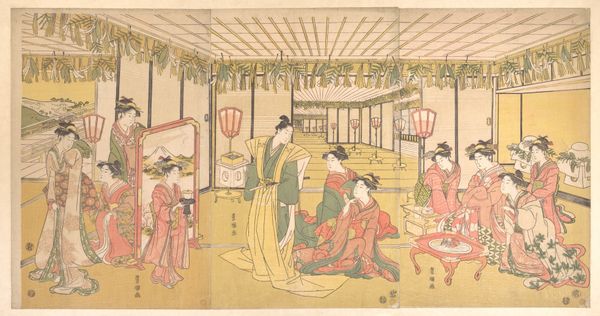
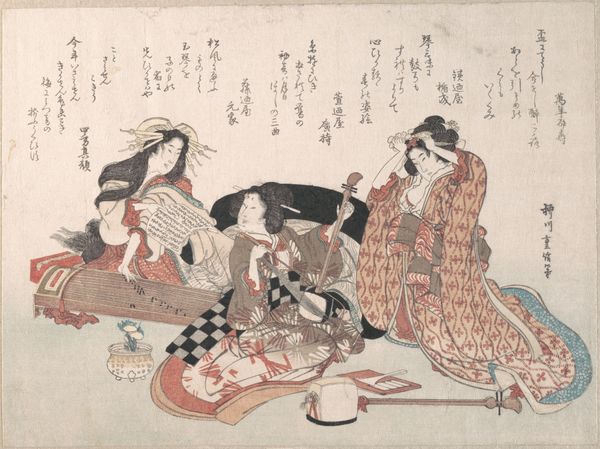
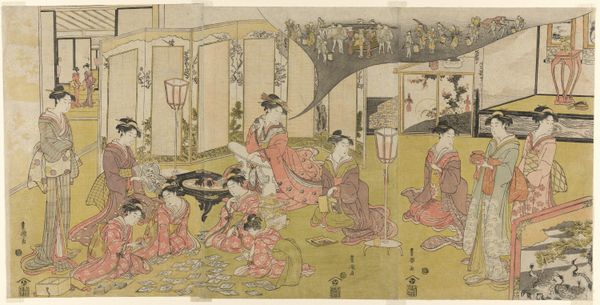
Utagawa Toyohiro created this beautiful, undated painting, “Summer Party on the Bank of the Kamo River,” likely during the Edo period. This work offers a glimpse into the lives of women in Japanese society and how they navigated the complex social expectations of their time. These women, possibly courtesans or geishas, are gathered in what seems to be a private, intimate setting. Here, we can see the women are engaging in leisurely activities such as playing music and sharing food. During the Edo period, women's roles were very restricted, yet courtesans and geishas often enjoyed a certain degree of freedom and influence. They were admired for their skills in the arts and their ability to engage in witty conversation. Despite their elevated status, these women were still bound by social constraints, their lives dictated by the pleasure of men and the demands of their profession. In this painting, Toyohiro captures a moment of respite, revealing the nuances of pleasure and constraint in the lives of these women. This work invites us to reflect on the complexities of gender, class, and identity in 19th century Japan.